
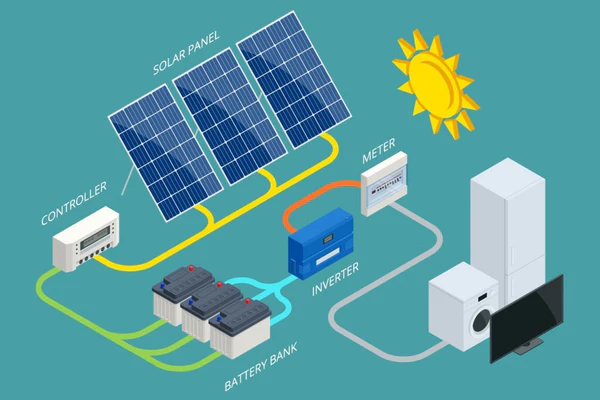
So berechnen Sie die Kapazität einer Solarbatterie? 3 Schritte zur perfekten Dimensionierung
(Ein praktischer Leitfaden für afrikanische Haushalte und Unternehmen, mit Schwerpunkt Südafrika)
Anpassung der Solarbatteriekapazität an Lastabwurfpläne in Afrika
In Regionen wie Südafrika und anderen Teilen Afrikas, Häufige Stromausfälle und unzuverlässige Netzstromversorgung machen Solarenergiesysteme zu einer Lebensader für Haushalte und Unternehmen. Eine entscheidende Komponente jeder Solaranlage ist die Batterie, die Energie speichert, um sie zu nutzen, wenn die Sonne nicht scheint. Jedoch, Die Wahl der falschen Batteriekapazität kann zu Geldverschwendung führen, unzureichende Leistung, oder verkürzte Akkulaufzeit.
Dieser Leitfaden erläutert den Berechnungsprozess Kapazität der Solarbatterie in drei einfache Schritte, zugeschnitten auf den einzigartigen Energiebedarf Afrikas, Klima, und Solarpotenzial.

Schritt 1: Bestimmen Sie Ihren täglichen Energieverbrauch
Bevor Sie Ihre Batterie dimensionieren, Du musst es wissenwie viel Energie Ihr Haushalt oder Ihr Unternehmen täglich verbraucht.
- Listen Sie alle Elektrogeräte auf Sie planen, Strom mit Solarenergie zu betreiben.
- Typische Geräte in afrikanischen Haushalten: LED-Leuchten (5–10W), Kühlschränke (100–200W), Fernseher (50–100W), Fans (50W), mobile Ladegeräte (10W), und kleine Wasserpumpen (200–500W).
- Für Unternehmen: Computer, Router, Sicherheitskameras, oder Maschinen.
- Berechnen Sie den täglichen Energieverbrauch (in Wattstunden, Wa):
- Leistung (W) × Nutzungsstunden pro Tag = Tagesenergie pro Gerät.
- Beispiel:
- 5 LED-Leuchten (10W jeweils) × 6 Stunden = 300 Wa
- Kühlschrank (150W) × 24 Std. (Zyklen ein/aus) ≈ 900 Wa
- Fernseher (80W) × 4 Stunden = 320 Wa
- Gesamte Tagesenergie = 300 + 900 + 320 = 1,520 Wa (1.52 kWh)
- Berücksichtigen Sie Ineffizienzen:
- Solaranlagen verlieren Energie aufgrund der Ineffizienz des Wechselrichters (~10–20 %) und Batterie-Lade-/Entladeverluste (~10–15 %).
- Multiplizieren Sie die tägliche Gesamtenergie mit1.3 (30% Puffer):
- 1.52 kWh × 1.3 = ~2 kWh pro Tag.
Schritt 2: Berechnen Sie die Batteriekapazität basierend auf Autonomietagen
Die Batteriekapazität hängt davon abWie viele Tage benötigen Sie Notstrom? (Autonomietage). In Südafrika, wo Lastabwürfe üblich sind, 2–3 Tage Autonomie sind praktisch.
1.Formel:
Batteriekapazität(kWh)=Tägliche Energie(kWh)×Autonomietage
- Beispiel: Für 2 Tage der Autonomie:
2 kWh/Tag×2 Tage=4 kWh
2.Konvertieren Sie kWh in Amperestunden (Ah):
- Batterien werden bei einer bestimmten Spannung in Ah angegeben (z.B., 12V, 24V, 48V).
- Formel:

- Beispiel: Für ein 48V-System:

3.Berücksichtigen Sie die Entladungstiefe (DoD):
- Die meisten Batterien (z.B., Lithium-Ionen) sollte nicht unter 80–90 % DoD entladen werden. Blei-Säure-Batterien sind begrenzt 50% DoD.
- Kapazität anpassen:

- Beispiel: Für Lithium-Ionen (90% DoD):

Schritt 3: Passen Sie die Batteriekapazität an die Solarpanel-Leistung an
Ihre Batterie muss mit der Ladekapazität Ihres Solarpanel-Arrays übereinstimmen.
- Überprüfen Sie die tägliche Solarerzeugung:
- Südafrika Durchschnittswerte4–6 Spitzensonnenstunden täglich (variiert je nach Jahreszeit).
- Formel:Solarpanel-Leistung(Wa)=Panel-Wattleistung×SonnenstundenSolarpanel-Leistung(Wa)=Panel-Wattleistung×Sonnenstunden
- Beispiel: 400W-Panels × 5 Sonnenstunden = 2,000 Wa (2 kWh).
- Stellen Sie sicher, dass die Panels die Batterie aufladen können:
- Die tägliche Solarerzeugung sollte den täglichen Energieverbrauch übersteigen.
- Beispiel: Wenn Sie verwenden 2 kWh/Tag und erzeugen 2 kWh/Tag, Für bewölkte Tage benötigen Sie zusätzliche Kapazität.
- Konto für Systemerweiterung:
- Fügen Sie 20–30 % zusätzliche Batteriekapazität für zukünftige Anforderungen hinzu (z.B., Hinzufügen von Geräten).
Wichtige Überlegungen für afrikanische Benutzer
- Akku-Typ:
- Lithium-Ionen: Längere Lebensdauer (10+ Jahre), höheres DoD (90%), aber teuer.
- Bleisäure: Günstiger, aber kürzere Lebensdauer (3–5 Jahre) und niedrigeres DoD (50%).
- Temperatur:
- Hohe Temperaturen (in Afrika verbreitet) die Batterieeffizienz verringern. Legen Sie die Batterien schattiert ein, belüftete Bereiche.
- Lokaler Support:
- Wählen Sie Marken mit Servicezentren in Ihrer Region (z.B., Huawei, Victron Energy, oder lokale Lieferanten).
Beispielrechnung für einen südafrikanischen Haushalt
- Haushaltsgeräte: 10 Lichter (100W insgesamt), Kühlschrank (150W), Fernseher (80W), Lüfter (50W).
- Tägliche Energie: 1.5 kWh + 30% Puffer = 1.95 kWh.
- Autonomie: 2 Tage → 3.9 kWh.
- Batteriespannung: 48V → 3.9 kWh × 1,000 / 48V = 81.25 Ah.
- Lithium-Ionen (90% DoD): 81.25 Ah / 0.9 ≈ 90 Ah.
- Empfohlener Akku: 100 Ah Lithium-Ionen (48V).
Letzte Tipps
- Verwenden Sie für die Präzision einen Solarrechner.
- Wenden Sie sich zur Validierung Ihres Entwurfs an lokale Installateure.
- Priorisieren Sie energieeffiziente Geräte, um Batteriegröße und -kosten zu reduzieren.
Indem Sie diese Schritte befolgen, Sie stellen sicher, dass Ihr Solarbatteriesystem Ihren Anforderungen entspricht, überlebt einen Lastabwurf, und hält dem afrikanischen Klima stand. 🌞🔋
Weiterführende Literatur:
- [Der ultimative Leitfaden für wandmontierte 48-V-100-Ah-Lithiumbatterien: Antworten 5 Wichtige FAQs]
- [48V 200Ah Solarbatterie Uganda: Beheben Sie Ausfälle & Kosten sparen]
10kWh LiFePO4-Batterien 10Kosten für kWh-Solarbatterien in Myanmar 25kWh-Batteriesysteme Alles in einem BESS Container 4MWh Saudi BESS Hersteller China Günstigste Heimbatterie China BESS-Lösungen China DDP Großhandel China Factory LiFePO4-Batterien China Grid-Scale BESS Chinesische OEM-Lieferanten Kommerzieller Batteriespeicher Kenia DC ESS-Lösungen DDP-Lösung direkt in die Demokratische Republik Kongo Direkt von China nach Afrika Direkte China-zu-Afrika-Batterie Energiespeicherbatterie Energiespeichersysteme Weltweit führende Anbieter von Lithiumbatterien Batterie der Güteklasse A Lieferant von Batteriespeichern im Netzmaßstab Heimbatterien für niederländische Familien Energiespeicher für zu Hause Industrielles BESS Kenia Bleisäure vs. Lithium-Ionen-Batterien LiFePO4 LiFePO4-Batterien LiFePO4-Batterien in Südafrika LifePo4-Akku LifePO4-Batterietechnologie LiFePO4-Händler im Irak LiFePO4 ESS Kenia Lithium-Ionen-Akku Litium-Ionen-Batterie Niedrigere Preise Markttrends Flüssigkeitskühlschrank für den Außenbereich Beschaffung von LiFePO4 in Saudi-Arabien Skalierbare BESS-Lösungen für die Industrie Solarplatten Sonnensystem Stapelbares All-in-One Großhandel mit LiFePO4-Solarbatterien Großhandel mit Solarbatterien
Ein Kommentar