

2025’s Best Home Inverters and Batteries: Never Lose Power!
Find the best home inverters and batteries for reliable, efficient energy solutions.With increasing demand for stable power supply in households, inverters have become essential for modern homes to combat power outages and support renewable energy systems. This article covers inverter capacity for home, the relationship between inverters and batteries, top product recommendations, and answers to common questions.
Why Choose the Best Home Inverters and Batteries?
Best home inverters and batteries are essential for ensuring a reliable power supply, especially during outages. They provide efficient energy storage, reduce electricity costs, and support sustainable living by optimizing energy use in your home.
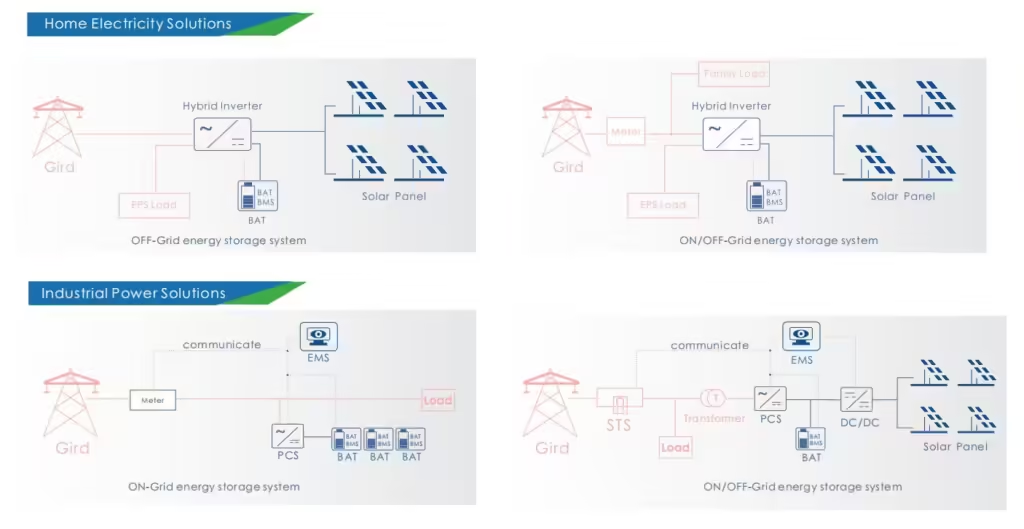
1. How to Choose the Right Inverter Capacity for Your Home
Inverter capacity (measured in watts, دبلیو) determines the total power it can support. Follow these steps:
- Calculate Total Load: List all appliances needing simultaneous power (به عنوان مثال, fridge, lights, تلویزیون) and sum their rated power. Example: Fridge (200دبلیو) + 4 LED bulbs (40دبلیو) + تلویزیون (100دبلیو) = 340W.
- Add Buffer: Select an inverter with 20-30% higher capacity to avoid overload. For the example above, a 500W inverter is safer.
- High-Power Devicess: Motors (به عنوان مثال, AC, pumps) require 2-3x their rated power during startup. Choose inverters ≥3kW for such appliances.
Typical Capacity Guidelines:
- Small homes/basic needs: <1kW
- Medium households (fridge, تلویزیون, طرفداران): 1-3کیلووات
- High-power appliances (AC, washing machine): 3-5کیلووات
2. Inverter vs Battery: Differences and Synergy
| معکوس کننده | باتری |
|---|---|
| Converts DC to AC | Stores DC power |
| Requires battery input | Can’t power AC devices directly |
Does an Inverter Need a Battery?
- Off-grid systems: Batteries are mandatory (به عنوان مثال, solar-powered homes without grid access).
- Grid-tied systems: Batteries are optional but recommended for backup during outages.
- Hybrid systems: Combine grid and battery power for seamless switching (ideal for areas with frequent outages).
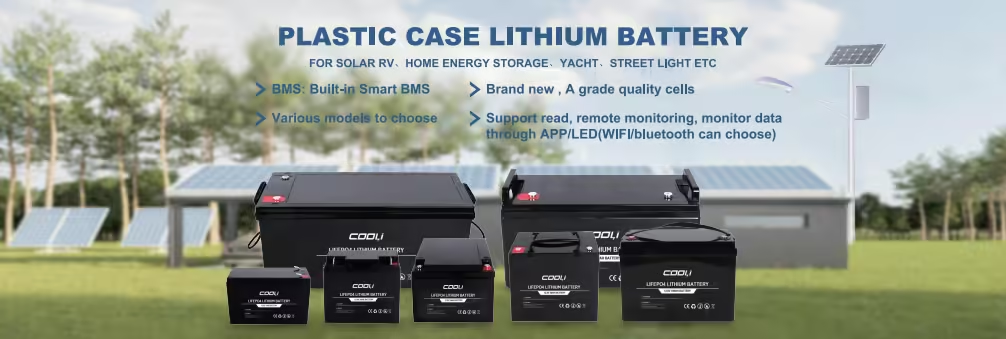
3. Top Home Inverter Solutions
Standalone Inverters
- Victron MultiPlus-II: Solar-ready, 3kW+
- Luminous EcoVolt 1050: Budget 1kW model
Inverter+Battery Combos
- APC Back-UPS Pro: Lithium battery, silent
- Exide Tubular Battery: Outage-proof
4. Battery Matching Formula
ظرفیت باتریEnsure the battery’s storage (آه) meets your energy needs during outages.Formula: Battery capacity (آه) = Total load (دبلیو) × Usage time (h) ÷ Battery voltage (V)Example: 500W load for 4 hours with a 12V battery → 500×4÷12 ≈ 167Ah.
Battery Types:
- سرب-اسید: Affordable but requires maintenance; طول عمر 3-5 سال ها.
- لیتیوم: Lightweight, longer lifespan (8-10 سال ها), higher upfront cost.
5. سوالات متداول
- Can I Use a Car Battery for a Home Inverter?
- Only for emergencies. Car batteries aren’t designed for deep discharge and may degrade quickly.
- Can an Inverter Run Directly from Grid Power Without a Battery?
- خیر. Inverters need DC input from batteries. Use a charger to convert grid AC to DC for the battery.
نتیجه گیری
Choosing the right inverter and battery for home depends on your power needs, outage frequency, and budget. For most households, الف 3kW inverter + 150Ah battery provides reliable backup. For eco-friendly solutions, pair with solar panels for off-grid setups. Regular maintenance (به عنوان مثال, checking battery fluid, avoiding over-discharge) ensures longevity and uninterrupted power during critical times.