
Klassifikazzjonijiet IP tal-batterija: Gwida Ultimate għat-Trab & Protezzjoni tal-Ilma【2025】
Gwida Tlesta tal-Klassifikazzjonijiet tal-IP tal-Batterija
1. Definizzjoni u Struttura tal-Klassifikazzjonijiet tal-IP
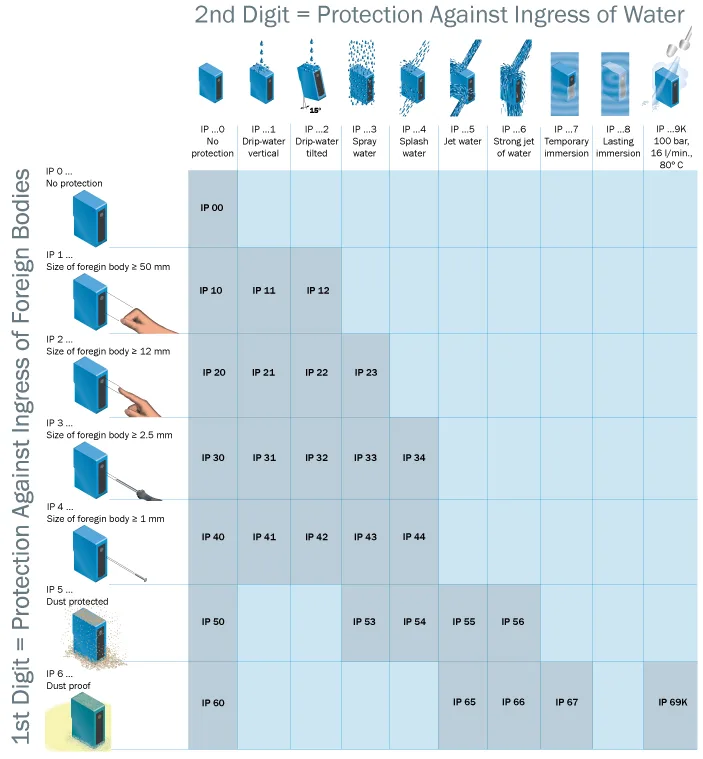
Il-Protezzjoni tad-dħul (IP) klassifikazzjoni, definit mill-Kummissjoni Elettroteknika Internazzjonali (IEC 60529 Standard), jikklassifika l-effettività tal-kompartimenti elettriċi kontra partiċelli solidi (eż., trab) u likwidi (eż., ilma).
- L-Ewwel Ċifra: Livell ta 'protezzjoni mit-trab (0–6). Numri ogħla jindikaw protezzjoni aktar b'saħħitha. Eżempji:
- 6: Issikkat mit-trab (ebda dħul ta 'trab).
- It-Tieni Ċifra: Livell ta 'reżistenza għall-ilma (0–9). Numri ogħla jindikaw protezzjoni aħjar tal-ilma. Eżempji:
- 7: Protetti kontra immersjoni fi 1 metru ilma għal 30 minuti.
- 8: Protetti kontra immersjoni fit-tul jew aktar profonda (kondizzjonijiet speċifikati mill-manifattur).
2. Klassifikazzjonijiet u Applikazzjonijiet Komuni tal-Batterija IP
Xenarji differenti jitolbu klassifikazzjonijiet IP differenti:
- IP20/IP22
- Każ ta' Użu: Sistemi ta 'ħażna ta' enerġija fuq ġewwa (eż., batteriji solari residenzjali). Protezzjoni bażika kontra t-trab u t-taqtir.
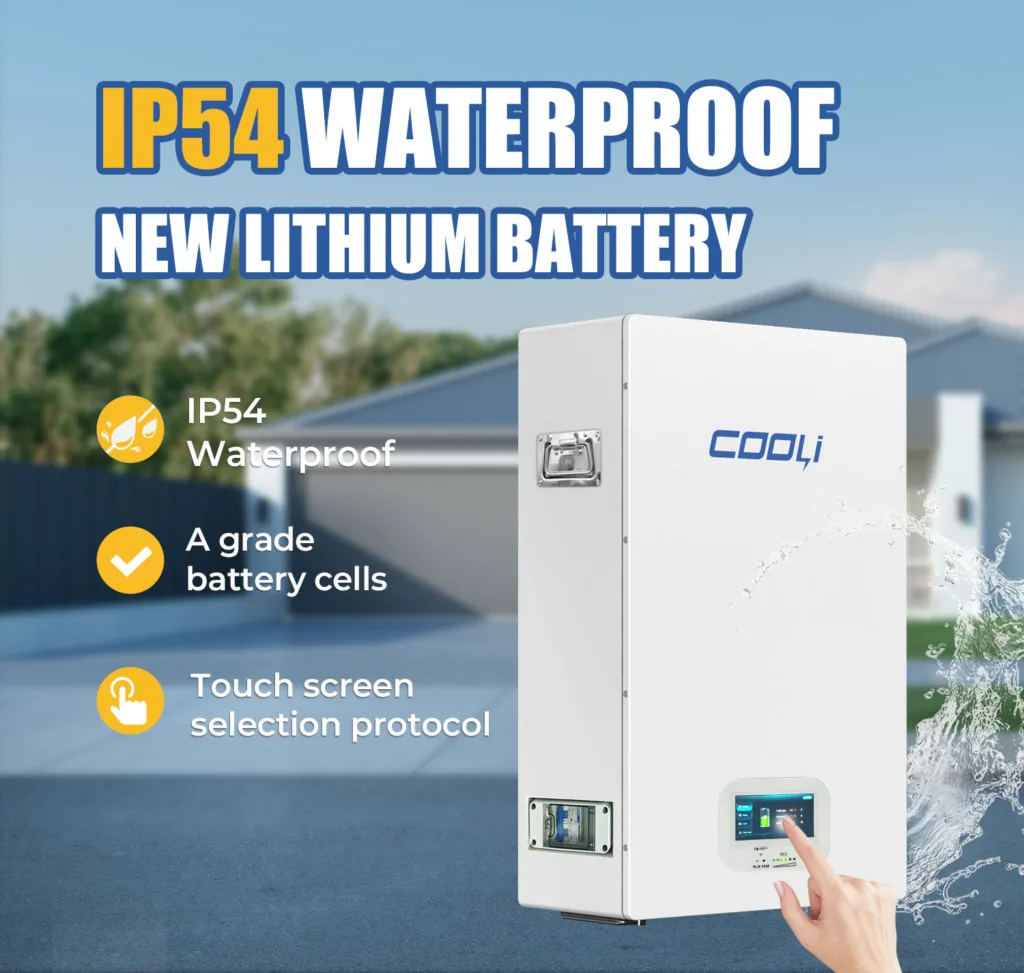
- IP54/IP65
- Każ ta' Użu: Tagħmir ta' barra (eż., Forklifts, karretti tal-golf). Reżistenza parzjali għat-trab (livell 5) u protezzjoni kontra t-titjir (livell 4) jew ġettijiet tal-ilma bi pressjoni baxxa (livell 5).
- IP67/IP68
- IP67: Użati ħafna fil-batteriji tal-vetturi elettriċi (eż., Hycan Z03). Sopravivenza 30 minuta immersjoni fi 1 metru ilma, adattat għal xita qawwija jew għargħar għal żmien qasir.
- IP68: Iddisinjat għal ambjenti marittimi jew estremi, jeħtieġu siġillar reżistenti għall-ilma fit-tul.
- Sistemi taċ-Ċelloli tal-Fjuwil tal-Idroġenu
- Tipikament jeħtieġu IP67 biex jimblokka t-trab u l-umdità milli jagħmlu ħsara lill-munzell taċ-ċelloli tal-fjuwil.
3. Standards tal-Ittestjar u Ċertifikazzjoni
- Metodi ta' Ittestjar
- Ittestjar tat-Trab: Simulat bl-użu ta 'kmamar tar-ramel/trab (eż., GB/T 2423.37).
- Ittestjar tal-Ilma: Żennuni tal-isprej, tankijiet ta' immersjoni, eċċ. (eż., GB/T 4208-2017).
- Ċertifikazzjoni
- Konformità ma CE, UL, jew regolamenti reġjonali hija obbligatorja għall-aċċess għas-suq.
4. Konsiderazzjonijiet Ewlenin u Suġġerimenti dwar l-Użu
Anke batteriji b'rata għolja IP jeħtieġu kawtela:
- Evita Kundizzjonijiet Estremi
- Il-batteriji IP67 jirreżistu l-immersjoni għal żmien qasir iżda jistgħu jfallu jekk ikunu mgħaddsa fit-tul (eż., konnetturi msadda).
- Strateġiji ta' Espożizzjoni għall-Ilma
- Għall-EVs, issuq bil-mod minn żoni mgħarrqa biex jipprevjenu żidiet fl-ilma li jagħmlu ħsara lill-pakkett tal-batterija.
- Azzjonijiet ta' Wara Ħsara mill-Ilma
- Itfi immedjatament u fittex spezzjoni professjonali jekk tkun mgħaddsa biex tevita ċirkwiti qosra jew nirien.
- Manutenzjoni
- Iċċekkja regolarment is-siġilli, integrità tad-djar, u komponenti li qed jixjieħu biex tinżamm il-prestazzjoni tal-IP.
5. Sommarju
L-għażla tal-klassifikazzjoni tal-IP it-tajba hija kritika għas-sikurezza u l-lonġevità tal-batterija:
- Ġewwa/Riskju Baxx: IP20–IP54.
- Barra/Umdità Għolja: IP65 jew ogħla.
- Ambjenti Estremi (Baħar, Għargħar): Ipprijoritizza IP67/IP68.
Għal protokolli jew ċertifikazzjonijiet dettaljati tal-ittestjar, irreferi għal IEC 60529 jew GB/T 4208.
Din il-gwida tibbilanċja l-eżattezza teknika mal-leġibbiltà, jagħmilha adattata għall-inġiniera, xerrejja, u utenti finali. Let me know jekk għandek bżonn aktar customization!
Kumment Wieħed