
Principal 3 Baterias de íons de lítio para sistemas solares: Melhores escolhas em 2025
The Core Role of Lithium-ion Batteries in Solar Systems and the Best Choices
With the growing popularity of solar systems, baterias de íon de lítio have become the preferred choice in energy storage due to their high efficiency, longa vida útil, and environmental benefits. This article combines information on mainstream products and manufacturers to analyze the types of lithium-ion batteries suitable for solar systems, their advantages, and recommendations for selection.
Sales Data Comparison
1. Global Sales Volume (2023):
- LiFePO₄ Battery: 2.5 GWh
- NCM Battery: 1.8 GWh
- LTO Battery: 0.6 GWh
- LiFePO₄ batteries have the largest share, making them the preferred choice for most residential and industrial systems.
2. Usage Rates for Residential and Industrial Systems:
- In residential systems:
- 80% use LiFePO₄
- 15% use NCM
- 5% use LTO
- In industrial and commercial systems:
- 60% use LiFePO₄
- 30% use NCM
- 10% use LTO
3. Charge/Discharge Efficiency Comparison:
- Charge/Discharge Efficiency:
- LiFePO₄ Battery: 96%
- NCM Battery: 92%
- LTO Battery: 98%
- Ciclo da vida:
- LiFePO₄ Battery: 2000-5000 ciclos
- NCM Battery: 1000-2000 ciclos
- LTO Battery: 10,000 ciclos
- Segurança:
- LiFePO₄: Alto, não inflamável
- NCM: Médio, may experience thermal runaway
- LTO: Very high, stable in extreme environments
4. Comparação de preços:
- LiFePO₄: Aproximadamente. $120–$180/kWh
- NCM: Aproximadamente. $150–$200/kWh
- LTO: Aproximadamente. $400–$600/kWh
Advantages of Lithium-ion Batteries in Solar Energy Storage
1. High Energy Density and Lightweight Compared to traditional lead-acid batteries, baterias de íon de lítio, especially LiFePO₄ types, have a higher energy density and are lighter. Por exemplo, a 12V 100Ah LiFePO₄ battery weighs only 9.36kg, while a lead-acid battery of the same capacity could weigh up to 30kg. This makes them ideal for rooftop installations or mobile applications like RVs and off-grid systems.
2. Long Cycle Life and Stability LiFePO₄ batteries typically have a cycle life of over 2000 ciclos (com 80% capacity retention), far exceeding the 300-500 cycles of lead-acid batteries. Manufacturers like Dinali Energy perform rigorous quality testing to ensure battery stability under extreme temperatures and offer warranties ranging from 1 para 3 anos.
3. Fast Charge/Discharge and High Compatibility Lithium-ion batteries support higher charge/discharge rates (por exemplo, 100A BMS), enabling rapid response to energy input from solar panels. Through smart Sistemas de gerenciamento de bateria (BMS), they provide overcharge and over-discharge protection, ensuring compatibility with inverters and solar controllers.
Best Lithium-ion Battery Types for Solar Systems
1. LiFePO₄ (Lithium Iron Phosphate Battery)
- Core Advantages: Alta segurança (strong thermal stability), ciclo de vida longo (1500-2000 ciclos), environmentally friendly.
- Typical Applications: Residential storage, off-grid solar systems, Autocaravanas, etc..
- Representative Product: A 12V 100Ah LiFePO₄ battery with 100A BMS, offering a 1-year warranty, priced around $139.
2. NCM (Nickel Cobalt Manganese Lithium Battery)
- Características: Maior densidade de energia, ideal for space-sensitive applications, but with slightly lower cycle life compared to LiFePO₄.
- Aplicativos: Commercial and industrial storage systems, high-power demand hybrid solar setups.
3. LTO (Lithium Titanate Battery)
- Vantagens: Ultra-long cycle life (até 10,000 ciclos), wide temperature adaptability (-30°C a 60 °C).
- Suitable Applications: Solar storage systems in extreme climates or microgrid systems with frequent charge/discharge cycles.
Purchasing Guide for Solar Lithium-ion Batteries
1. Capacity and Voltage Matching For residential systems, 12V or 24V batteries are commonly used (por exemplo, a 12V 100Ah battery can store approximately 1.2kWh of energy). It is essential to calculate the total energy requirement based on load power and sunlight duration.
2. BMS and Safety Certifications Ensure the battery has an integrated BMS that supports overcurrent and temperature protection. Choose products certified by UL, CE, or TUV (such as those from EastSun ,Sunchees and Coolítio).
3. Manufacturer and After-sales Service Opt for brands that offer customized solutions:
- Totlpower: 30,000 m² factory, supports industrial-grade energy storage customization.
- CMGL Solar (Pakistan Market): Offers Tesla and Longi battery solutions with a 25-year system warranty.
Recommended Global Lithium Battery Manufacturers
1. EastSun (China)
- Their product line covers both residential and commercial storage systems, providing integrated solutions with hybrid inverters and LiFePO₄ batteries, certified by UL and IEC.
2. Dinali Energy (India)
- Specializes in green energy, producing LFP and NCM batteries, supporting solar inverters and microgrid applications, and offering 24/7 suporte técnico.
3. Sunchees (China)
- Com 15 years of OEM experience, Sunchees offers pure sine wave inverters and lithium battery systems, supporting distributed projects in over 100 países.
4. Coolítio(China)
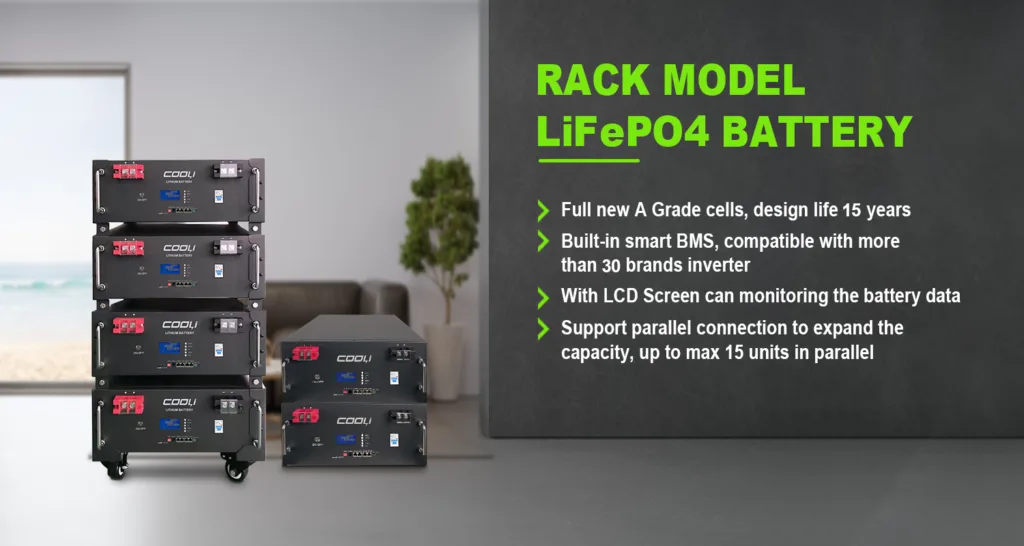
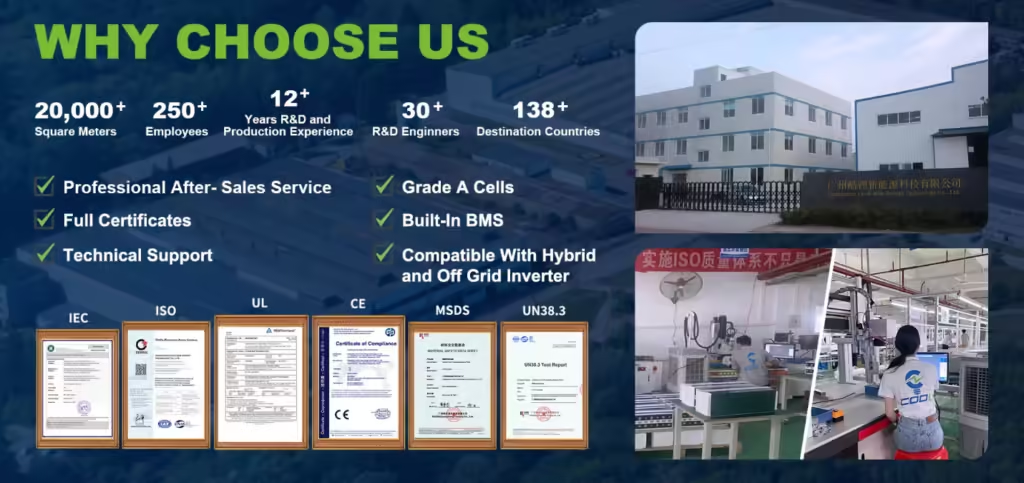
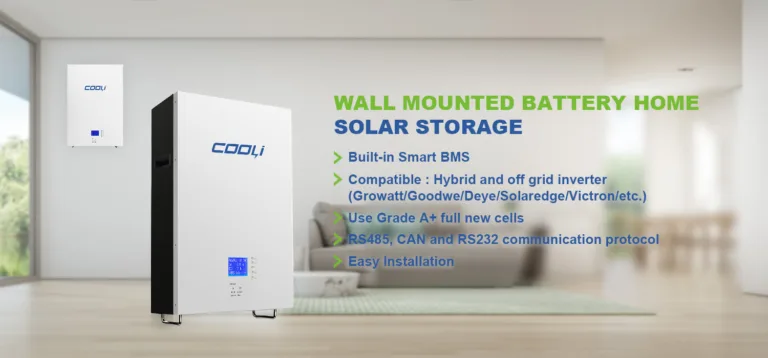
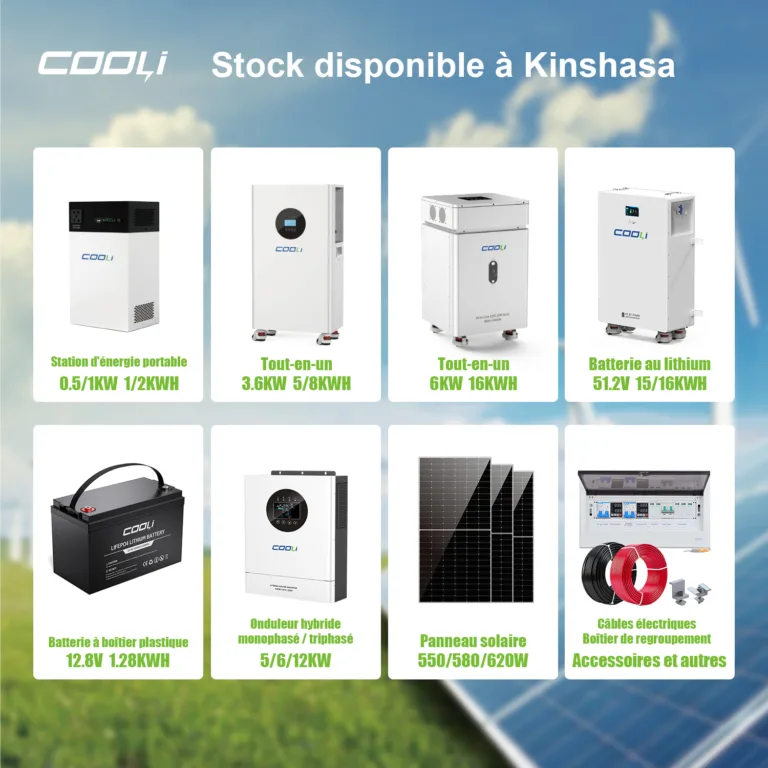
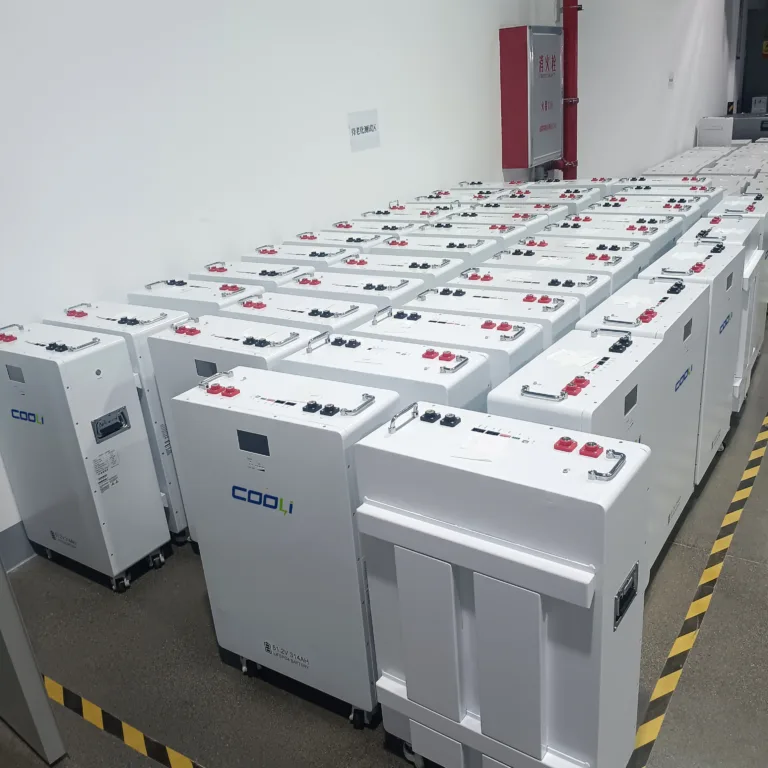
- 15 Anos de experiência fábrica profissional com 3 edifícios para produção, OEM&ODM experience, O sistema BMS é desenvolvido pela nossa própria equipe de engenheiros, Pode combinar mais de 20 brands of inverters.Got ISO9001,UL,o-021, CEI,CE,CB,ONU38.3,MSDS,etc Certificados.
Installation and Maintenance Recommendations
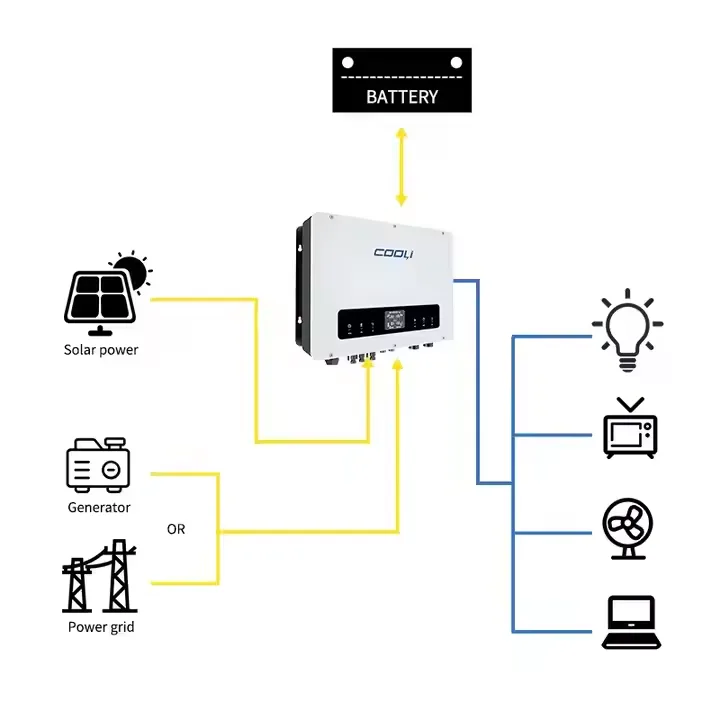
1. System Compatibility Ensure the battery voltage matches the solar panel and inverter specifications (por exemplo, a 12V battery must be compatible with a 12V solar controller).
2. Regular Monitoring Use smart apps provided by manufacturers (por exemplo, CMGL Solar’s monitoring tools) to track the charging and discharging status in real-time.
3. Environmental Requirements Avoid high temperatures or humid environments. LiFePO₄ batteries are recommended to operate within a temperature range of -20°C to 60°C.
Conclusão
LiFePO₄ batteries, due to their high charge/discharge efficiency, segurança, and affordable price, remain the top choice in most residential and industrial systems. NCM batteries are better suited for high-capacity applications, while LTO batteries stand out in extreme environments or high-frequency cycling scenarios. When selecting, consider the specific needs of the system, and from a long-term investment and efficiency perspective, LiFePO₄ is the best choice in most cases.
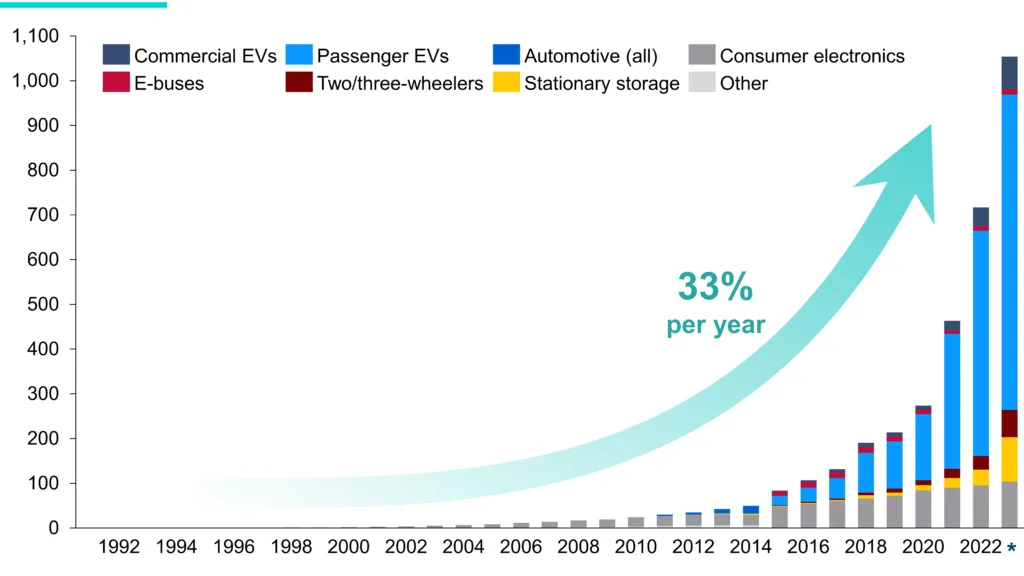
Global Solar Battery Market Overview Source: https://www.marketresearchfuture.com/reports/solar-battery-market-10621
10Baterias kWh LiFePO4 10Custos da bateria solar kWh em Mianmar 25Sistemas de bateria kWh Tudo-em-um Contêiner BESS 4MWh Saudita BESS Fabricante China Bateria doméstica mais barata Soluções BESS da China China DDP atacado Baterias LiFePO4 de fábrica na China BESS em escala de grade da China Fornecedores OEM chineses Armazenamento de bateria comercial Quênia Soluções ESS DC Solução DDP Direta para a RDC Direcionar a China para a África Bateria direta da China para a África bateria de armazenamento de energia Sistemas de armazenamento de energia Líderes globais em baterias de lítio Bateria grau A Fornecedor de armazenamento de bateria em escala de grade Baterias domésticas para famílias holandesas armazenamento de energia doméstica BESS Industrial Quênia Chumbo-ácido vs.. Baterias de íon-lítio LiFePO4 Baterias LiFePO4 Baterias LiFePO4 na África do Sul Bateria LifePo4 Tecnologia de bateria LifePO4 Distribuidor LiFePO4 no Iraque LiFePO4 ESS Quênia Bateria de íon de lítio bateria de íon de lítio Preços mais baixos Tendências de mercado Gabinete de resfriamento líquido externo Aquisição Saudita de LiFePO4 Soluções BESS escaláveis para a indústria Painéis Solares sistema solar Empilhamento multifuncional Baterias solares LiFePO4 por atacado Por atacado baterias solares


Um comentário