
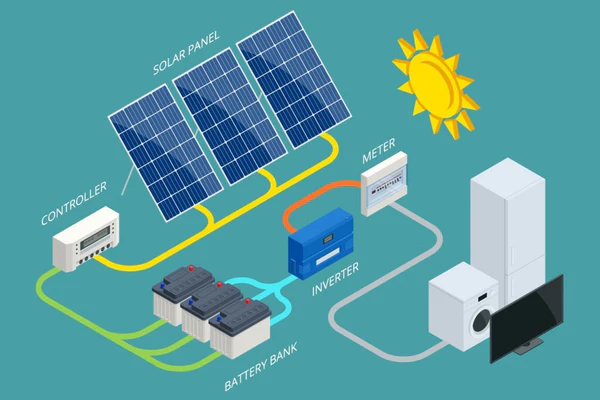
Cum se calculează capacitatea bateriei solare? 3 Pași pentru o dimensiune perfectă
(Un ghid practic pentru case și afaceri africane, cu accent pe Africa de Sud)
Potrivirea capacității bateriei solare cu programele de descărcare a încărcăturii din Africa
În regiuni precum Africa de Sud și alte părți ale Africii, întreruperile frecvente de curent și electricitatea nesigură din rețea fac din sistemele de energie solară o linie de salvare pentru case și afaceri. O componentă critică a oricărei configurații solare este bateria, care stochează energie pentru utilizare atunci când soarele nu strălucește. in orice caz, alegerea unei capacități greșite a bateriei poate duce la pierderi de bani, putere insuficientă, sau durata de viață scurtă a bateriei.
Acest ghid defalcă procesul de calcul capacitatea bateriei solare în trei pași simpli, adaptate nevoilor unice de energie ale Africii, clima, si potentialul solar.

Pas 1: Determinați consumul zilnic de energie
Înainte de a dimensiona bateria, trebuie sa stiicâtă energie folosește zilnic gospodăria sau afacerea ta.
- Listați toate aparatele electrice intenționați să alimentați cu solar.
- Aparate tipice în gospodăriile africane: Lumini LED (5-10W), frigidere (100-200W), televizoare (50-100W), fani (50W), încărcătoare mobile (10W), și mici pompe de apă (200-500W).
- Pentru afaceri: Calculatoare, routere, camere de securitate, sau utilaje.
- Calculați consumul zilnic de energie (în watt-oră, Wh):
- Putere (W) × Ore de utilizare pe zi = energie zilnică per aparat.
- Exemplu:
- 5 Lumini LED (10W fiecare) × 6 ore = 300 Wh
- Frigider (150W) × 24 ore (cicluri de pornire/oprire) ≈ 900 Wh
- televizor (80W) × 4 ore = 320 Wh
- Energia totală zilnică = 300 + 900 + 320 = 1,520 Wh (1.52 kWh)
- Factor în ineficiență:
- Sistemele solare pierd energie din cauza ineficienței invertorului (~10–20%) și pierderi de încărcare/descărcare a bateriei (~10–15%).
- Înmulțiți energia zilnică totală cu1.3 (30% tampon):
- 1.52 kWh × 1.3 = ~2 kWh pe zi.
Pas 2: Calculați capacitatea bateriei pe baza zilelor de autonomie
Capacitatea bateriei depinde dede câte zile aveți nevoie de energie de rezervă (zile de autonomie). În Africa de Sud, unde deversarea sarcinii este frecventă, 2–3 zile de autonomie sunt practice.
1.Formula:
Capacitatea bateriei(kWh)=Energie zilnică(kWh)×Zilele autonomiei
- Exemplu: Pentru 2 zile de autonomie:
2 kWh/zi×2 zile=4 kWh
2.Convertiți kWh în amperi-oră (Ah):
- Bateriile sunt nominale în Ah la o anumită tensiune (de ex., 12V, 24V, 48V).
- Formula:

- Exemplu: Pentru un sistem de 48V:

3.Factorizați profunzimea descărcării (DoD):
- Majoritatea bateriilor (de ex., litiu-ion) nu ar trebui să se descarce sub 80–90% DoD. Bateriile plumb-acid sunt limitate la 50% DoD.
- Reglați capacitatea:

- Exemplu: Pentru litiu-ion (90% DoD):

Pas 3: Potriviți capacitatea bateriei la ieșirea panoului solar
Bateria trebuie să se alinieze cu capacitatea de încărcare a panoului solar.
- Verificați generația solară zilnică:
- Mediile din Africa de Sud4-6 ore de vârf zilnic (variază în funcție de sezon).
- Formula:Ieșire panou solar(Wh)= Puterea panoului×Ore de soare Ieșire panou solar(Wh)= Puterea panoului×Ore de soare
- Exemplu: 400W panouri × 5 orele soarelui = 2,000 Wh (2 kWh).
- Asigurați-vă că panourile pot reîncărca bateria:
- Producția solară zilnică ar trebui să depășească consumul zilnic de energie.
- Exemplu: Dacă utilizați 2 kWh/zi și generează 2 kWh/zi, veți avea nevoie de capacitate suplimentară pentru zilele înnorate.
- Luați în considerare extinderea sistemului:
- Adăugați 20–30% capacitate suplimentară a bateriei pentru nevoile viitoare (de ex., adăugarea de aparate).
Considerații cheie pentru utilizatorii africani
- Tip baterie:
- Litiu-ion: Durată de viață mai lungă (10+ ani), DoD mai mare (90%), dar costisitoare.
- plumb-acid: Durată de viață mai ieftină, dar mai scurtă (3-5 ani) și DoD inferior (50%).
- Temperatura:
- Temperaturi ridicate (comună în Africa) reduce eficiența bateriei. Instalați bateriile în umbrire, zone ventilate.
- Suport local:
- Alegeți mărci cu centre de service în regiunea dvs (de ex., Huawei, Victron Energy, sau furnizori locali).
Exemplu de calcul pentru o gospodărie sud-africană
- Aparate: 10 lumini (100W total), frigider (150W), televizor (80W), ventilator (50W).
- Energie zilnică: 1.5 kWh + 30% tampon = 1.95 kWh.
- Autonomie: 2 zile → 3.9 kWh.
- Tensiunea bateriei: 48V → 3.9 kWh × 1,000 / 48V = 81.25 Ah.
- Litiu-ion (90% DoD): 81.25 Ah / 0.9 ≈ 90 Ah.
- Baterie recomandată: 100 Ah litiu-ion (48V).
Sfaturi finale
- Utilizați un calculator solar pentru precizie.
- Consultați instalatorii locali pentru a vă valida designul.
- Acordați prioritate aparatelor eficiente din punct de vedere energetic pentru a reduce dimensiunea și costul bateriei.
Urmând acești pași, vă veți asigura că sistemul dumneavoastră de baterii solare răspunde nevoilor dumneavoastră, supraviețuiește vărsării sarcinii, și rezistă climei Africii. 🌞🔋
Lectură suplimentară:
- [Ghidul suprem pentru baterie cu litiu de 48 V 100 Ah montată pe perete: Răspunzând 5 Întrebări frecvente cheie]
- [48Baterie solară V 200Ah Uganda: Rezolva intreruperile & Economisiți costuri]
10Baterii kWh LiFePO4 10Costul bateriilor solare kWh în Myanmar 25Sisteme de baterii kWh All-in-One Container BESS 4MWh saudiți BESS Producator China Cea mai ieftină baterie de acasă China BESS Solutions China DDP en-gros China Factory LiFePO4 Baterii China Grid-Scale BESS Furnizori OEM chinezi Stocare comercială a bateriei Kenya Soluții DC ESS Soluție DDP Direct în RDC Dirijați China către Africa Direcționați China către Africa Battery baterie de stocare a energiei Sisteme de stocare a energiei Lideri mondiali în bateriile cu litiu Baterie de gradul A Furnizor de stocare a bateriilor la scară de rețea Baterii de acasă pentru familii olandeze stocarea energiei la domiciliu Industrial BESS Kenya Plumb-acid vs. Baterii litiu-ion LiFePO4 baterii LiFePO4 Bateriile LiFePO4 în Africa de Sud baterie LifePo4 Tehnologia bateriei LifePO4 Distribuitor LiFePO4 în Irak LiFePO4 ESS Kenya Baterie Litiu-Ion baterie litiu-ion Preturi mai mici Tendințele pieței Dulap de răcire cu lichid în aer liber Achiziții saudite LiFePO4 Soluții scalabile BESS pentru industrie Panouri solare sistem solar Stivuire All-in-One Baterii solare LiFePO4 en-gros Baterii solare cu ridicata
Un comentariu