
Baterie solară vs generator: Ceea ce economisește mai mulți bani pentru casele din Kinshasa?
Baterie solară vs generator: Costul real al “Fără curent” în Kinshasa
Dacă locuiești în Kinshasa, știi deja burghiul: luminile se sting, frigiderul se oprește din fredonat, iar cineva strigă “curent e-tii!” din camera alăturată. Reducerea frecventă a sarcinii SNEL și instabilitatea tensiunii au transformat energia de rezervă dintr-un lux într-o necesitate casnică - pentru familii, magazine mici (magazine), biserici, camere de zi, și birourile de acasă deopotrivă.
De zeci de ani, răspunsul implicit a fost a generator diesel sau benzină. Astăzi, un număr tot mai mare de gospodării din Kinshasa în cartiere precum Gombe, Limes, Ngaliema, și Lemba pun o nouă întrebare: este în sfârșit timpul să trecem la a sistem de baterii solare?
Acest ghid defalcă numerele reale - prețul de achiziție, costurile de combustibil și de întreținere, durată de viaţă, zgomot, și rentabilitatea investiției pe termen lung — astfel încât să puteți decide ce soluție de alimentare de rezervă economisește efectiv banii familiei dvs. în 5-10 ani.
1. Înțelegerea celor două tehnologii
Generatoare converti combustibilul (benzină sau motorină) în energie electrică printr-un motor cu ardere. Sunt disponibile pe scară largă în piețele din Kinshasa, cum ar fi Zigida și Marché Central, relativ ieftin de cumpărat, și familiar pentru majoritatea tehnicienilor.
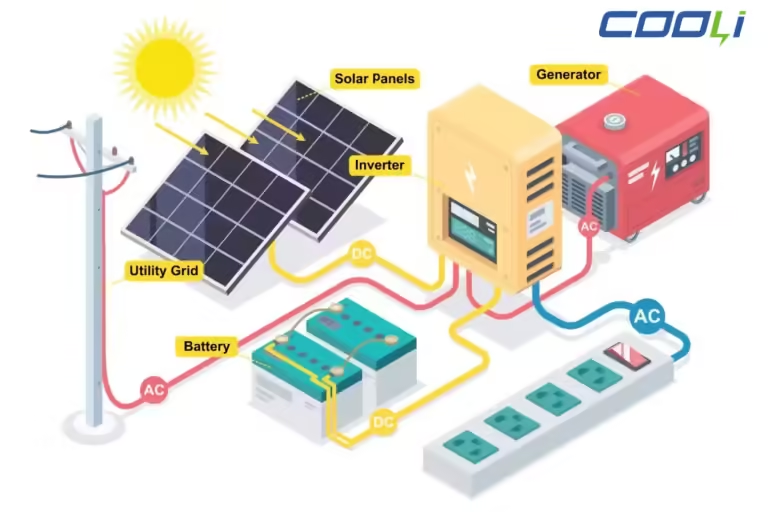
Sisteme de baterii solare stocarea energiei din panourile solare (sau din grila, când este disponibil) în baterii litiu-ion sau LiFePO4, apoi eliberați-l printr-un invertor când SNEL întrerupe alimentarea. Nu era combustibil, fara motor, fara evacuare.
2. Comparația costurilor inițiale
Aici câștigă în mod tradițional generatoarele și de ce atât de multe gospodării din Kinshasa încă le cumpără primele.
- Un generator de bază pe benzină de 2-3 kVA poate costa aproximativ $150– 400 USD, suficient pentru a aprinde luminile, la televizor, fani, si incarcatoare de telefon.
- Un generator diesel de dimensiuni medii (5–8 kVA), potrivit pentru un magazin sau o casă cu frigider și AC, de obicei rulează $700– 1.500 USD.
- Un sistem de baterii solare de pornire (1 panou solar + baterie mică cu litiu + invertor, suficient pentru iluminare și încărcare telefon/laptop) începe în jur $400– 800 USD.
- O configurație completă a bateriei solare de acasă (panouri multiple, 3– baterie de 5 kWh, invertor, capabil să funcționeze un frigider, televizor, și fani pe tot parcursul nopții) poate costa $1,800-4.000 USD+, in functie de capacitatea bateriei si marca.
3. Costuri de funcționare: Unde generatoarele se scumpesc în liniște
Acesta este numărul pe care majoritatea oamenilor îl subestimează.
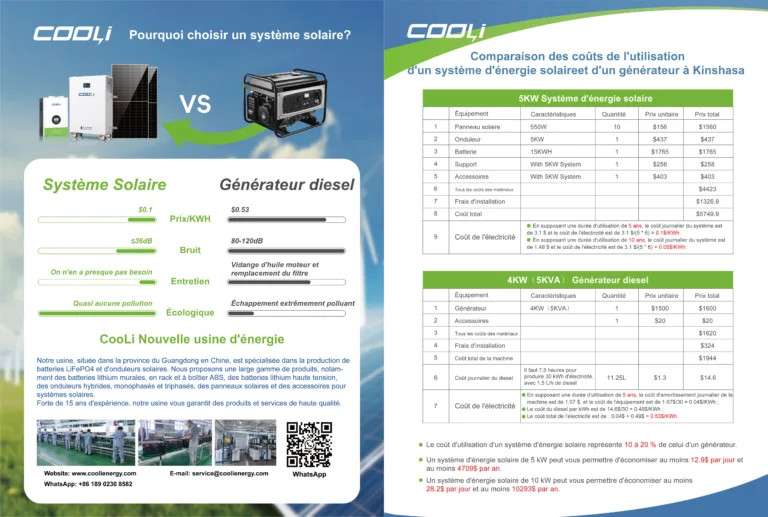
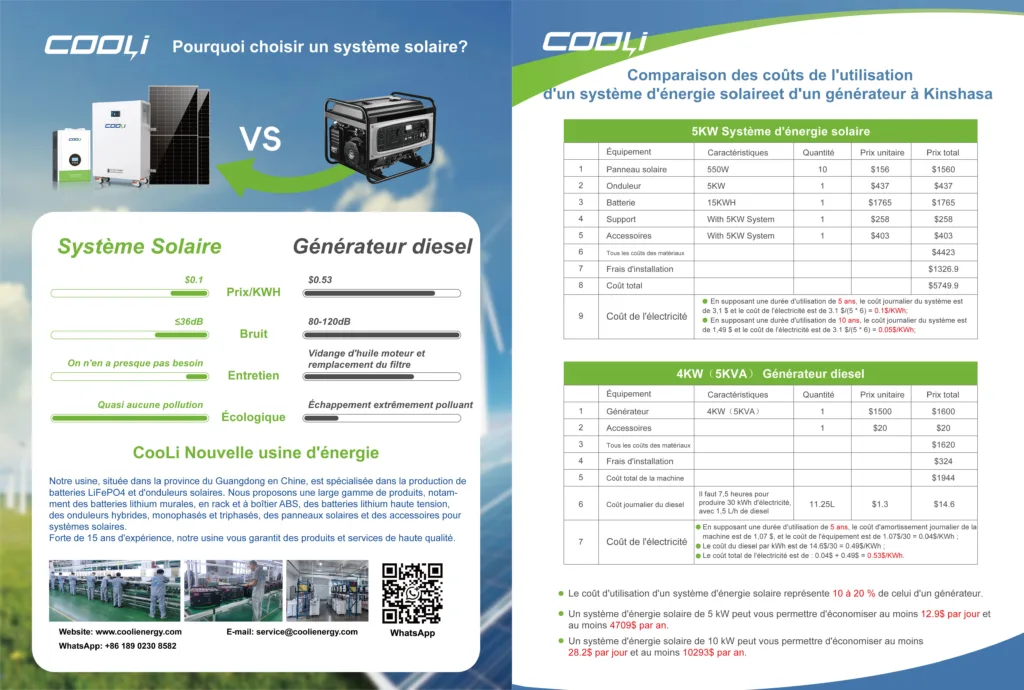
Un generator de dimensiuni medii care funcționează 4-6 ore pe zi (o cifră realistă în timpul reducerilor frecvente de SNEL de mai multe zile din Kinshasa) consumă aproximativ 1,5-2,5 litri de combustibil pe oră. La prețurile pompelor Kinshasa - care fluctuează în funcție de cursul de schimb al CDF și de lipsa periodică de combustibil - acest lucru poate însemna $8– 15 USD în combustibil pe zi, sau $240– 450 USD pe lună pentru o gospodărie care o rulează în mod constant.
Un sistem de baterii solare, odată instalat, are cost de funcționare zilnic aproape de zero. Lumina soarelui este gratuită, iar climatul ecuatorial din Kinshasa oferă puternic, iradiere solară constantă pe tot parcursul anului - chiar și în timpul sezonului ploios, panourile generează încă o încărcare utilă în zilele înnorate.
4. Întreţinere, Durată de viaţă, și costuri ascunse
| Factor | Generator | Sistem de baterii solare |
|---|---|---|
| Durata de viață tipică | 3–6 ani (utilizare zilnică intensă) | 8-15 ani (baterie), 20-25 de ani (panouri) |
| Întreţinere | Schimbări de ulei, bujii, curatarea carburatorului, vizite frecvente la tehnician | Minimal - curățare ocazională a panourilor, verificări de sănătate a bateriei |
| Risc de combustibil/aprovizionare | Vulnerabil la lipsa de combustibil și la creșterea prețurilor | Niciuna — lumina soarelui este întotdeauna disponibilă |
| Zgomot | Tare, perturbatoare pentru vecini | Tăcut |
| Calitatea aerului | Gaze de evacuare, riscul de monoxid de carbon în interior | Zero emisii |
Generatoarele suferă, de asemenea, mai mult în climatul din Kinshasa: praf, umiditate, iar ciclul de pornire/oprire constantă uzează motoarele mai repede, care necesită adesea o vizită de tehnician (și piese de schimb care nu sunt întotdeauna ușor de procurat local) la fiecare câteva luni de utilizare intensă.
5. Fiabilitate în timpul întreruperilor extinse
Întreruperile de curent în Kinshasa nu sunt întotdeauna de câteva ore - întreruperile de mai multe zile sunt frecvente în unele comune. Aici, cele două tehnologii se comportă foarte diferit:
- Generatoare poate, în teorie, rulați pe termen nelimitat atâta timp cât aveți combustibil, dar în timpul lipsei de combustibil (ceea ce se întâmplă în Kinshasa), un generator devine inutil exact atunci când ai cea mai mare nevoie de el.
- Sisteme de baterii solare reîncărcați în fiecare zi de la lumina soarelui, deci atâta timp cât răsare soarele, bateria se reîncarcă - fără călătorii la benzinărie, fara coada, nicio dependență de lanțurile de aprovizionare.
6. Zgomot, Vecinii, și Confort de zi cu zi
Oricine locuiește într-un cartier dens populat Kinshasa știe că un generator în funcțiune este imposibil de ignorat - pentru tine și vecinii tăi. Sistemele de baterii solare funcționează în liniște completă, care contează pentru:
- Dormitori ușori și copii care studiază noaptea
- Afaceri la domiciliu (camere de zi, croitorie, birouri mici) având nevoie de un mediu liniştit
- Clădiri de apartamente și ansambluri comune unde fumul generatorului și zgomotul provoacă tensiuni între vecini
7. Rentabilitatea investiției pe termen lung (ROI)
Să-l punem împreună cu o estimare simplificată pe 3 ani pentru o nevoie casnică de mărime medie (frigider, lumini, fani, televizor, incarcarea telefonului):
- Generator: $1,000 (cumpărare) + ~300 USD/lună combustibil × 36 luni = ~11.800 USD peste 3 ani
- Sistem de baterii solare: $2,500 (cumpărare) + cost de funcționare aproape de zero + întreținere ocazională de încărcare a bateriei = ~2.700 USD–3.000 USD peste 3 ani
Chiar și pentru o eventuală înlocuire a bateriei după 8-10 ani, solarul iese în mod constant cu mult înainte odată ce costurile combustibilului sunt luate în considerare - perioada de amortizare a unui sistem de baterii solare din Kinshasa este de obicei 8-14 luni comparativ cu cheltuielile continue cu combustibilul generatorului.
8. Pe care ar trebui să-l alegi? Un ghid rapid de decizie
Alegeți un generator dacă:
- Aveți nevoie imediat de energie de rezervă și aveți un buget inițial foarte limitat
- Nevoile dvs. de putere sunt ocazionale și ușoare (câteva ore, de câteva ori pe lună)
- Încă nu aveți acces la asistență pentru instalarea echipamentelor solare din zona dvs
Alegeți un sistem de baterii solare dacă:
- Întâmpinați întreruperi frecvente sau de lungă durată SNEL (de mai multe ori pe săptămână sau tăieturi de mai multe zile)
- Vrei să protejezi alimentele, medicament, sau echipament de afaceri în mod fiabil
- Doriți să reduceți cheltuielile curente cu combustibil și expunerea la schimb valutar
- Zgomot, fumuri, sau relațiile cu vecinii contează pentru tine
- Planificați pe termen lung (3+ ani) și doresc cel mai mic cost total de proprietate
9. Sfaturi locale pentru achiziționarea de sisteme de baterii solare în Kinshasa
- Cumpărați de la furnizori locali consacrați în Gombe sau Limete care oferă asistență post-vânzare și garanție — evitați bateriile fără marcă fără rețea locală de service.
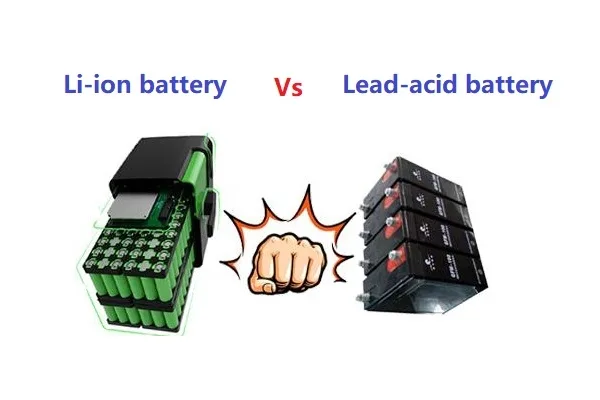
- Verificați chimia bateriei: LiFePO4 (fosfat de litiu fier) bateriile gestionează mai bine căldura din Kinshasa și durează mai mult decât alternativele mai vechi de plumb-acid.
- Confirmați capacitatea invertorului se potrivește cu aparatele dvs. — invertoarele subdimensionate sunt o cauză comună de dezamăgire.
- Întrebați despre planurile de finanțare: câțiva furnizori de energie solară din Kinshasa oferă acum planuri cu plata în funcție de utilizare sau în rate, scăderea barierei inițiale în comparație cu achiziția unică a generatorului.
- Factorul de instalare: montajul și cablajul profesional vă protejează investiția și siguranța electrică a casei dumneavoastră.
Concluzie
Pe termen scurt, nevoi ocazionale și cele mai strânse bugete, un generator rămâne o alegere viabilă. Dar pentru marea majoritate a gospodăriilor din Kinshasa se confruntă cu întreruperi frecvente SNEL, o sistemul de baterii solare oferă economii semnificativ mai mari în timp - fără facturi de combustibil, întreținere minimă, functionare silentioasa, și o independență energetică reală față de o aprovizionare imprevizibilă cu combustibil.
Dacă gospodăria dvs. cheltuiește mai mult de 100-150 USD pe lună pe combustibilul generatorului, merită să obțineți o cotație pentru un sistem de baterii solare - matematica, în majoritatea cazurilor, va fi deja în favoarea solarului.