
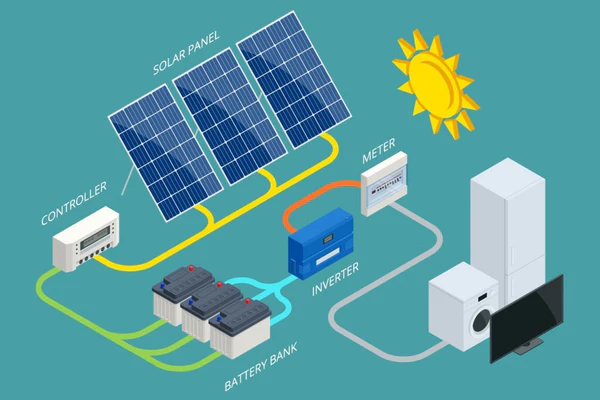
Як розрахувати ємність сонячної батареї? 3 Кроки до ідеального розміру
(Практичний посібник для африканських будинків і підприємств, з акцентом на Південну Африку)
Відповідність потужності сонячної батареї графікам розвантаження в Африці
У таких регіонах, як Південна Африка та інші частини Африки, часті відключення електроенергії та ненадійна електромережа роблять системи сонячної енергії порятунком для будинків і підприємств. Важливим компонентом будь-якої сонячної установки є акумулятор, який накопичує енергію для використання, коли сонце не світить. Проте, вибір неправильної ємності батареї може призвести до втрати грошей, недостатня потужність, або скорочений термін служби батареї.
Цей посібник розбиває процес розрахунку ємність сонячної батареї у три прості кроки, пристосований до унікальних енергетичних потреб Африки, клімат, і сонячний потенціал.

Крок 1: Визначте своє щоденне споживання енергії
Перш ніж визначити розмір акумулятора, тобі потрібно знатискільки енергії щодня споживає ваше домогосподарство чи підприємство.
- Перерахувати всі електроприлади ви плануєте використовувати сонячну енергію.
- Типова техніка в африканських домогосподарствах: Світлодіодні ліхтарі (5–10 Вт), холодильники (100–200 Вт), телевізори (50–100 Вт), вболівальники (50В), мобільні зарядні пристрої (10В), і невеликі водяні насоси (200–500 Вт).
- Для підприємств: комп'ютери, маршрутизатори, камери спостереження, або машини.
- Розрахувати добове споживання енергії (у ват-годинах, Wh):
- потужність (В) × Кількість годин використання на день = добова енергія на прилад.
- приклад:
- 5 Світлодіодні ліхтарі (10W кожен) × 6 години = 300 Wh
- Холодильник (150В) × 24 години (цикли увімкнення/вимкнення) ≈ 900 Wh
- телевізор (80В) × 4 години = 320 Wh
- Загальна добова енергія = 300 + 900 + 320 = 1,520 Wh (1.52 кВт/год)
- Фактор неефективності:
- Сонячні системи втрачають енергію через неефективність інвертора (~10–20%) і втрати під час зарядки/розрядки батареї (~10–15%).
- Помножте загальну денну енергію на1.3 (30% буфер):
- 1.52 кВт*год × 1.3 = ~2 кВт/год на добу.
Крок 2: Розрахуйте ємність батареї на основі днів автономної роботи
Ємність акумулятора залежить відскільки днів вам потрібно резервне живлення (дні автономії). У Південній Африці, де розвантаження є звичайним явищем, 2– 3 дні автономності – це практично.
1.Формула:
Ємність акумулятора(кВт/год)=Денна енергія(кВт/год)×Дні автономії
- приклад: для 2 дні автономії:
2 кВт-год/день×2 дні=4 кВт-год
2.Перетворення кВт/год в ампер-години (Ах):
- Батареї вказуються в Аг при певній напрузі (напр., 12В, 24В, 48В).
- Формула:

- приклад: Для системи 48 В:

3.Фактор глибини розряду (Міністерство оборони):
- Більшість акумуляторів (напр., літій-іонний) не повинен розряджатися нижче 80–90% DoD. Свинцево-кислотні акумулятори обмежені 50% Міністерство оборони.
- Відрегулюйте ємність:

- приклад: Для літій-іонних (90% Міністерство оборони):

Крок 3: Підберіть ємність батареї до потужності сонячної панелі
Ваша батарея має відповідати зарядним можливостям вашої сонячної панелі.
- Перевірте щоденну сонячну генерацію:
- Середні показники Південної Африки4–6 годин пік сонця щодня (змінюється залежно від сезону).
- Формула:Вихід сонячної панелі(Wh)=Потужність панелі×Сонячні годиниПотужність сонячної панелі(Wh)=Потужність панелі × сонячні години
- приклад: 400W панелі × 5 сонячні години = 2,000 Wh (2 кВт/год).
- Переконайтеся, що панелі можуть заряджати акумулятор:
- Щоденна сонячна генерація повинна перевищувати щоденне споживання енергії.
- приклад: Якщо ви використовуєте 2 кВт-год/день і генерувати 2 кВт/год, вам знадобиться додаткова ємність для хмарних днів.
- Рахунок для розширення системи:
- Додайте 20–30% додаткової ємності акумулятора для майбутніх потреб (напр., додавання техніки).
Основні міркування для користувачів з Африки
- тип батареї:
- Літій-іонний: Довший термін служби (10+ років), вище DoD (90%), але дорого.
- Свинцево-кислотний: Дешевше, але менший термін служби (3– 5 років) і нижче DoD (50%).
- температура:
- Високі температури (поширений в Африці) знизити ефективність батареї. Встановіть батареї в затіненому місці, вентильовані приміщення.
- Місцева підтримка:
- Вибирайте бренди з сервісними центрами у вашому регіоні (напр., Huawei, Victron Energy, або місцеві постачальники).
Приклад розрахунку для домогосподарства Південної Африки
- Побутова техніка: 10 вогні (100W всього), холодильник (150В), телевізор (80В), вентилятор (50В).
- Щоденна енергія: 1.5 кВт/год + 30% буфер = 1.95 кВт/год.
- Автономність: 2 днів → 3.9 кВт/год.
- Напруга акумулятора: 48V → 3.9 кВт*год × 1,000 / 48V = 81.25 Ах.
- Літій-іонний (90% Міністерство оборони): 81.25 Ах / 0.9 ≈ 90 Ах.
- Рекомендований акумулятор: 100 Ах літій-іонний (48В).
Останні поради
- Для точності використовуйте сонячний калькулятор.
- Зверніться до місцевих інсталяторів, щоб підтвердити ваш проект.
- Надавайте перевагу енергоефективним приладам, щоб зменшити розмір і вартість акумулятора.
Дотримуючись цих кроків, ви гарантуєте, що ваша система сонячних батарей відповідає вашим потребам, витримує розвантаження, і витримує клімат Африки. 🌞🔋
Подальше читання:
- [Повний посібник із настінної літієвої батареї 48 В 100 Аг: Відповідаючи 5 Основні поширені запитання]
- [48Сонячна батарея V 200Ah Уганда: Усунення збоїв & Економія витрат]
10кВт*год LiFePO4 батареї 10Вартість сонячної батареї в М’янмі 25Акумуляторні системи кВт/год Все-в-одному BESS Container 4MWh Саудівська Аравія BESS Виробник Китай Найдешевший домашній акумулятор Китай BESS Solutions Китай DDP оптом Батареї LiFePO4 китайського заводу Китайська сітка BESS Китайські постачальники OEM Комерційне зберігання акумуляторів Кенія Рішення DC ESS DDP Solution Direct to DRC Прямий Китай до Африки Пряма батарея з Китаю в Африку акумуляторна батарея Системи накопичення енергії Світові лідери літієвих батарей Акумулятор класу А Постачальник систем зберігання акумуляторів Домашні батареї для голландських сімей домашній накопичувач енергії Промисловий BESS Кенія Свинцево-кислотний проти. Літій-іонні акумулятори LiFePO4 Акумулятори LiFePO4 LiFePO4 батареї в Південній Африці Акумулятор LifePo4 Технологія акумулятора LifePO4 Дистриб'ютор LiFePO4 в Іраку LiFePO4 ESS Кенія Літій-іонний акумулятор літій-іонний акумулятор Нижчі ціни Тенденції ринку Зовнішня шафа рідинного охолодження Закупівля LiFePO4 в Саудівській Аравії Масштабовані рішення BESS для промисловості Сонячні панелі Сонячна система Універсальний пристрій для стекування Оптовий продаж сонячних батарей LiFePO4 Сонячні батареї оптом

Один коментар