
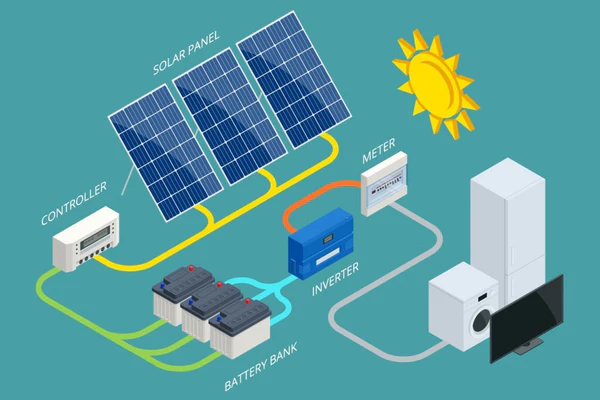
Cách tính dung lượng pin năng lượng mặt trời? 3 Các bước để định cỡ hoàn hảo
(Hướng dẫn thực hành cho các ngôi nhà và doanh nghiệp ở Châu Phi, với trọng tâm là Nam Phi)
Điều chỉnh công suất pin mặt trời phù hợp với lịch trình cắt giảm tải ở Châu Phi
Ở các khu vực như Nam Phi và các vùng khác của Châu Phi, tình trạng mất điện thường xuyên và điện lưới không đáng tin cậy khiến hệ thống năng lượng mặt trời trở thành cứu cánh cho các gia đình và doanh nghiệp. Một thành phần quan trọng của bất kỳ thiết lập năng lượng mặt trời nào là pin, dự trữ năng lượng để sử dụng khi mặt trời không chiếu sáng. Tuy nhiên, Chọn sai dung lượng pin có thể dẫn tới lãng phí tiền bạc, không đủ điện, hoặc tuổi thọ pin bị rút ngắn.
Hướng dẫn này trình bày quá trình tính toán dung lượng pin năng lượng mặt trời thành ba bước đơn giản, phù hợp với nhu cầu năng lượng đặc biệt của Châu Phi, khí hậu, và tiềm năng mặt trời.

Bước chân 1: Xác định mức tiêu thụ năng lượng hàng ngày của bạn
Trước khi định cỡ pin của bạn, bạn cần biếthộ gia đình hoặc doanh nghiệp của bạn sử dụng bao nhiêu năng lượng hàng ngày.
- Liệt kê tất cả các thiết bị điện bạn dự định sử dụng năng lượng mặt trời.
- Những thiết bị tiêu biểu trong các hộ gia đình châu Phi: đèn LED (5–10W), tủ lạnh (100–200W), TV (50–100W), người hâm mộ (50W), bộ sạc di động (10W), và máy bơm nước nhỏ (200–500W).
- Dành cho doanh nghiệp: Máy tính, bộ định tuyến, camera an ninh, hoặc máy móc.
- Tính toán năng lượng sử dụng hàng ngày (tính bằng watt-giờ, cái gì):
- Quyền lực (W) × Số giờ sử dụng mỗi ngày = Năng lượng hàng ngày trên mỗi thiết bị.
- Ví dụ:
- 5 đèn LED (10W mỗi) × 6 giờ = 300 cái gì
- Tủ lạnh (150W) × 24 giờ (bật/tắt chu kỳ) ≈ 900 cái gì
- TV (80W) × 4 giờ = 320 cái gì
- Tổng năng lượng hàng ngày = 300 + 900 + 320 = 1,520 cái gì (1.52 kWh)
- Yếu tố kém hiệu quả:
- Hệ thống năng lượng mặt trời bị mất năng lượng do biến tần hoạt động kém hiệu quả (~10–20%) và tổn thất sạc/xả pin (~10–15%).
- Nhân tổng năng lượng hàng ngày với1.3 (30% đệm):
- 1.52 kWh × 1.3 = ~2 kWh mỗi ngày.
Bước chân 2: Tính dung lượng pin dựa trên số ngày tự chủ
Dung lượng pin phụ thuộc vàobạn cần nguồn điện dự phòng bao nhiêu ngày (ngày tự chủ). Ở Nam Phi, nơi việc sa thải tải diễn ra phổ biến, 2–3 ngày tự chủ là thiết thực.
1.Công thức:
Dung lượng pin(kWh)=Năng lượng hàng ngày(kWh)×Những ngày tự chủ
- Ví dụ: Vì 2 ngày tự chủ:
2 kWh/ngày×2 ngày=4 kWh
2.Chuyển đổi kWh sang Ampe giờ (Ah):
- Pin được đánh giá bằng Ah ở điện áp cụ thể (ví dụ., 12V., 24V., 48V.).
- Công thức:

- Ví dụ: Đối với hệ thống 48V:

3.Yếu tố độ sâu xả (DoD):
- Hầu hết các loại pin (ví dụ., lithium-ion) không nên xả dưới 80–90% DoD. Pin axit chì được giới hạn ở 50% DoD.
- Điều chỉnh công suất:

- Ví dụ: Đối với lithium-ion (90% DoD):

Bước chân 3: Kết hợp dung lượng pin với đầu ra của bảng điều khiển năng lượng mặt trời
Pin của bạn phải phù hợp với khả năng sạc của tấm pin mặt trời.
- Kiểm tra năng lượng mặt trời hàng ngày:
- Trung bình Nam Phi4–6 giờ nắng cao điểm mỗi ngày (thay đổi theo mùa).
- Công thức:Đầu ra của bảng điều khiển năng lượng mặt trời(cái gì)=Công suất bảng ×Số giờ nắngĐầu ra bảng điều khiển năng lượng mặt trời(cái gì)=Công suất bảng ×Số giờ nắng
- Ví dụ: 400Tấm W × 5 số giờ nắng = 2,000 cái gì (2 kWh).
- Đảm bảo các tấm có thể sạc lại pin:
- Sản lượng năng lượng mặt trời hàng ngày phải vượt quá mức sử dụng năng lượng hàng ngày.
- Ví dụ: Nếu bạn sử dụng 2 kWh/ngày và tạo ra 2 kWh/ngày, bạn sẽ cần thêm dung lượng cho những ngày nhiều mây.
- Tài khoản mở rộng hệ thống:
- Bổ sung thêm 20–30% dung lượng pin cho nhu cầu trong tương lai (ví dụ., thêm thiết bị).
Những cân nhắc chính cho người dùng châu Phi
- loại pin:
- Liti-ion: Tuổi thọ dài hơn (10+ năm), DoD cao hơn (90%), nhưng tốn kém.
- Axit chì: Rẻ hơn nhưng tuổi thọ ngắn hơn (3–5 năm) và DoD thấp hơn (50%).
- Nhiệt độ:
- nhiệt độ cao (phổ biến ở Châu Phi) giảm hiệu quả sử dụng pin. Lắp pin ở nơi có bóng râm, khu vực thông gió.
- Hỗ trợ địa phương:
- Chọn thương hiệu có trung tâm dịch vụ trong khu vực của bạn (ví dụ., Huawei, Năng lượng Victron, hoặc nhà cung cấp địa phương).
Tính toán ví dụ cho một hộ gia đình Nam Phi
- Thiết bị gia dụng: 10 đèn (100tổng W), tủ lạnh (150W), TV (80W), cái quạt (50W).
- Năng lượng hàng ngày: 1.5 kWh + 30% đệm = 1.95 kWh.
- quyền tự chủ: 2 ngày → 3.9 kWh.
- Điện áp pin: 48V → 3.9 kWh × 1,000 / 48V = 81.25 Ah.
- Liti-ion (90% DoD): 81.25 Ah / 0.9 ≈ 90 Ah.
- Pin khuyến nghị: 100 À, lithium-ion (48V.).
Lời khuyên cuối cùng
- Sử dụng công cụ tính toán năng lượng mặt trời để có độ chính xác.
- Tham khảo ý kiến người cài đặt địa phương để xác thực thiết kế của bạn.
- Ưu tiên các thiết bị tiết kiệm năng lượng để giảm kích thước và chi phí pin.
Bằng cách làm theo các bước sau, bạn sẽ đảm bảo hệ thống pin năng lượng mặt trời đáp ứng nhu cầu của bạn, sống sót sau khi giảm tải, và chịu được khí hậu Châu Phi. 🌞🔋
Đọc thêm:
- [Hướng dẫn cơ bản về pin lithium 48V 100Ah treo tường: Trả lời 5 Câu hỏi thường gặp chính]
- [48Pin năng lượng mặt trời V 200Ah Uganda: Giải quyết sự cố mất điện & Tiết kiệm chi phí]
10kWh Pin LiFePO4 10Chi phí pin năng lượng mặt trời kWh ở Myanmar 25Hệ thống pin kWh Tất cả trong một BESS Container 4MWh Ả Rập Xê Út Nhà sản xuất BESS Trung Quốc Pin gia đình rẻ nhất Giải pháp BESS Trung Quốc Bán buôn DDP Trung Quốc Nhà máy Trung Quốc Pin LiFePO4 BESS quy mô lưới Trung Quốc Các nhà cung cấp OEM Trung Quốc Bộ lưu trữ pin thương mại Kenya Giải pháp DC ESS Giải pháp DDP trực tiếp tới DRC Trực tiếp Trung Quốc tới Châu Phi Trực tiếp Trung Quốc tới Châu Phi Pin pin lưu trữ năng lượng Hệ thống lưu trữ năng lượng Lãnh đạo pin lithium toàn cầu Pin hạng A Nhà cung cấp bộ lưu trữ pin quy mô lưới Trang chủ Pin cho các gia đình Hà Lan lưu trữ năng lượng gia đình BESS công nghiệp Kenya Axit chì vs. Pin Lithium-Ion LiFePO4 Pin LiFePO4 Pin LiFePO4 ở Nam Phi Pin LifePo4 Công nghệ pin LifePO4 Nhà phân phối LiFePO4 tại Iraq LiFePO4 ESS Kenya Pin Lithium-Ion pin lithium ion Giá thấp hơn Xu hướng thị trường Tủ làm mát chất lỏng ngoài trời Mua sắm LiFePO4 của Saudi Giải pháp BESS có thể mở rộng cho ngành Tấm năng lượng mặt trời hệ mặt trời Xếp chồng tất cả trong một Bán buôn pin năng lượng mặt trời LiFePO4 Bán buôn pin năng lượng mặt trời
Một bình luận