
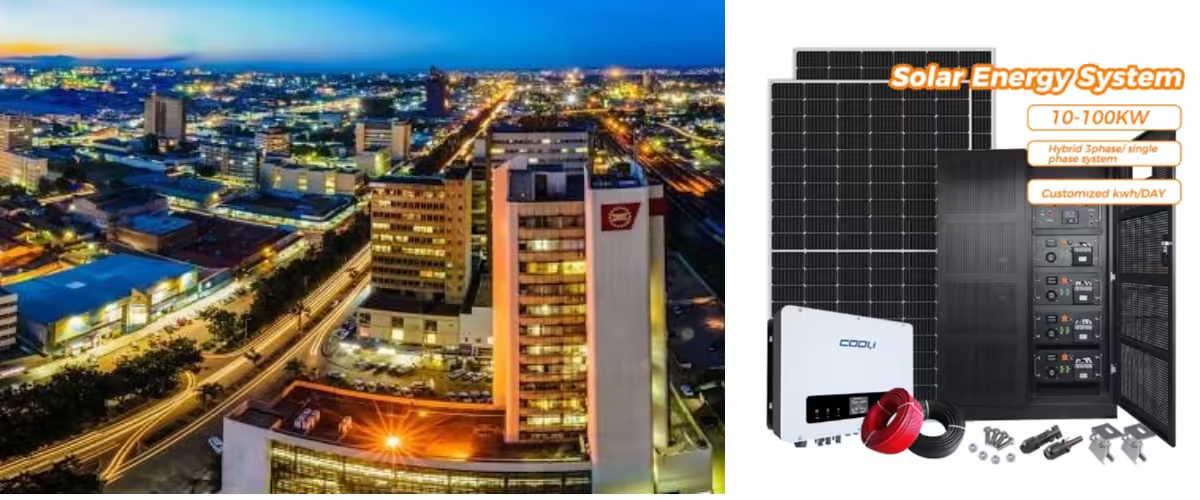
El auge solar de Zambia: Los mejores inversores para una energía confiable!
1.La estructura de poder de Zambia
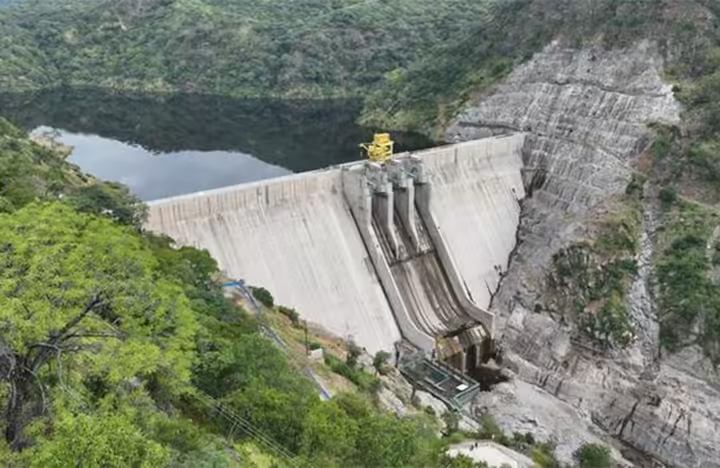
La estructura de generación de energía de Zambia se basa principalmente en la energía hidroeléctrica., complementado con otras formas de generación de energía. Con abundantes recursos hídricos, La energía hidroeléctrica es la principal fuente de electricidad del país., representando aproximadamente 80% de la generación total de energía de Zambia. Según datos facilitados por el CEIC, La generación eléctrica total de Zambia en 2022 era 19,399 GWh, que disminuyó ligeramente a 19,373 GWh en 2023. La gran dependencia del país de la energía hidroeléctrica lo hace vulnerable a condiciones climáticas extremas., especialmente durante las estaciones secas, cuando las precipitaciones insuficientes provocan niveles más bajos de agua en las centrales hidroeléctricas, afectando significativamente el suministro eléctrico.
2.Grave escasez de energía en Zambia
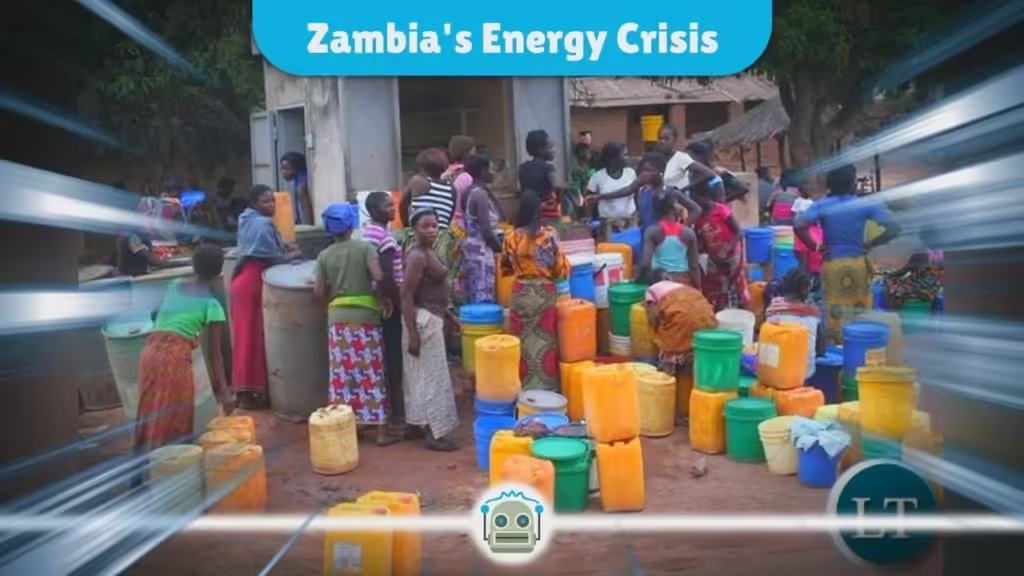
Zambia se enfrenta actualmente a una grave escasez de energía. A partir de la última actualización de agosto 15, 2024, Los niveles de agua en el embalse de la central hidroeléctrica más grande de Zambia han ido disminuyendo continuamente., dejando sólo alrededor 10% de agua utilizable para generación de energía. Como resultado, Se espera que el déficit energético aumente en 300 megavatio.
La capacidad instalada total de Zambia se sitúa en 3,777 megavatio, mientras que la demanda máxima promedio de electricidad del país se mantiene en 2,400 megavatio. Sin embargo, la capacidad de generación de energía disponible promedia solo 890 megavatio, provocando un déficit de energía de 1,510 megavatio. La empresa eléctrica nacional de Zambia, junto con otros comerciantes de energía, esta importando 496 MW de electricidad de la región del sur de África, pero la escasez total de energía aún supera 1,000 megavatio.
Debido a la insuficiencia de precipitaciones durante el 2023-2024 temporada de lluvias, lo que provocó una disminución en los niveles de agua del embalse, La empresa eléctrica de Zambia anunció en marzo un programa de desconexión de carga diaria de 8 horas 2024. Este horario se fue ampliando paulatinamente., y a partir de septiembre 1, Los cortes de energía diarios aumentarán de 14 horas para 17 horas. En respuesta a la actual crisis energética, El gobierno de Zambia está fomentando la inversión en fuentes de energía alternativas., particularmente la energía solar.
3.Aumento de los precios de la electricidad en Zambia
Los precios de la electricidad en Zambia han sido tradicionalmente relativamente bajos.. Sin embargo, debido a las recientes condiciones de sequía que afectan la generación de energía hidroeléctrica, la Corporación de Suministro de Electricidad de Zambia (ZESCO) ha ajustado su estructura de precios de la electricidad. Según un informe de Zambia
medios de comunicación en agosto 18, 2024, ZESCO ha ampliado sus niveles de precios existentes e introducido diferentes planes de ajuste para usuarios de electricidad residenciales y comerciales..
Para consumidores de electricidad residenciales:
El precio de la electricidad por primera vez. 100 kWh (tarifa de salvavidas) permanecerá sin cambios.
El aumento de tarifas propuesto oscilará entre 50% a 156%, afectando aproximadamente 44% de los hogares de Zambia (417,365 hogares).
La tarifa para el primer y segundo nivel de consumo se mantendrá sin cambios para evitar cargas financieras adicionales para los hogares de bajos ingresos..
Para consumidores comerciales de electricidad.:
Para el uso de electricidad a continuación 500 kWh, el precio permanecerá sin cambios.
Para consumo de electricidad superior 500 kWh, los aranceles aumentarán, con un ajuste propuesto de aproximadamente 39%.
Para familias de bajos ingresos, el mantenimiento de la tarifa vital sin cambios garantiza que sus costes de electricidad no aumentarán. Sin embargo, para los hogares que consumen más allá de este límite, Los gastos de electricidad pueden aumentar significativamente..
El aumento de los precios de la electricidad también aumentará los costes operativos de las empresas en Zambia., Especialmente para industrias con alto consumo de electricidad., potencialmente impactando sus operaciones. Sin embargo, por otro lado, El aumento de los precios de la electricidad y la escasez de energía pueden acelerar el crecimiento del mercado de energía solar de Zambia.. Se espera que estos factores impulsen el desarrollo de solar fotovoltaica residencial (fotovoltaica) proyectos y aumentar la demanda de productos relacionados con la energía solar, como inversores solares, sistemas de generación de energía solar, y paneles solares fotovoltaicos.
Capacidad de almacenamiento solar recomendada para hogares en Zambia
Basado en el consumo de energía del hogar., Se recomiendan las siguientes capacidades de almacenamiento.:
- Hogares pequeños (1-3 gente)
– Consumo diario: 5kWh – 7kWh
– Almacenamiento recomendado: 5kWh – 10kWh - Hogares medianos (4-6 gente)
– Consumo diario: 8kWh – 12kWh
– Almacenamiento recomendado: 10kWh – 15kWh - Hogares Grandes (6+ gente)
– Consumo diario: 12kWh – 20kWh
– Almacenamiento recomendado: 15kWh – 20kWh+(módulos ampliables)
Sistema de generación de energía solar fuera de la red adecuado para Zambia
Zambia tiene una población total de 20.72 millón (2023). Actualmente, La tasa de cobertura de electricidad entre la población de Zambia es 25%, mientras que el nivel de cobertura eléctrica en las zonas rurales es inferior al 5%. La electricidad es la base del desarrollo industrial.. Sin fuente de alimentación confiable, No puede haber una producción industrial y un desarrollo económico estables.. La electricidad está relacionada con la vida diaria de las personas.. Si hay un corte de energía prolongado todos los días, La calidad de vida de la población local inevitablemente disminuirá significativamente.. En la actual situación de escasez de energía en Zambia, cómo mejorar eficazmente el problema del consumo de electricidad? Entonces el sistema de generación de energía solar es una buena solución, y el sistema de generación de energía solar fuera de la red es una solución de energía solar muy adecuada para muchas familias y empresas en Zambia.
Sistemas de generación de energía solar. se dividen en sistemas de generación de energía solar fuera de la red, sistemas de generación de energía solar conectados a la red, y sistemas híbridos de generación de energía solar.
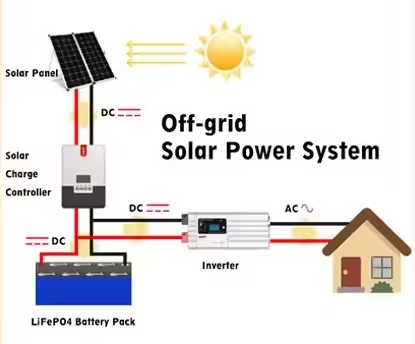
El sistema de generación de energía solar fuera de la red Es un sistema de generación de energía independiente que no depende de la red eléctrica pública.. Puede suministrar energía de forma independiente a hogares o pequeñas comunidades., solucionando el problema de la falta de cobertura de la red eléctrica. El sistema utiliza paneles solares para convertir la energía solar en energía eléctrica y almacenar energía eléctrica para su uso nocturno.. Al usar electrodomésticos, La energía CC generada por paneles solares o almacenada en baterías se convierte en energía CA mediante inversores solares para uso de cargas de equipos..
Los sistemas de generación de energía solar fuera de la red requieren baterías de almacenamiento de energía. La mayor ventaja es que pueden generar electricidad de forma independiente y no se verá afectado por fallas de red o cortes de energía. Esto hace que los sistemas de generación de energía solar fuera de la red sean muy prácticos en áreas remotas o lugares donde hay falta de cobertura de la red., como zonas rurales o zonas montañosas. Para los habitantes de Zambia que suelen sufrir cortes de energía, Los sistemas de generación de energía solar fuera de la red son una opción rígida y muy adecuada., especialmente en un país con abundante energía solar. Puede llevar electricidad estable y confiable a los zambianos, mejorar las condiciones de electricidad, y mejorar la calidad de vida sin preocuparte por los cortes de energía.
Sistemas de generación de energía solar conectados a la red son un sistema que convierte la energía CC generada por paneles solares en energía CA que cumple con los requisitos de la red a través de un inversor conectado a la red y luego se conecta a la red pública para lograr compartir y asignar energía.. Este sistema puede vender electricidad a empresas de red y obtener electricidad de la red cuando sea necesario.. La mayor ventaja del sistema de generación de energía solar conectado a la red es que puede interactuar con la red eléctrica y existe la posibilidad de complementariedad energética.. El sistema de generación de energía solar conectado a la red no requiere equipos de almacenamiento de energía adicionales. Es adecuado para ciudades y zonas industriales con buena cobertura de red y gran demanda de energía.. Es adecuado para proyectos nacionales de generación de energía fotovoltaica a gran escala., pero no apto para hogares de Zambia. El sistema conectado a la red debe estar conectado a la red eléctrica pública para funcionar.. En caso de un corte de energía, el sistema dejará de funcionar y no podrá proporcionar electricidad a la familia. La conexión a la red depende de la luz solar., y el tipo conectado a la red generalmente no está equipado con baterías. Una vez que el corte de energía, el sistema no puede suministrar energía, y no se puede utilizar en días nublados o de noche.
El sistema híbrido de generación de energía solar. Combina las ventajas del sistema aislado y del sistema conectado a la red.. Puede vender el exceso de electricidad a la compañía eléctrica., y cuando la red eléctrica se queda sin energía, Puede proporcionar electricidad a la familia a través de la batería de almacenamiento de energía fotovoltaica.. La red y la energía solar pueden cargar la batería al mismo tiempo.. Es muy flexible y puede lograr el propósito de autogeneración y autouso., y el propósito del excedente de electricidad a la red, para maximizar la utilización de la generación de energía fotovoltaica y mejorar la eficiencia de la utilización de la energía fotovoltaica.
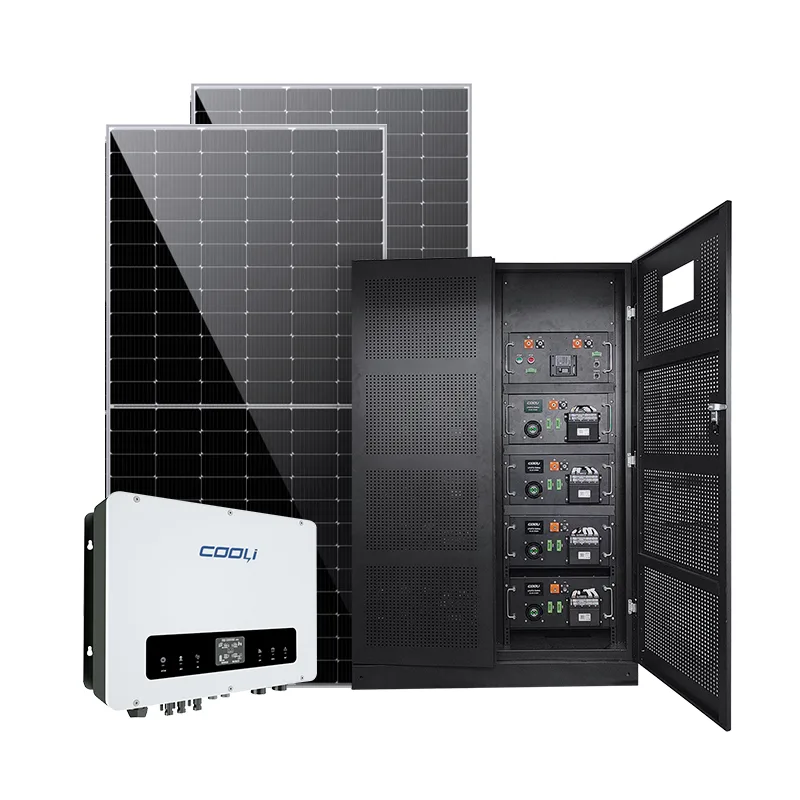
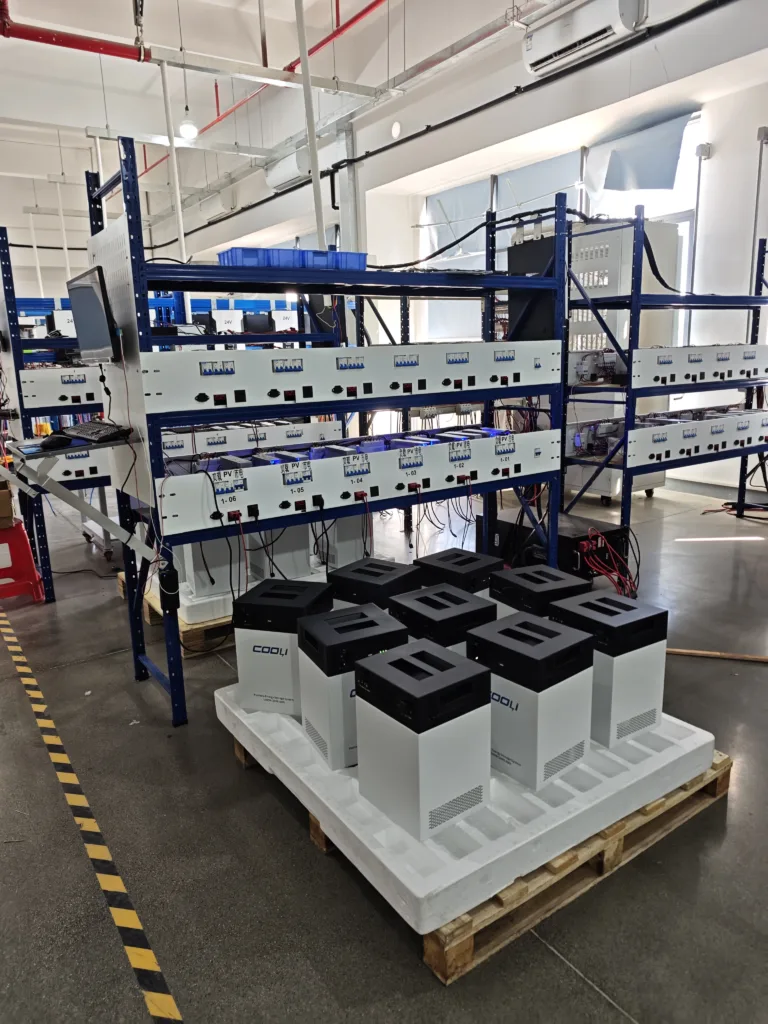
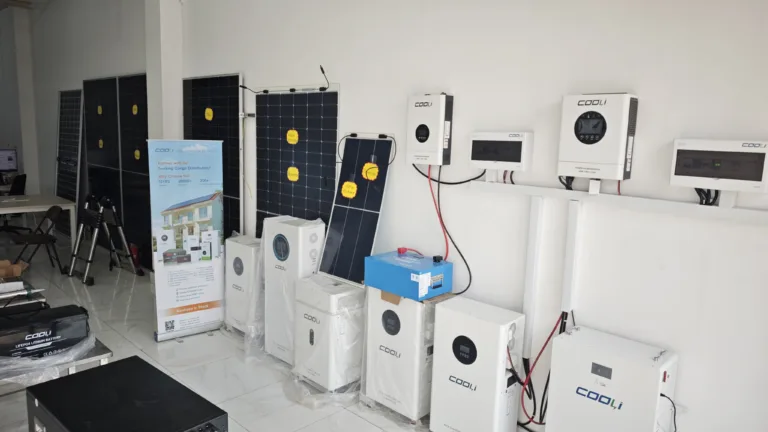
Coolithium 3KW 5KW 10KW 15KW 30KW fuera de la red Solución de Sistema Solar
Para abordar estos desafíos, el coolicio Coolithium 3KW 5KW 10KW 15KW 30KW fuera de la red Solución de Sistema Solar proporciona una solución confiable, Optimización del almacenamiento de energía solar y mejora de la estabilidad energética..
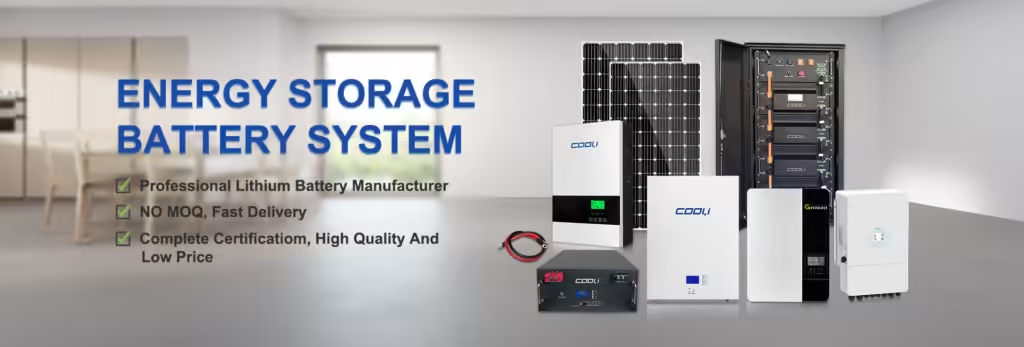
1. Gran capacidad de almacenamiento para 24/7 Fuente de alimentación
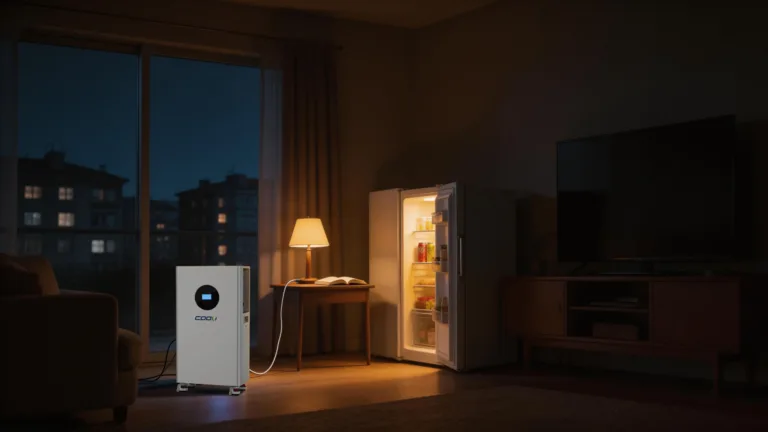
Equipado con LiFePO4 de alta eficiencia (Fosfato de hierro y litio) baterias, el sistema soporta descarga profunda, Ofrece energía duradera incluso durante la noche o en días nublados..
2. Gestión inteligente de la energía para una máxima eficiencia
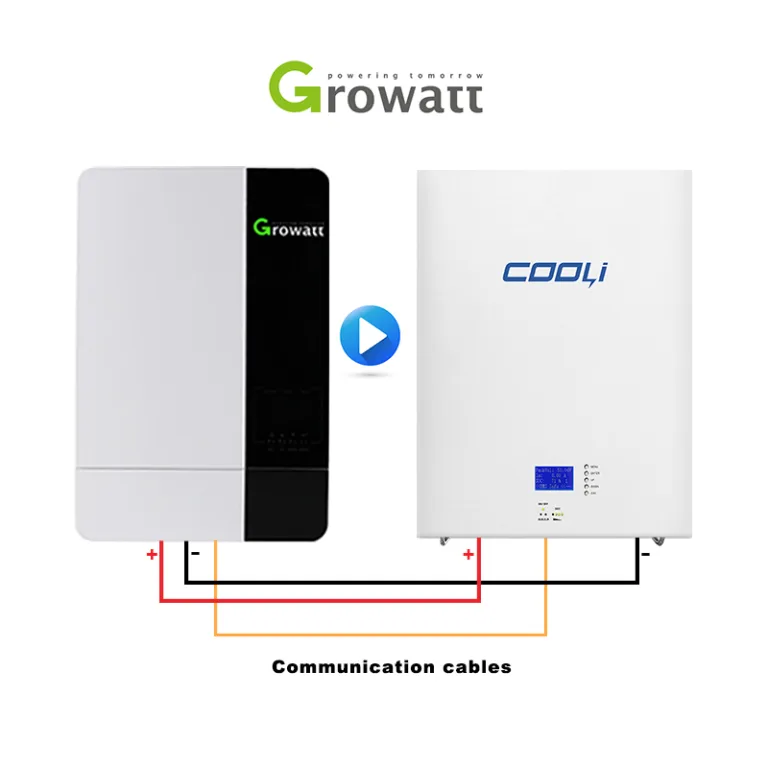
Se integra perfectamente con inversores solares para gestionar de forma inteligente la carga y descarga., priorizar el suministro de energía a los electrodomésticos y almacenar el exceso de energía para su uso posterior.
3. Diseño modular para una expansión flexible
Los hogares con mayores necesidades de energía pueden ampliarse conectando múltiples unidades de almacenamiento, garantizando una solución personalizable y preparada para el futuro.
4. Alta Seguridad & Bajos costos de mantenimiento
Baterías LiFePO4 son conocidos por su estabilidad térmica, Reducir el riesgo de sobrecalentamiento o incendios.. Además, el sistema requiere un mantenimiento mínimo, Reducir los costos a largo plazo..
5. Ideal para diversas aplicaciones domésticas
Ya sea en hogares urbanos o zonas rurales, El sistema solar fuera de la red Coolithium 3KW 5KW 10KW 15KW 30KW ayuda a los hogares a aumentar la independencia energética mientras disfrutan de un suministro de energía estable y continuo.
Conclusión
Para los hogares de Zambia, La escasez de almacenamiento solar se puede resolver eficazmente mediante la adopción de un sistema de almacenamiento eficiente y confiable.. El sistema solar fuera de la red Coolithium 3KW 5KW 10KW 15KW 30KW ofrece alta capacidad, gestión inteligente de la energía, y características de seguridad robustas, convirtiéndolo en una solución ideal. No solo mejora la utilización de la energía solar, pero también garantiza el suministro de electricidad las 24 horas del día para una vida más segura., económico, y solución energética sostenible para el hogar.
Si está buscando una solución eficaz de almacenamiento de energía en el hogar, El sistema solar Coolithium 3KW 5KW 10KW 15KW 30KW es su mejor opción!
Productos relacionados

10Sistema de almacenamiento de batería solar híbrido kw-100kw

50Sistema de almacenamiento de energía en kw
Sistema solar híbrido (10kw-100kw)

Sistema solar fuera de la red


10Baterías LiFePO4 kWh 10Costos de las baterías solares kWh en Myanmar 25Sistemas de baterías kWh Todo en uno Contenedor BESS 4MWh Arabia Saudita BESS Fabricante China La batería doméstica más barata Soluciones BESS de China China DDP al por mayor Baterías LiFePO4 de fábrica de China BESS a escala de red de China Proveedores chinos del OEM Almacenamiento de baterías comerciales Kenia Soluciones DC ESS Solución DDP directa a la República Democrática del Congo Dirigir China a África Batería directa de China a África batería de almacenamiento de energía Sistemas de almacenamiento de energía Líderes mundiales en baterías de litio Batería de grado A Proveedor de almacenamiento de baterías a escala de red Baterías domésticas para familias holandesas almacenamiento de energía en el hogar BESS industrial Kenia Plomo-ácido vs.. Baterías de iones de litio LiFePO4 Baterías LiFePO4 Baterías LiFePO4 en Sudáfrica Batería LifePo4 Tecnología de batería LifePO4 Distribuidor de LiFePO4 en Irak LiFePO4 ESS Kenia Batería de iones de litio batería de iones de litio Precios más bajos Tendencias del mercado Gabinete de refrigeración líquida para exteriores Adquisición saudita de LiFePO4 Soluciones BESS escalables para la industria Paneles solares sistema solar Apilamiento todo en uno Venta al por mayor Baterías solares LiFePO4 Venta al por mayor Baterías solares
Nuestra empresa busca inversores fiables y adecuados para el mercado de Zambia., planificar compras al por mayor. ¿Los modelos mencionados en su artículo están disponibles para un suministro estable a largo plazo?? ¿Podría enviarnos su lista de precios al por mayor??
Gracias por tu interés! Todos los modelos de inversores recomendados en el artículo se seleccionan para ofrecer un rendimiento estable y disponibilidad a largo plazo., ideal para la creciente demanda en Zambia. Ofrecemos precios al por mayor competitivos según la cantidad del pedido.. Por favor deje su información de contacto o correo electrónico, y nuestro equipo de ventas le enviará la cotización completa y el programa de suministro de inmediato!