
Indices IP de la batterie: Guide ultime de la poussière & Protection contre l'eau【2025】
Guide complet des indices IP de la batterie
1. Définition et structure des indices IP
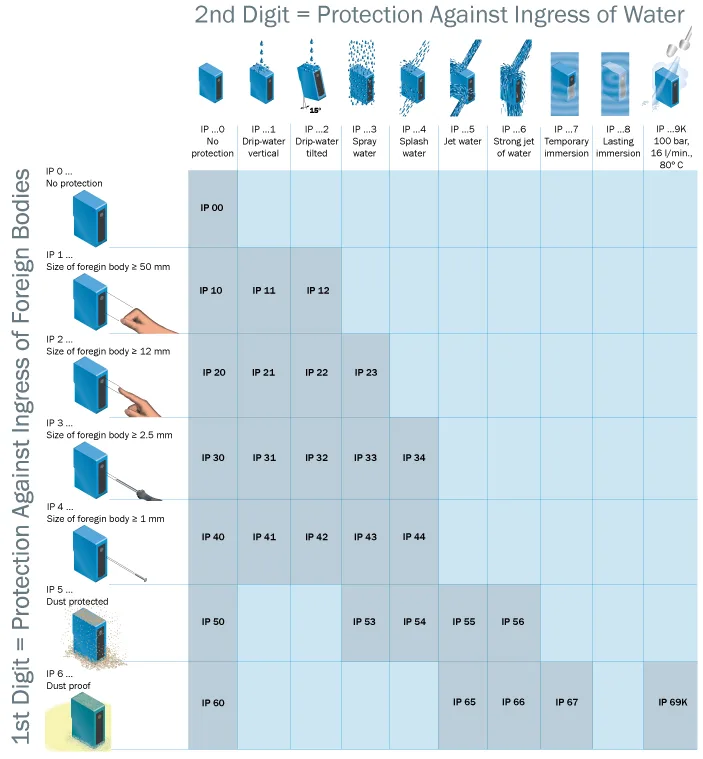
LeProtection contre la pénétration (IP) notation, défini par leCommission électrotechnique internationale (CEI 60529 Standard), classe l'efficacité des enceintes électriques contre les particules solides (par ex., poussière) et liquides (par ex., eau).
- Premier chiffre: Niveau de protection contre la poussière (0–6). Des chiffres plus élevés indiquent une protection plus forte. Exemples:
- 6: Etanche à la poussière (pas de pénétration de poussière).
- Deuxième chiffre: Niveau de résistance à l'eau (0–9). Des nombres plus élevés indiquent une meilleure protection de l’eau. Exemples:
- 7: Protégé contre l'immersion dans 1 mètre d'eau pour 30 minutes.
- 8: Protégé contre une immersion prolongée ou plus profonde (conditions spécifiées par le fabricant).
2. Indices IP et applications courants des batteries
Différents scénarios exigent des indices IP variables:
- IP20/IP22
- Cas d'utilisation: Systèmes de stockage d'énergie intérieurs (par ex., batteries solaires résidentielles). Protection de base contre la poussière et les gouttes.
- IP54/IP65
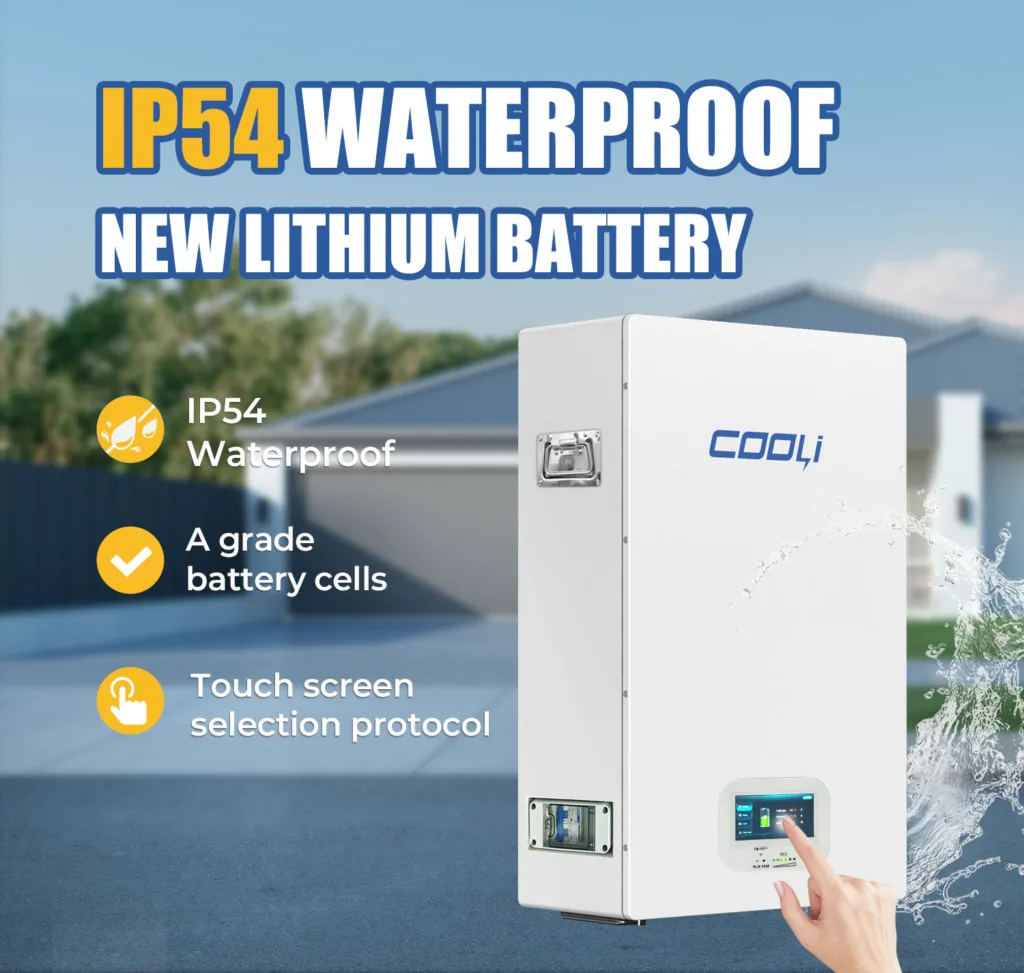
- Cas d'utilisation: Équipement extérieur (par ex., chariots élévateurs, voiturettes de golf). Résistance partielle à la poussière (niveau 5) et protection contre les éclaboussures (niveau 4) ou jets d'eau basse pression (niveau 5).
- IP67/IP68
- IP67: Largement utilisé dans les batteries de véhicules électriques (par ex., Hycan Z03). Survit à une immersion de 30 minutes dans 1 mètre d'eau, adapté aux fortes pluies ou aux inondations de courte durée.
- IP68: Conçu pour les environnements marins ou extrêmes, nécessitant une étanchéité à long terme.
- Systèmes de piles à combustible à hydrogène
- Nécessite généralement IP67 pour empêcher la poussière et l'humidité d'endommager la pile à combustible.
3. Normes de test et certification
- Méthodes de test
- Test de poussière: Simulé à l'aide de chambres à sable/poussière (par ex., GB/T 2423.37).
- Analyse de l'eau: Buses de pulvérisation, cuves d'immersion, etc.. (par ex., GB/T 4208-2017).
- Attestation
- Conformité avec CE, UL, ou les réglementations régionales sont obligatoires pour l'accès au marché.
4. Considérations clés et conseils d'utilisation
Même les batteries à indice IP élevé nécessitent de la prudence:
- Évitez les conditions extrêmes
- Les batteries IP67 résistent à une immersion à court terme mais peuvent tomber en panne si elles sont immergées à long terme (par ex., connecteurs corrodés).
- Stratégies d'exposition à l'eau
- Pour les véhicules électriques, conduisez lentement dans les zones inondées pour éviter que les montées d’eau n’endommagent la batterie.
- Actions suite à un dégât des eaux
- Éteignez immédiatement et demandez une inspection professionnelle en cas d'immersion pour éviter les courts-circuits ou les incendies..
- Entretien
- Vérifier régulièrement les joints, intégrité du logement, et des composants vieillissants pour maintenir les performances IP.
5. Résumé
La sélection du bon indice de protection IP est essentielle pour la sécurité et la longévité de la batterie:
- Intérieur/faible risque: IP20–IP54.
- Extérieur/humidité élevée: IP65 ou supérieur.
- Environnements extrêmes (Marin, Inondation): Privilégier IP67/IP68.
Pour des protocoles de test détaillés ou des certifications, se référer à CEI 60529 ou GB/T 4208.
Ce guide équilibre précision technique et lisibilité, ce qui le rend adapté aux ingénieurs, acheteurs, et les utilisateurs finaux. Faites-moi savoir si vous avez besoin d'une personnalisation supplémentaire!
Un Commentaire