
Bateri LiFePO4 lwn. Litium-Ion: Panduan Komprehensif
Apabila memilih antara LiFePO4 (Litium Besi Fosfat) dan litium-ion (Li-ion) bateri, memahami perbezaan mereka adalah penting untuk mengoptimumkan prestasi, keselamatan, dan kos. Panduan ini memecahkan kimia mereka, kelebihan, batasan, dan aplikasi yang ideal untuk membantu anda membuat keputusan termaklum.

Apakah itu Bateri LiFePO4?
Bateri LiFePO4 ialah subjenis bateri litium-ion yang digunakan katod berasaskan fosfat (LiFePO₄) bukannya bahan berasaskan kobalt atau nikel seperti bateri Li-ion tradisional. Kimia unik ini memberikan mereka kestabilan haba yang luar biasa, keselamatan, dan panjang umur.
Kelebihan Bateri LiFePO4
1. Keselamatan Unggul
Bateri LiFePO4 ialah tahan terhadap pelarian haba, tindak balas berantai yang berbahaya menyebabkan kebakaran dalam bateri Li-ion konvensional. Struktur kimianya yang stabil meminimumkan risiko terlalu panas walaupun dalam keadaan yang melampau.
2. Jangka hayat yang lebih lama
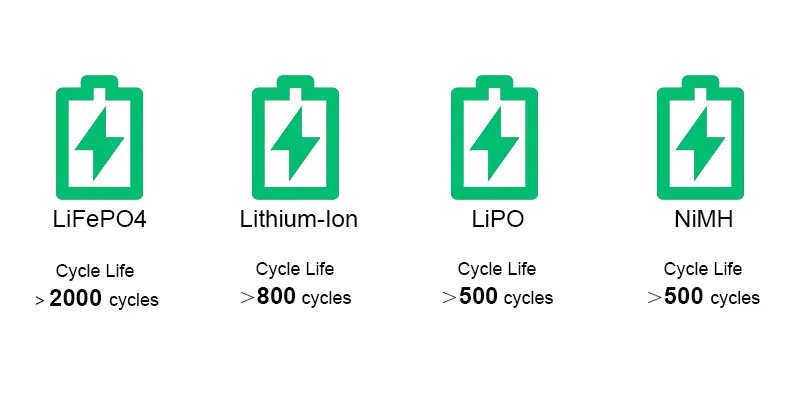
Dengan 2,000–5,000 kitaran pengecasan (lwn. 500–1,000 untuk Li-ion), Bateri LiFePO4 cemerlang dalam aplikasi yang memerlukan berbasikal yang kerap, seperti storan tenaga suria atau kenderaan elektrik.
3. Mesra Alam Sekitar
Mereka menggunakan bahan bukan toksik (besi, fosfat) dan lebih mudah untuk dikitar semula berbanding dengan bateri Li-ion yang bergantung kepada kobalt.
4. Toleransi Suhu Luas
LiFePO4 beroperasi dengan cekap dalam -20°C hingga 60°C julat, mengatasi prestasi Li-ion yang lebih sempit 0°C hingga 45°C toleransi.
5. Keberkesanan Kos Sepanjang Masa
Walaupun lebih mahal di muka, jangka hayat mereka yang panjang mengurangkan kos penggantian. Contohnya, kos hayat bateri LiFePO4 ialah 80–200/kWj∗∗vs.Li−ion∗∗80–200/kWj∗∗lwn.Li−ion's∗∗300–600/kWj.
Kelemahan Bateri LiFePO4
1. Ketumpatan Tenaga Rendah
Kedai LiFePO4 90–120 Wj/kg, kurang daripada Li-ion 150–250 Wj/kg, menjadikannya lebih besar untuk aplikasi bertenaga tinggi seperti telefon pintar.
2. Kos Permulaan yang Lebih Tinggi
Kimia lanjutan mereka menimbulkan kos pendahuluan, walaupun ini diimbangi oleh simpanan jangka panjang.
3. Prestasi Kuasa Tinggi Terhad
Kadar nyahcas yang lebih rendah menjadikannya kurang sesuai untuk aplikasi yang memerlukan letupan tenaga yang cepat, seperti alatan kuasa.
LiFePO4 lwn. Litium-Ion: Perbandingan Utama
| Metrik | LiFePO4 | Litium-Ion |
|---|---|---|
| Kitaran Kehidupan | 2,000–5,000 kitaran | 500–1,000 kitaran |
| Ketumpatan Tenaga | 90–120 Wj/kg | 150–250 Wj/kg |
| Keselamatan | Risiko pelarian haba minimum | Risiko lebih tinggi dengan reka bentuk berasaskan kobalt |
| Julat Suhu | -20°C hingga 60°C | 0°C hingga 45°C |
| kos (seumur hidup) | Lebih rendah | Lebih tinggi |
Adakah Bateri LiFePO4 Tahan Lebih Lama?
ya. Kimia teguh LiFePO4 membolehkan 3–5× jangka hayat lebih lama daripada Li-ion. Penyelenggaraan yang betul, seperti mengelakkan pelepasan dalam (> 80% DoD) dan suhu yang melampau, dapat memanjangkan lagi umur mereka.
Bateri Litium Mana Yang Paling Tahan Lama?
Bateri LiFePO4 memegang mahkota untuk umur panjang, dengan sehingga 5,000 kitaran dalam keadaan optimum. Sebaliknya, litium kobalt oksida (LCO) atau nikel-mangan-kobalt (NMC) Bateri li-ion merosot lebih cepat disebabkan oleh ketidakstabilan kimia.
Bolehkah Anda Mengecas LiFePO4 dengan Pengecas Li-ion?
Tidak disyorkan. LiFePO4 memerlukan yang lebih rendah voltan cas (3.6–3.65V setiap sel) lwn. Li-ion 4.2V. Menggunakan pengecas yang tidak sepadan berisiko mengecas kurang atau merosakkan bateri. Sentiasa gunakan a Pengecas khusus LiFePO4 untuk keselamatan dan kecekapan.
Kesimpulan: Adakah LiFePO4 Lebih Baik Daripada Litium-Ion?
LiFePO4 bersinar masukkritikal keselamatan, aplikasi kitaran panjang seperti simpanan solar, EV, dan peralatan industri. Namun begitu, Li-ion tradisional kekal unggul untukbertenaga tinggi, peranti padat seperti komputer riba. Pilihan anda bergantung pada keutamaan jangka hayat dan keselamatan berbanding ketumpatan tenaga.
Untuk penyelesaian yang disesuaikan, teroka produk LiFePO4 kami yang disyorkan di sini atau berunding dengan pakar untuk keperluan tersuai.
Teroka Lagi:
10Bateri LiFePO4 kWh 10Kos Bateri Suria kWj di Myanmar 25Sistem Bateri kWj All-in-One Kontena BESS 4MWj Saudi Pengeluar BESS China Bateri Rumah Termurah Penyelesaian BESS China Borong DDP China Bateri LiFePO4 Kilang China BESS Skala Grid China Pembekal OEM Cina Penyimpanan Bateri Komersial Kenya Penyelesaian ESS DC Penyelesaian DDP Terus ke DRC Teruskan China ke Afrika Teruskan China ke Bateri Afrika bateri simpanan tenaga Sistem Penyimpanan Tenaga Peneraju Bateri Litium Global Bateri Gred A Pembekal Storan Bateri Skala Grid Bateri Rumah untuk Keluarga Belanda simpanan tenaga rumah Perindustrian BESS Kenya Plumbum-Asid lwn. Bateri Litium-Ion LiFePO4 Bateri LiFePO4 Bateri LiFePO4 di Afrika Selatan Bateri LifePo4 Teknologi Bateri LifePO4 Pengedar LiFePO4 di Iraq LiFePO4 ESS Kenya Bateri Litium-Ion bateri ion litium Harga Lebih Rendah Aliran Pasaran Kabinet Penyejukan Cecair Luaran Perolehan LiFePO4 Saudi Penyelesaian BESS Berskala untuk Industri Panel Suria sistem suria Menyusun All-in-One Borong Bateri Solar LiFePO4 Borong Bateri Solar

Satu Komen