
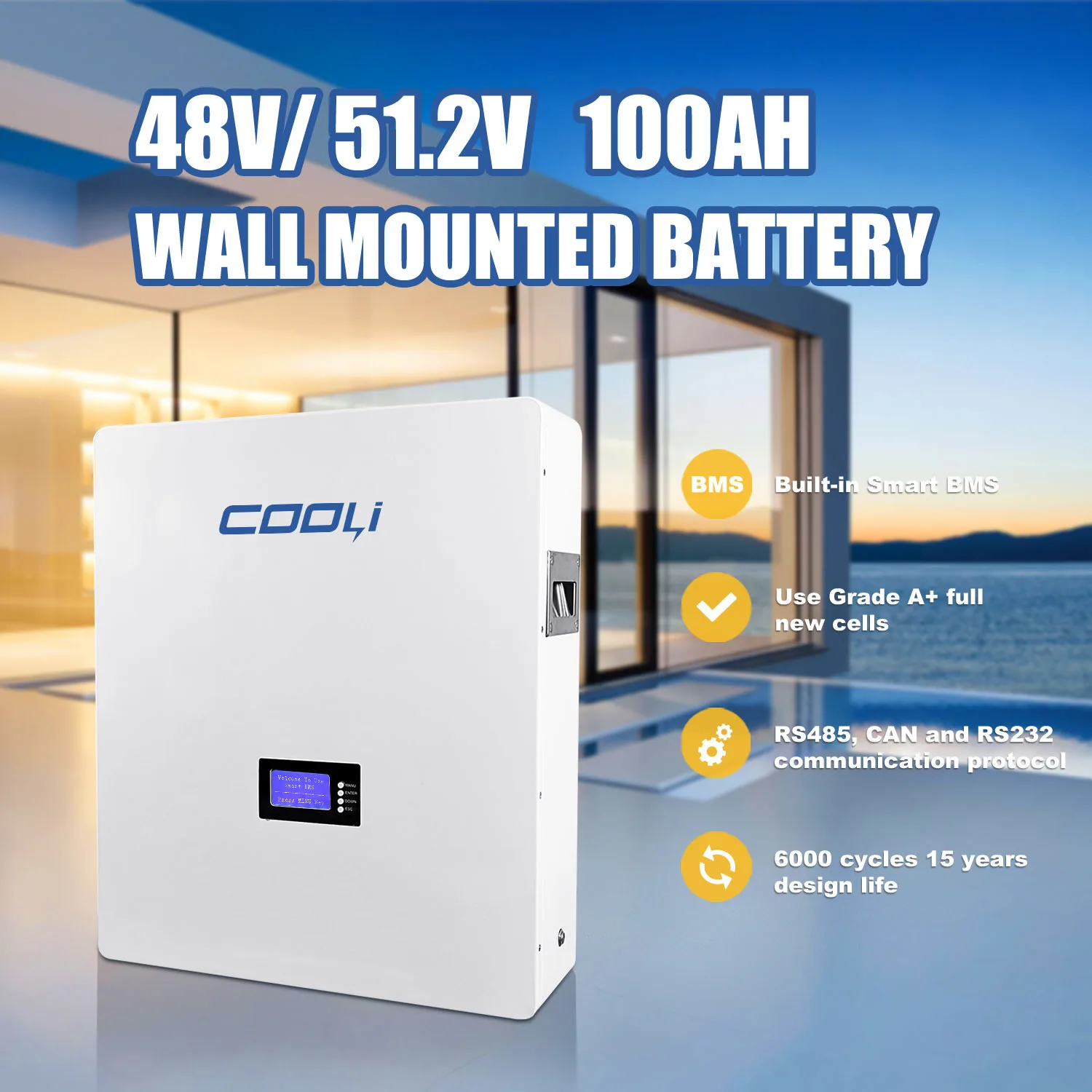
O guia definitivo para bateria de lítio 48V 100Ah montada na parede: Respondendo 5 Principais perguntas frequentes
À medida que o armazenamento de energia doméstico e os sistemas solares ganham popularidade, o48Bateria de lítio V 100Ah montada na parede tornou-se a melhor escolha por sua eficiência, design compacto, e segurança. Este artigo aborda as cinco perguntas mais comuns que os usuários fazem, combinando especificações técnicas com cenários do mundo real para fornecer insights acionáveis.
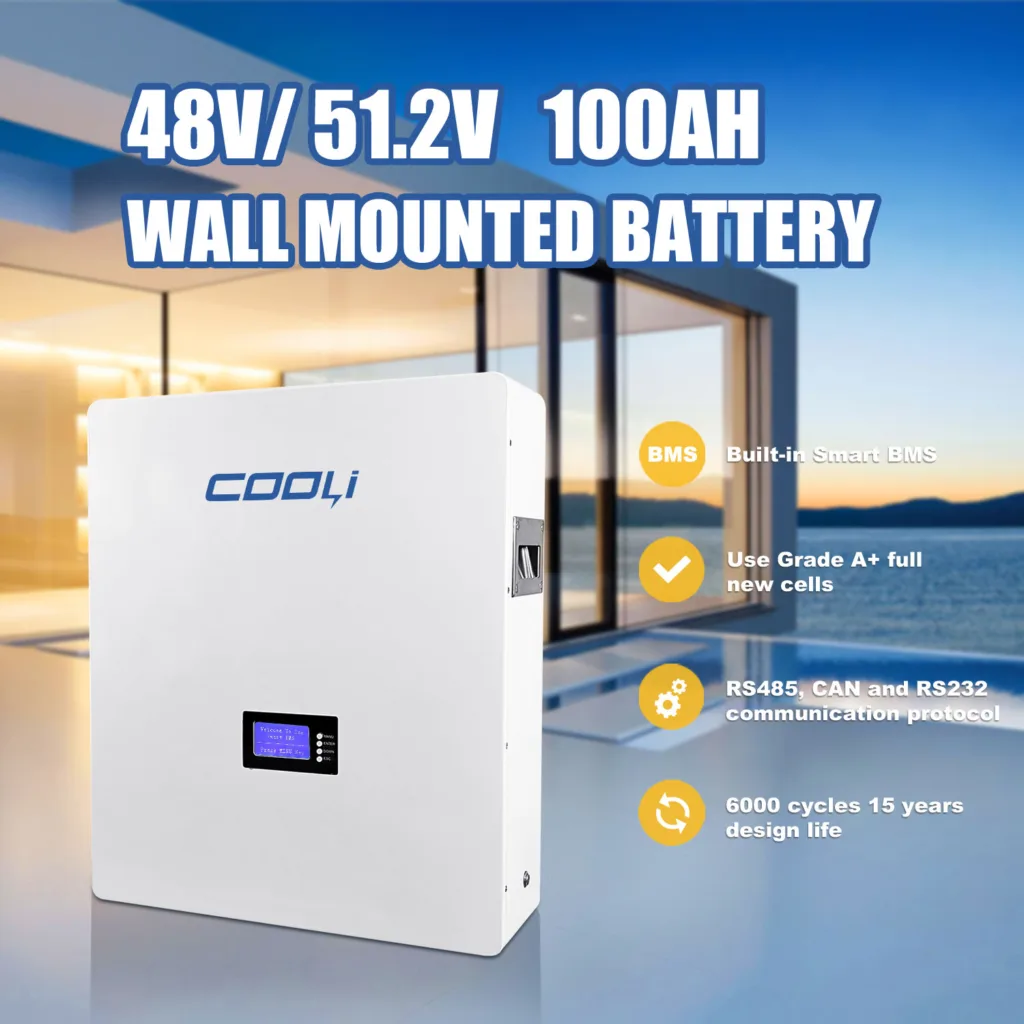
1. Quanto tempo durará uma bateria de lítio 48V 100Ah montada na parede?
O tempo de execução dependepotência de carga eeficiência do sistema. Use esta fórmula:
Tempo de execução (horas) = Capacidade da bateria (Ah) × Tensão (V) × Profundidade de Descarga (Departamento de Defesa) ÷ Carregar energia (C)
Exemplo:
- Departamento de Defesa: 80% (recomendado)
- Carregar: 500W eletrodomésticos
Cálculo:
100Ah×48V× 0.8 ÷ 500W ≈7.68 horas
❗Nota: Eficiência do inversor (~90%) e a temperatura podem reduzir o tempo de execução real.
2. 2Baterias ×100Ah vs.. 1Bateria ×200Ah: O que é melhor?
| Critérios | 2× Baterias 100Ah | 1Bateria ×200Ah |
|---|---|---|
| Escalabilidade | ✅ Expansível ao longo do tempo | ❌ Capacidade fixa |
| Manutenção | ❌ Correspondência complexa de tensão | ✅ Sistema simplificado |
| Redundância | ✅ Um falha, o outro funciona | ❌ Ponto único de falha |
| Espaço | ❗ Requer espaço de parede dupla | ✅ 50% economia de espaço |
| Eficiência de custos | Muitas vezes melhor (descontos em massa) | Custo inicial mais baixo possível |
Recomendação: Escolha uma única bateria de 200Ah para sistemas solares; opte por unidades duplas de 100Ah para investimentos faseados.
3. Quantos painéis solares são necessários para carregar uma bateria LiFePO4 de 100Ah?
Suposições:
- Energia total: 48V × 100Ah = 4.800Wh
- Eficiência de carregamento: 80% (incluindo perda do inversor)
- Luz solar diária: 4 horas
Fórmula:
Energia do painel solar (C) = Capacidade da bateria (O que) ÷ Horas de luz solar ÷ Eficiência
= 4.800Wh ÷ 4h ÷ 0.8 =1,500C
Isso requer três painéis de 500 W ou cinco painéis de 300 W.
🔋 Dica profissional: Combine com um controlador de carregamento MPPT para aumentar a eficiência 15%-30%.
4. Quanto tempo uma bateria de 100Ah pode funcionar em uma geladeira e uma TV?
| Dispositivo | Poder (C) | Uso Diário | Consumo Diário (O que) |
|---|---|---|---|
| Geladeira com baixo consumo de energia | 150 | 24 horas | 1,200 |
| TV LED | 100 | 5 horas | 500 |
| Total | 1,700O que |
Cálculo de tempo de execução:
Energia utilizável = 48V × 100Ah × 0.8 = 3.840Wh
Dias de energia = 3.840Wh ÷ 1.700Wh/dia ≈2.26 dias
⚠️ Reserve sempre 20% capacidade para emergências como dias nublados.
5. Devo carregar minha bateria LFP para 100% Diário?
Não! As baterias LiFePO4 prosperam nessas condições:
- Alcance ideal: 20%-90% cobrar
- Armazenamento de carga total acelera a degradação (~0,5%/mês)
- Descarga profunda (<10%) encurta o ciclo de vida
✅ Dicas de manutenção:
- Cobrar para 90%-95% diário
- Execute um completo 100% cobrar mensalmente para calibrar o BMS
- Evite carregar abaixo de 0°C (32°F)
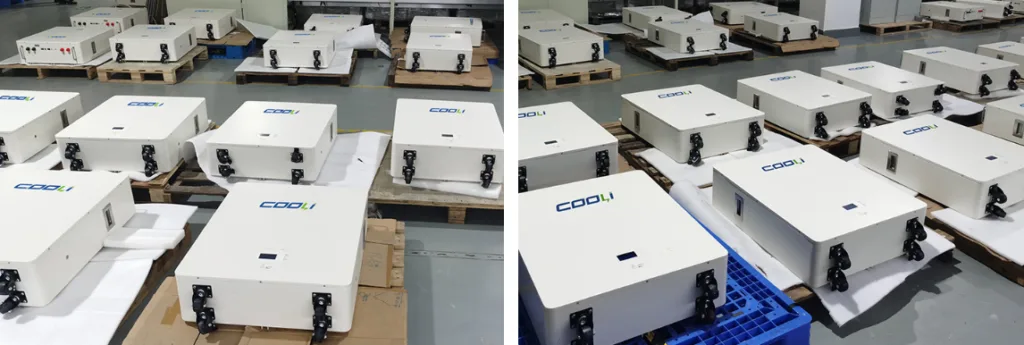
Por que escolher uma bateria de lítio montada na parede 48V 100Ah?
- Alta densidade de energia: Ocupa apenas 0,1㎡ de espaço na parede
- Longa vida útil: 2,000+ ciclos (≥10 anos)
- Controle térmico inteligente: Opera em -20°C a 60°C (-4°F a 140°F)
- Projeto modular: Expansível até 48V 400Ah
Seja para viver fora da rede, armazenamento solar, ou energia reserva, o48Bateria de lítio V 100Ah montada na parede oferece desempenho e valor incomparáveis. Consulte um profissional hoje para projetar sua solução de energia sustentável!
Leitura adicional:
- [Como calcular a capacidade da bateria solar? 3 Passos para o dimensionamento perfeito]
- [Instalação de bateria montada na parede: Evite estes 5 Erros]
Ótimo artigo! Estou pensando em mudar para uma bateria de lítio 48V 100Ah para minha configuração solar. Quão difícil é o processo de instalação na parede? Preciso de ajuda profissional, ou é compatível com DIY?
Quão seguras são essas baterias em ambientes de alta temperatura? Eu moro em uma região onde os verões atingem 95°F+ regularmente. O superaquecimento será um problema?
Obrigado pela sua pergunta! Embora o processo de instalação seja projetado para ser simples, é altamente recomendável consultar um técnico certificado, especialmente se você estiver integrando-o com sistemas solares. Baterias de lítio montadas na parede requerem montagem segura, fiação adequada, e conformidade com os códigos elétricos locais. Alguns usuários experientes em DIY cuidam disso sozinhos, mas a assistência profissional garante segurança e desempenho ideal.
Grande preocupação! Baterias de lítio modernas de 48V 100Ah, como os discutidos no guia, incluem sistemas de gerenciamento de bateria integrados (BMS) para monitorar a temperatura, tensão, e atual. Eles são projetados para operar com segurança em temperaturas de até 113°F (45°C), com recursos de desligamento automático se os limites forem excedidos. Para climas extremos, garanta ventilação adequada e evite luz solar direta durante a instalação. Sempre verifique as especificações de temperatura do fabricante para o seu modelo específico!
Sim, pode substituir baterias de chumbo-ácido, mas muitas vezes são necessárias modificações. As baterias de lítio têm diferentes perfis de carregamento, então você precisará de um carregador específico de lítio compatível ou de um controlador de carregamento que suporte a química do lítio. Adicionalmente, certifique-se de que as configurações de tensão do seu inversor correspondam ao sistema de 48V. Alguns usuários também atualizam a fiação para lidar com cargas de maior eficiência. Consulte sempre o manual do seu sistema ou um profissional para evitar problemas de compatibilidade!
Esta bateria pode ser usada como substituição direta de baterias de chumbo-ácido em um sistema fora da rede existente?? Quais modificações seriam necessárias?