
Stop the Confusion! 7 Must-Know Battery Specs That Will Save You Money.
The Core of Home Battery Performance: Understanding Specs for a Smart Investment
Understanding the core technical specifications of a home energy storage system is fundamental to making an informed investment and maximizing its long-term value. Battery storage is more than just a backup power source; it is a sophisticated piece of technology that serves as the cornerstone of energy independence, resilience, and financial savings. However, the array of terms and metrics—kWh, kW, DoD, C-rate, and various chemical acronyms—can be overwhelming for homeowners.
This guide is designed to demystify the essential technical language of home battery storage. By clearly explaining the key performance parameters, we empower you to ask the right questions, compare different products accurately, and set realistic expectations for how a system will perform in your specific home and climate. Whether your primary goal is to optimize solar self-consumption, ensure backup power during outages, or reduce your carbon footprint, the knowledge contained in the following sections will help you navigate the selection process with confidence and clarity. Let’s begin by breaking down the fundamental concepts that define a battery’s capacity, power, health, efficiency, and lifespan.
Q: What is the difference between kWh and kW in battery storage?
- kWh (Kilowatt-hour) is a unit of energy. It represents the total capacity or amount of energy stored in the battery. Think of it as the size of your fuel tank. For example, a 10 kWh battery can deliver 10 kilowatts of power for one hour, or 5 kilowatts for two hours, and so on.
- kW (Kilowatt) is a unit of power. It represents the rate at which energy can be instantly delivered or charged. Think of it as the size of the hose filling or draining the tank. A battery with a 5 kW power rating can provide a maximum of 5 kilowatts at any given moment.
In short: kWh = Capacity (How much), kW = Power (How fast).
Q: What is battery depth of discharge (DoD) and why is it important?
Depth of Discharge (DoD) is the percentage of a battery’s total capacity that has been used or discharged. For instance, if a 10 kWh battery has 2 kWh remaining, its DoD is 80%.
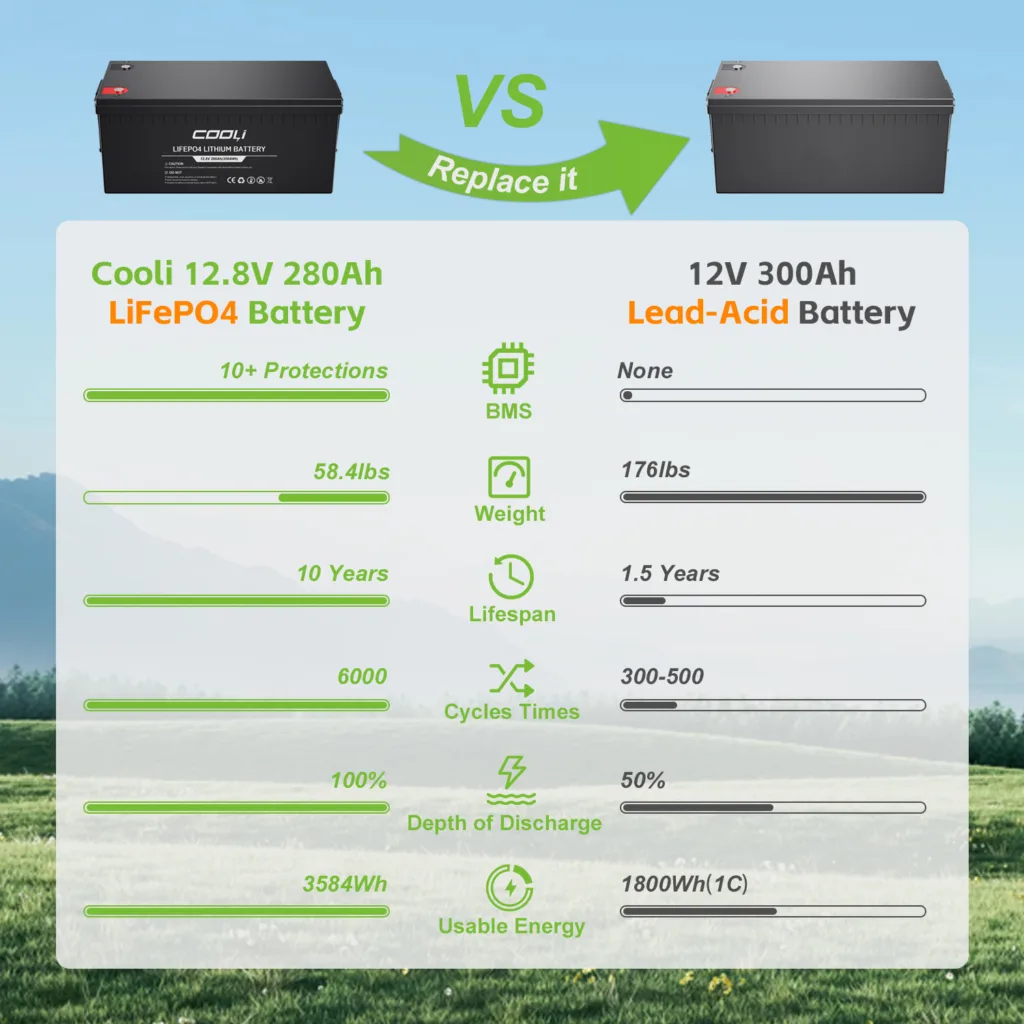
Why it’s important: It directly impacts battery lifespan. Deeper, regular discharges cause more stress on most battery chemistries. Manufacturers specify a recommended maximum DoD (e.g., 90% for lithium-ion, 50% for lead-acid) to optimize cycle life. Operating within this limit is crucial for ensuring your battery lasts for its advertised number of cycles.
Q: How does round-trip efficiency affect my energy savings?
Round-trip efficiency is the percentage of energy put into the battery that can be retrieved for use. For example, if you feed 10 kWh from your solar panels into a battery with 90% round-trip efficiency, you will get 9 kWh of usable electricity back out. The remaining energy is lost as heat during the charge and discharge process.
Impact on Savings: Higher efficiency (typically 90-98% for modern lithium-ion) means you waste less of your self-generated solar energy, maximizing your self-consumption and savings on grid electricity. Lower efficiency (e.g., 70-85% for lead-acid) means more energy loss, reducing the financial benefit.
Q: What’s the lifespan (cycle life) of lithium-ion vs. lead-acid batteries?
Lifespan is measured in cycle life (the number of full charge/discharge cycles a battery can complete before its capacity degrades to a specified percentage, usually 80% of its original capacity).
- Lithium-ion (LFP/NMC): Typically offers 3,000 to 7,000+ cycles, depending on chemistry and usage. This translates to 10+ years of daily cycling under ideal conditions.
- Lead-Acid (Flooded or AGM): Typically offers 500 to 1,500 cycles at a shallow DoD. To achieve a reasonable lifespan, they often cannot be deeply discharged daily, requiring a larger installed capacity for the same usable energy. Their effective lifetime is usually 3-7 years.
Lithium-ion batteries have a significantly longer cycle life and require less maintenance, making them the dominant choice for modern home storage despite a higher upfront cost.
Q: What are LFP (LiFePO4) and NMC batteries, and which is better for home use?
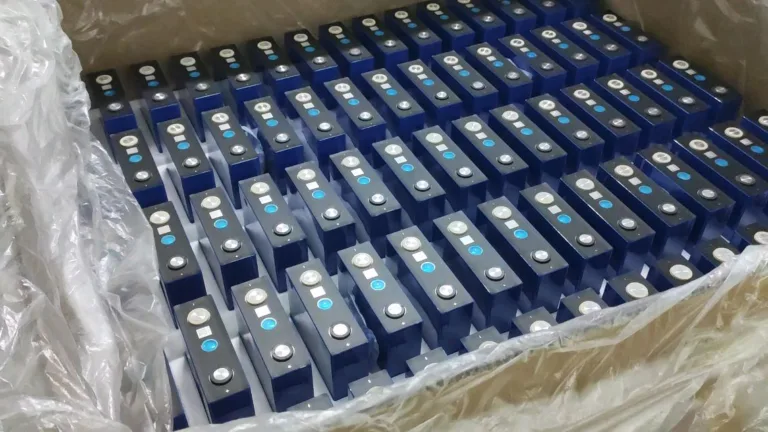
- LFP (Lithium Iron Phosphate): A lithium-ion chemistry known for exceptional safety, longevity, and thermal stability. It has a slightly lower energy density but is non-toxic and highly stable. Its cycle life is often 6,000+ cycles.
- NMC (Lithium Nickel Manganese Cobalt Oxide): Another lithium-ion chemistry known for higher energy density (more capacity in a smaller space) and excellent performance across a range of temperatures. Historically, it had a slightly lower cycle life than LFP, but advances are closing this gap.
Which is better for home use? Currently, LFP is generally favored for most stationary home storage applications due to its superior safety profile (lower fire risk), longer lifespan, and lack of cobalt (an ethical and cost advantage). NMC may be chosen where space is extremely limited, requiring the highest possible energy density. Both are excellent, but LFP’s safety and longevity make it a very compelling choice.
Q: What is the battery’s charge and discharge rate (C-rate)?
The C-rate indicates how quickly a battery can be charged or discharged relative to its total capacity.
- A 1C rate means a battery can be fully charged or discharged at a current equal to its capacity in one hour (e.g., a 10 kWh battery at 1C charges/discharges at 10 kW).
- A 0.5C rate means it would take 2 hours (e.g., 5 kW for a 10 kWh battery).
- A 2C rate means it can handle a very high power for 30 minutes (e.g., 20 kW for a 10 kWh battery).
A higher C-rate allows the battery to support larger loads (like air conditioners) or absorb surplus solar power more quickly. It’s a key spec for understanding the battery’s power capability.
目录册-23.6.7修改_04-1024x759.webp "Stop the Confusion! 7 Must-Know Battery Specs That Will Save You Money.")
Q: What is the operating temperature range?
This is the range of ambient temperatures within which the battery can safely and efficiently operate. Operating outside this range can reduce performance, cause permanent damage, or void the warranty.
- Typical Range: Most lithium-ion home batteries operate optimally between 15°C to 25°C (59°F to 77°F).
- Allowable Range: The functional range is often wider, e.g., -10°C to 50°C (14°F to 122°F), but at extreme temperatures, performance degrades, and the battery’s internal management system may limit charging (especially below freezing) to prevent damage.
- Importance: Proper installation in a temperature-controlled environment (like a garage) is crucial. Many modern systems include built-in thermal management (heating and/or cooling) to maintain optimal temperature.
In summary, the performance and long-term value of a home battery system are defined by a set of interlinked technical specifications. Capacity (kWh) and Power (kW) dictate the system’s scale and capability, while Depth of Discharge (DoD) and Cycle Life are the primary determinants of its practical lifespan. The Round-trip Efficiency directly impacts your energy savings by determining how much of your stored power is usable.
When evaluating battery chemistry, LFP (LiFePO4) has emerged as the leading choice for most residential applications, prioritizing exceptional safety, longevity, and thermal stability. Understanding the C-rate clarifies the battery’s ability to handle high-power appliances and rapid solar charging. Finally, respecting the Operating Temperature Range and ensuring proper installation is critical for maintaining performance, safety, and warranty compliance.
Ultimately, selecting a home battery is about balancing these specifications with your individual energy goals, budget, and physical constraints. By grasping these core principles, you are equipped to choose a system that will reliably store energy, deliver power, and provide peace of mind for years to come.