Powering Your Home in Africa: A Simple Guide to Choosing the Right Home Battery
4 Thrilling Secrets to Picking Your Perfect African Home Battery!
Living in Africa often means dealing with unreliable grid power. Whether you’re facing daily “load-shedding,” frequent outages, or living completely off-grid, a home energy storage system is no longer a luxury—it’s a necessity for a modern, productive life.
The heart of any solar or backup power system is the battery. But with so many options, how do you choose the right one? This guide will walk you through the key factors to consider for your African home.
Step 1: Know Your Power Needs (The “How Much?” Question)
Before looking at batteries, you must understand your energy consumption.
- List Essential Appliances: What must you power during an outage? Think fridge, lights, fans, Wi-Fi router, TV, and a water pump.
- Calculate Daily Energy Use: Check the wattage of each appliance and estimate how many hours you use them daily. The formula is: Watt-hours (Wh) = Appliance Wattage (W) × Hours of Use.
- Example: A 50W TV running for 4 hours uses 200Wh.
- Add a Buffer: Sum the Wh for all appliances and add 20-30% as a safety buffer for future needs and inefficiencies.
This total gives you a rough idea of your daily kilowatt-hour (kWh) requirement (1 kWh = 1000 Wh). A system for basics might be 2-5 kWh, while a whole-house backup could be 10 kWh or more.
Step 2: Understand Battery Types (The “Which Technology?” Question)
Not all batteries are created equal. Here are the most common types for African homes:
1. Lithium-Ion (Li-ion) – The Modern Champion
- Pros:
- Long Lifespan: Lasts 5,000-10,000 cycles (10+ years).
- High Efficiency: More than 95% of the stored energy is usable.
- Lightweight & Compact: Takes up less space.
- Deep Discharge: You can safely use 80-90% of their capacity without damage.
- Low Maintenance: Set it and forget it.
- Cons:
- Higher Initial Cost.
- Best For: Anyone looking for a long-term, “set-and-forget” solution. It’s the best value over time.
2. Lithium Iron Phosphate (LFP) – The Premium & Safest Choice
This is a subtype of Lithium-Ion but deserves its own highlight.
- Pros: All the benefits of Li-ion, plus:
- Exceptional Safety: Much more stable and resistant to overheating or fire.
- Even Longer Lifespan: Can last over 6,000 cycles.
- Cons:
- Slightly more expensive than standard Li-ion.
- Best For: Families prioritizing safety and the absolute longest lifespan. Highly recommended for hot climates.
3. Lead-Acid – The Budget Veteran
- Pros:
- Low Upfront Cost: Cheaper to buy initially.
- Cons:
- Short Lifespan: Only 500-1,200 cycles (3-5 years).
- Heavy & Bulky: Requires strong mounting.
- Low Efficiency: Loses more energy as heat.
- Shallow Discharge: Using more than 50% of its capacity regularly damages it.
- High Maintenance: Requires regular topping up with distilled water and good ventilation due to fumes.
- Best For: Those on a very tight budget who don’t mind the shorter lifespan and maintenance.
Step 3: Key Features to Look For in the African Context
Beyond chemistry, these features are critical for performance and durability.
- Cycle Life: This is the number of charge/discharge cycles a battery can handle before its capacity significantly drops. Higher is better. In Africa, where you might cycle the battery daily, a high cycle life (e.g., 6,000+) is crucial for long-term value.
- Depth of Discharge (DoD): The percentage of the battery you can use. A 10kWh battery with 90% DoD gives you 9kWh of usable energy. Look for a high DoD (80-95% for LFP).
- Power Rating (kW): How much power the battery can deliver at once. Can it handle the startup surge of a water pump or fridge compressor? Ensure the battery’s power rating meets your highest simultaneous demand.
- Temperature Tolerance: African climates can be extremely hot. Check the battery’s operating temperature range. LFP batteries generally handle high temperatures better than other types.
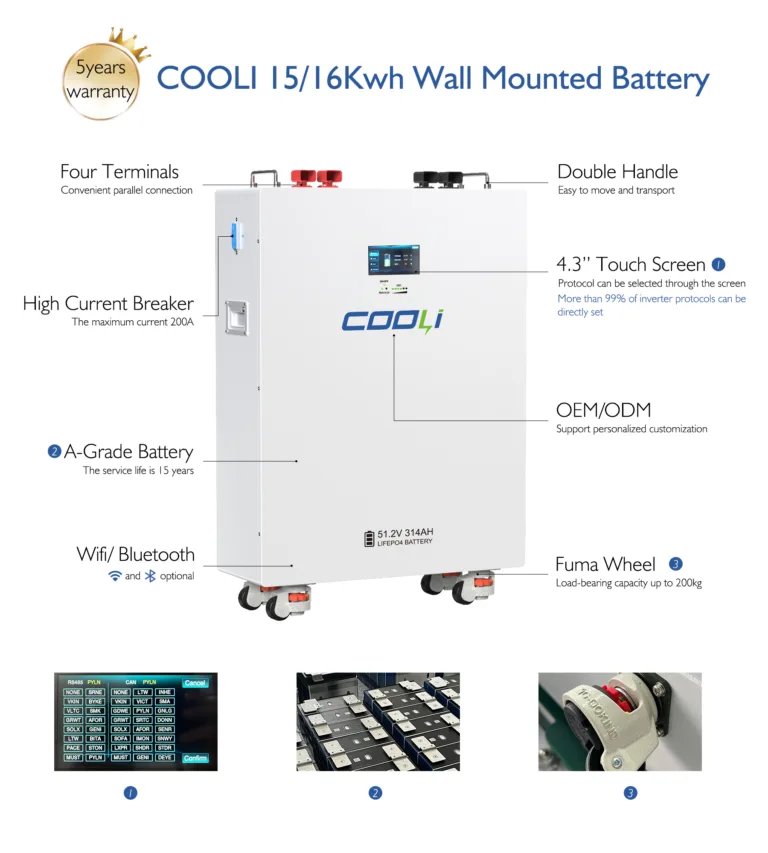
- Scalability: Can you easily add more batteries later if your needs grow? A modular system is a great investment.
- Battery Management System (BMS): A smart BMS protects the battery from overcharging, deep discharging, and overheating. This is a non-negotiable feature.
Step 4: Making the Final Choice
Let’s match scenarios with solutions:
- Scenario A: Urban Home with Daily Power Cuts (2-4 hours)
- Need: Power for lights, TV, fridge, internet.
- Recommendation: A 5-10kWh Lithium (LFP preferred) battery. It’s a perfect balance of lifespan, safety, and sufficient capacity to bridge daily gaps without stress.
- Scenario B: Remote Off-Grid Homestead
- Need: Complete energy independence for all household needs, including a water pump and power tools.
- Recommendation: A large, scalable LFP battery bank (10kWh+). The long cycle life and deep discharge capability are essential for daily, heavy use. Don’t compromise on quality.
- Scenario C: Tight Budget for Basic Backup
- Need: Keep lights on and phone charged during outages.
- Recommendation: A small Lithium-ion system is still the best choice. If the budget is too tight, a Lead-Acid battery can be a temporary solution, but be prepared for replacement costs sooner.

Final Checklist Before You Buy:
- My Energy Audit: I know my daily kWh needs.
- My Budget: I’ve considered long-term value, not just upfront cost.
- My Choice: I’m leaning towards Lithium (especially LFP) for its safety and lifespan.
- Compatibility: I will ensure the battery works with my existing or planned inverter and solar panels.
- Warranty & Support: I’m choosing a reputable brand with a solid warranty and, crucially, local technical support in my country.
Investing in a home battery is an investment in comfort, productivity, and peace of mind. By choosing wisely, you can ensure your home remains powered, no matter what happens to the grid.
Stay Powered!