
Nangunguna 3 Mga Lithium-ion na Baterya para sa Solar System: Pinakamahusay na Pinili sa 2025
The Core Role of Lithium-ion Batteries in Solar Systems and the Best Choices
With the growing popularity of solar systems, mga baterya ng lithium-ion have become the preferred choice in energy storage due to their high efficiency, mahabang buhay, and environmental benefits. This article combines information on mainstream products and manufacturers to analyze the types of lithium-ion batteries suitable for solar systems, their advantages, and recommendations for selection.
Sales Data Comparison
1. Global Sales Volume (2023):
- LiFePO₄ Battery: 2.5 GWh
- NCM Battery: 1.8 GWh
- LTO Battery: 0.6 GWh
- LiFePO₄ batteries have the largest share, making them the preferred choice for most residential and industrial systems.
2. Usage Rates for Residential and Industrial Systems:
- In residential systems:
- 80% use LiFePO₄
- 15% use NCM
- 5% use LTO
- In industrial and commercial systems:
- 60% use LiFePO₄
- 30% use NCM
- 10% use LTO
3. Charge/Discharge Efficiency Comparison:
- Charge/Discharge Efficiency:
- LiFePO₄ Battery: 96%
- NCM Battery: 92%
- LTO Battery: 98%
- Ikot ng Buhay:
- LiFePO₄ Battery: 2000-5000 mga cycle
- NCM Battery: 1000-2000 mga cycle
- LTO Battery: 10,000 mga cycle
- Kaligtasan:
- LiFePO₄: Mataas, hindi nasusunog
- NCM: Katamtaman, may experience thermal runaway
- LTO: Very high, stable in extreme environments
4. Price Comparison:
- LiFePO₄: Tinatayang. $120–$180/kWh
- NCM: Tinatayang. $150–$200/kWh
- LTO: Tinatayang. $400–$600/kWh
Advantages of Lithium-ion Batteries in Solar Energy Storage
1. High Energy Density and Lightweight Compared to traditional lead-acid batteries, mga baterya ng lithium-ion, especially LiFePO₄ types, have a higher energy density and are lighter. Halimbawa, a 12V 100Ah LiFePO₄ battery weighs only 9.36kg, while a lead-acid battery of the same capacity could weigh up to 30kg. This makes them ideal for rooftop installations or mobile applications like RVs and off-grid systems.
2. Long Cycle Life and Stability LiFePO₄ batteries typically have a cycle life of over 2000 mga cycle (kasama 80% capacity retention), far exceeding the 300-500 cycles of lead-acid batteries. Manufacturers like Dinali Energy perform rigorous quality testing to ensure battery stability under extreme temperatures and offer warranties ranging from 1 sa 3 taon.
3. Fast Charge/Discharge and High Compatibility Lithium-ion batteries support higher charge/discharge rates (hal., 100A BMS), enabling rapid response to energy input from solar panels. Through smart Mga Sistema sa Pamamahala ng Baterya (BMS), they provide overcharge and over-discharge protection, ensuring compatibility with inverters and solar controllers.
Best Lithium-ion Battery Types for Solar Systems
1. LiFePO₄ (Lithium Iron Phosphate Battery)
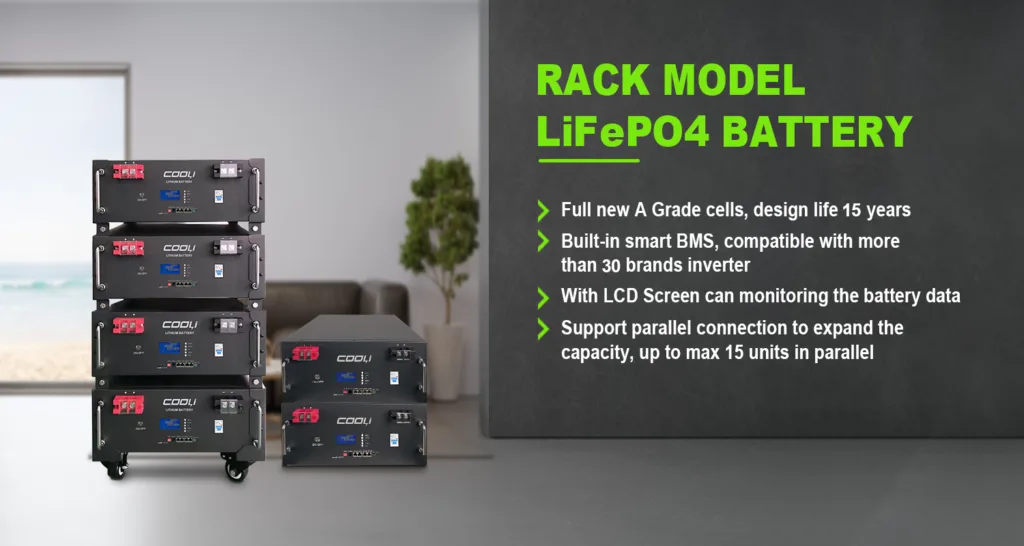
- Core Advantages: Mataas na kaligtasan (strong thermal stability), mahabang ikot ng buhay (1500-2000 mga cycle), environmentally friendly.
- Typical Applications: Residential storage, off-grid solar system, Mga RV, atbp.
- Representative Product: A 12V 100Ah LiFePO₄ battery with 100A BMS, offering a 1-year warranty, priced around $139.
2. NCM (Nickel Cobalt Manganese Lithium Battery)
- Mga tampok: Mas mataas na density ng enerhiya, ideal for space-sensitive applications, but with slightly lower cycle life compared to LiFePO₄.
- Mga aplikasyon: Commercial and industrial storage systems, high-power demand hybrid solar setups.
3. LTO (Lithium Titanate Battery)
- Mga kalamangan: Ultra-long cycle life (hanggang sa 10,000 mga cycle), wide temperature adaptability (-30°C hanggang 60°C).
- Suitable Applications: Solar storage systems in extreme climates or microgrid systems with frequent charge/discharge cycles.
Purchasing Guide for Solar Lithium-ion Batteries
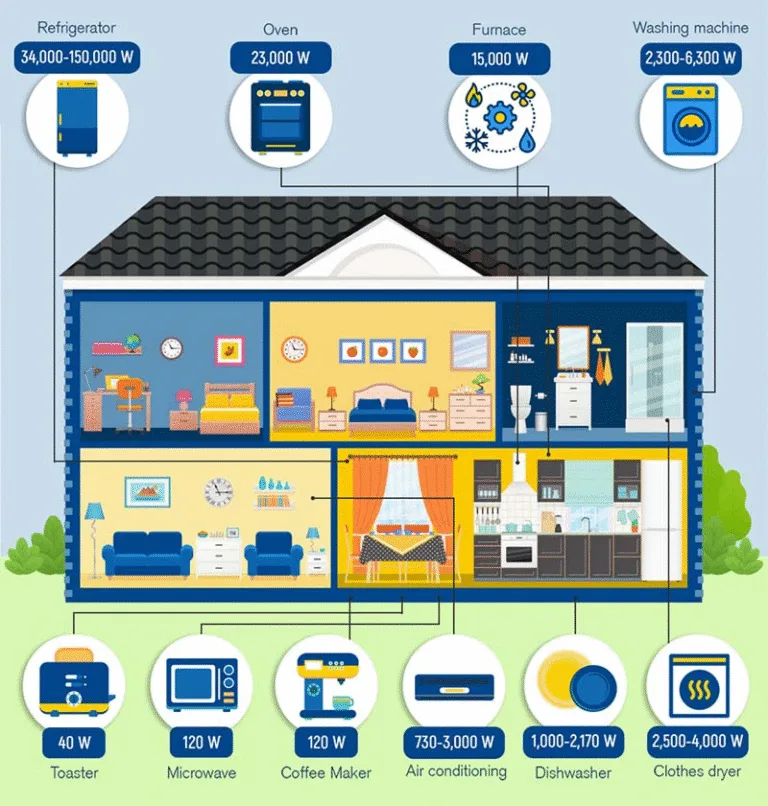
1. Capacity and Voltage Matching For residential systems, 12V or 24V batteries are commonly used (hal., a 12V 100Ah battery can store approximately 1.2kWh of energy). It is essential to calculate the total energy requirement based on load power and sunlight duration.
2. BMS and Safety Certifications Ensure the battery has an integrated BMS that supports overcurrent and temperature protection. Choose products certified by UL, CE, or TUV (such as those from EastSun ,Sunchees and Coolithium).
3. Manufacturer and After-sales Service Opt for brands that offer customized solutions:
- Totlpower: 30,000 m² factory, supports industrial-grade energy storage customization.
- CMGL Solar (Pakistan Market): Offers Tesla and Longi battery solutions with a 25-year system warranty.
Recommended Global Lithium Battery Manufacturers
1. EastSun (Tsina)
- Their product line covers both residential and commercial storage systems, providing integrated solutions with hybrid inverters and LiFePO₄ batteries, certified by UL and IEC.
2. Dinali Energy (India)
- Specializes in green energy, producing LFP and NCM batteries, supporting solar inverters and microgrid applications, and offering 24/7 teknikal na suporta.
3. Sunchees (Tsina)
- Sa 15 years of OEM experience, Sunchees offers pure sine wave inverters and lithium battery systems, supporting distributed projects in over 100 mga bansa.
4. Coolithium(Tsina)
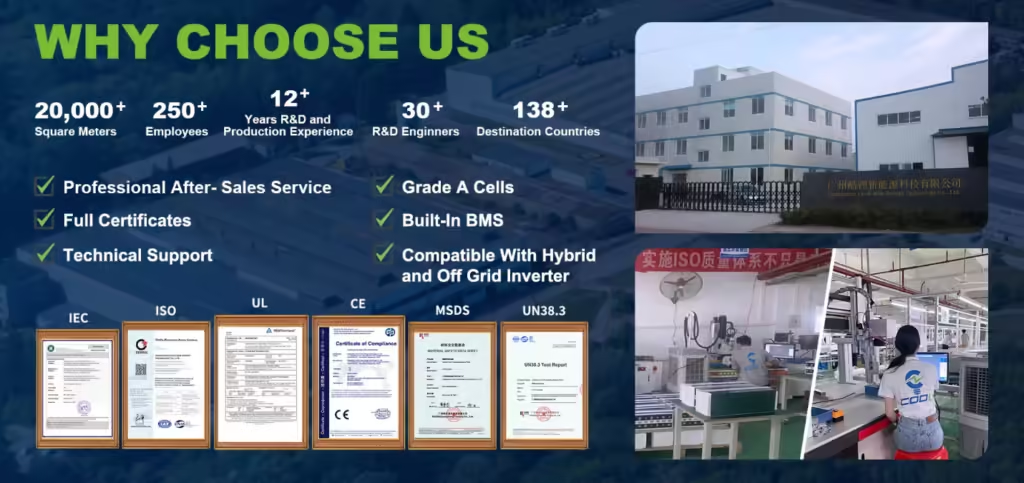
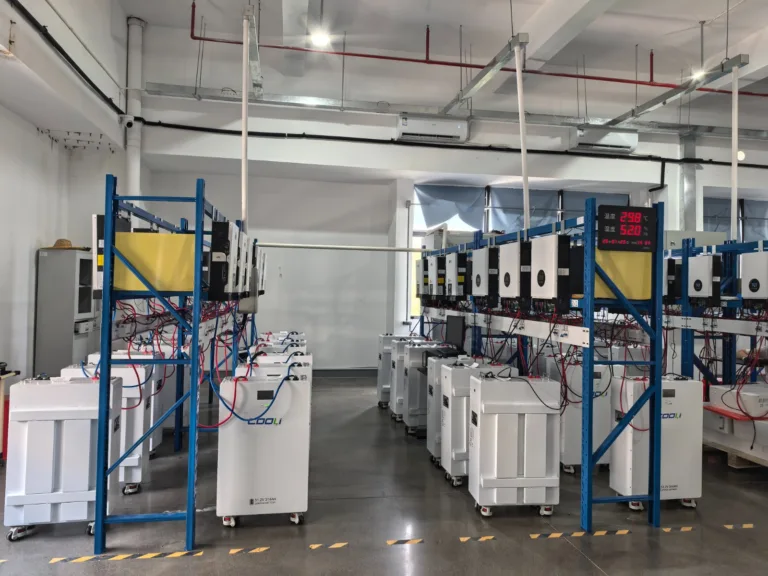
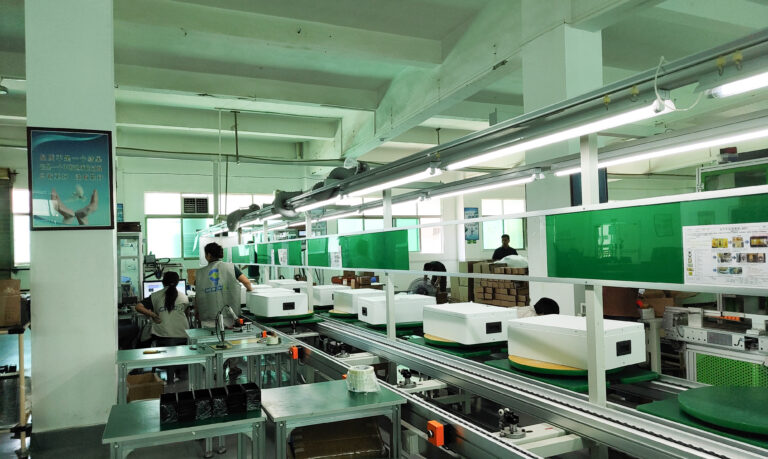
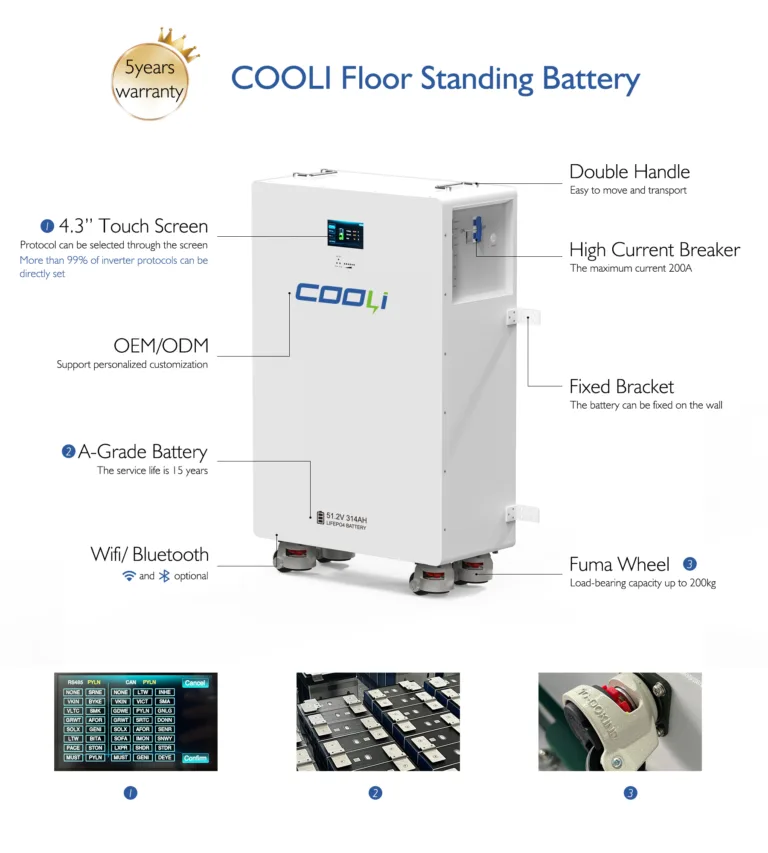
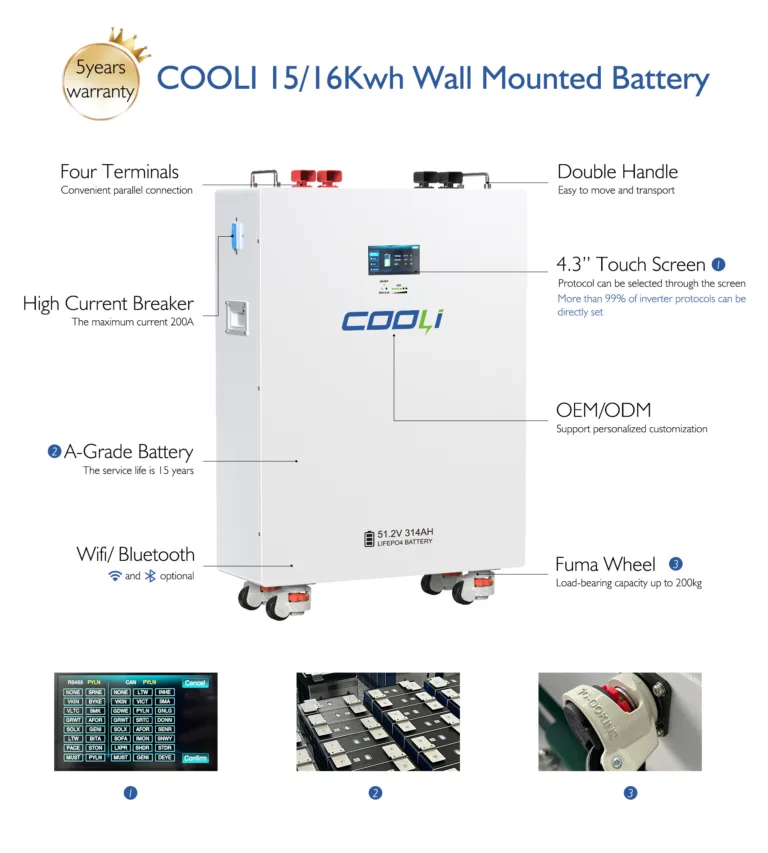
- 15 Taon na karanasan Propesyonal na pabrika na may 3 mga gusali para sa produksyon, OEM&ODM experience, Ang BMS system ay binuo ng sarili nating Engineers Team, Maaaring tumutugma sa higit sa 20 brands of inverters.Got ISO9001,UL,ang-021, IEC,CE,CB,UN38.3,MSDS,atbp Sertipiko.
Installation and Maintenance Recommendations
1. System Compatibility Ensure the battery voltage matches the solar panel and inverter specifications (hal., a 12V battery must be compatible with a 12V solar controller).
2. Regular Monitoring Use smart apps provided by manufacturers (hal., CMGL Solar’s monitoring tools) to track the charging and discharging status in real-time.
3. Environmental Requirements Avoid high temperatures or humid environments. LiFePO₄ batteries are recommended to operate within a temperature range of -20°C to 60°C.
Konklusyon
LiFePO₄ batteries, due to their high charge/discharge efficiency, kaligtasan, and affordable price, remain the top choice in most residential and industrial systems. NCM batteries are better suited for high-capacity applications, while LTO batteries stand out in extreme environments or high-frequency cycling scenarios. When selecting, consider the specific needs of the system, and from a long-term investment and efficiency perspective, LiFePO₄ is the best choice in most cases.
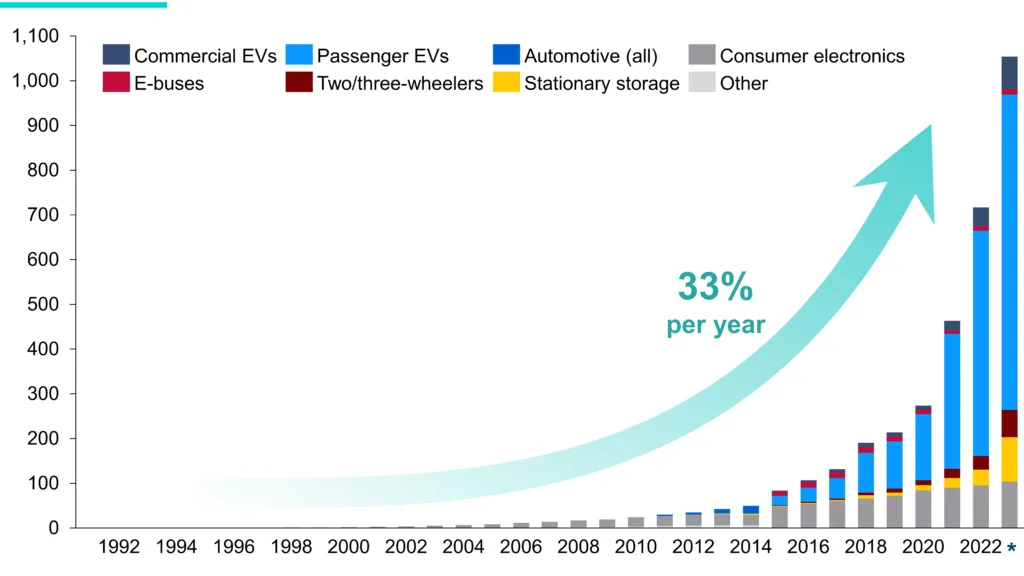
Global Solar Battery Market Overview Source: https://www.marketresearchfuture.com/reports/solar-battery-market-10621
10kWh LiFePO4 Baterya 10kWh Solar Battery Gastos sa Myanmar 25Mga Sistema ng Baterya ng kWh All-in-One BESS Container 4MWh Saudi BESS Manufacturer China Pinaka murang Baterya sa Bahay China BESS Solutions Bultuhang DDP ng Tsina China Factory LiFePO4 Baterya China Grid-Scale BESS Mga Supplier ng Chinese OEM Komersyal na Imbakan ng Baterya Kenya Mga Solusyon sa DC ESS DDP Solution Direkta sa DRC Direktang Tsina sa Africa Direktang China sa Africa Battery baterya ng imbakan ng enerhiya Sistema ng Imbakan ng Enerhiya Pandaigdigang Lithium Battery Leaders Grade A na Baterya Supplier ng Imbakan ng Baterya ng Grid-Scale Mga Baterya sa Bahay para sa Mga Pamilyang Dutch imbakan ng enerhiya sa bahay Pang-industriya BESS Kenya Lead-Acid vs. Mga Baterya ng Lithium-Ion LiFePO4 Mga baterya ng LiFePO4 Mga Baterya ng LiFePO4 sa South Africa LifePo4 na baterya LifePO4 Battery Technology Distributor ng LiFePO4 sa Iraq LiFePO4 ESS Kenya Lithium-Ion na Baterya baterya ng lithium ion Mas mababang Presyo Mga Trend sa Market Panlabas na Liquid Cooling Cabinet Saudi LiFePO4 Procurement Scalable BESS Solutions para sa Industriya Mga Solar Panel solar system Pinagsasalansan ang All-in-One Pakyawan LiFePO4 Solar Baterya Pakyawan na mga Baterya ng Solar
Isang Komento