
बैटरी क्षमता और पावर गणना: सौर ऊर्जा के लिए संपूर्ण व्यावहारिक मार्गदर्शिका & ऊर्जा भंडारण प्रणालियाँ
समझ बैटरी क्षमता और बिजली की गणना सौर ऊर्जा भंडारण प्रणाली को डिजाइन करते समय यह आवश्यक है, बैकअप पावर समाधान, या ऑफ-ग्रिड स्थापना. गलत बैटरी आकार चुनने से बिजली की कमी हो सकती है, व्यर्थ निवेश, या सिस्टम अस्थिरता.
यह मार्गदर्शिका बैटरी क्षमता बताती है, शक्ति रेटिंग, सूत्रों, वास्तविक उदाहरण, और सरल शब्दों में सिस्टम आकार देने के तरीके.
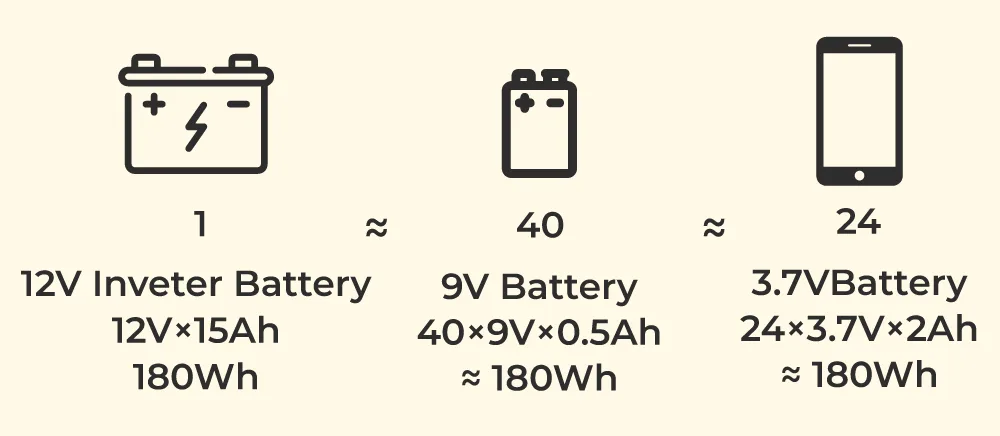
बैटरी क्षमता क्या है?
बैटरी की क्षमता दिखाता है कि एक बैटरी समय के साथ कितनी ऊर्जा संग्रहीत और वितरित कर सकती है. इसे आमतौर पर मापा जाता है:
- एम्प घंटे (एएच) - वर्तमान × समय
- वाट घंटे (क) - ऊर्जा क्षमता
- किलोवाट घंटे (किलोवाट) - बड़ी सिस्टम भंडारण क्षमता
मूल सूत्र
बैटरी की क्षमता (क) = वोल्टेज (वी) × एम्पीयर-घंटे (एएच)
उदाहरण:
- 12वी 100Ah बैटरी
- क्षमता = 12 × 100 = 1,200 क = 1.2 किलोवाट
यह बैटरी क्षमता और पावर गणना का सबसे महत्वपूर्ण आधार है.
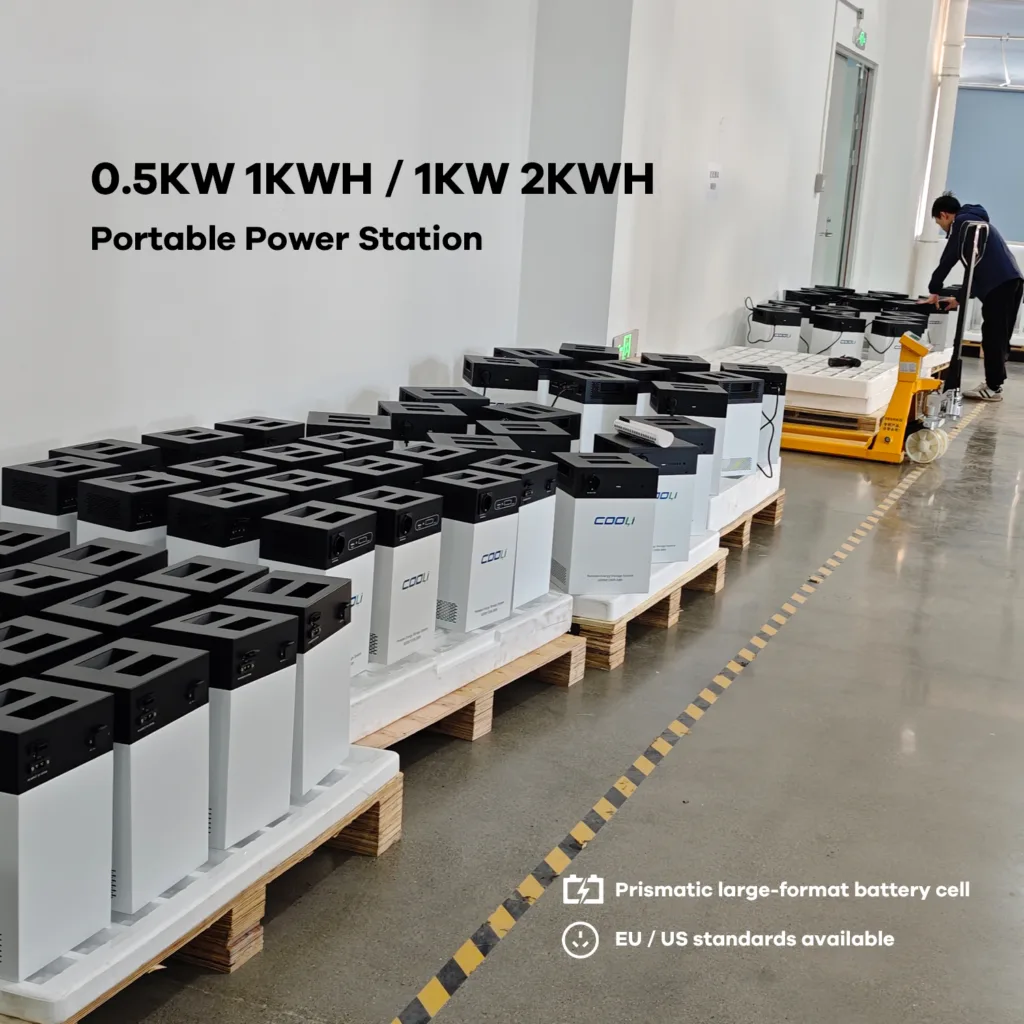
बैटरी पावर क्या है?
बैटरी शक्ति यह दर्शाता है कि किसी निश्चित समय पर कितनी तेजी से ऊर्जा वितरित की जा सकती है. इसमें मापा जाता है:
- वाट (डब्ल्यू)
- किलोवाट (किलोवाट)
शक्ति निर्धारित करती है:
- एक साथ कितने डिवाइस चल सकते हैं
- चाहे भारी बोझ हो (मोटर्स, पंप, एयर कंडिशनर) शुरू कर सकता है
- चरम निर्वहन क्षमता
क्षमता बनाम शक्ति - मुख्य अंतर
| वस्तु | क्षमता | शक्ति |
|---|---|---|
| ऊर्जा संग्रहित | कितना | — |
| वितरण की गति | — | कितनी तेजी से |
| इकाई | क / किलोवाट | डब्ल्यू / किलोवाट |
| उदाहरण | 10 किलोवाट बैटरी | 5 किलोवाट आउटपुट |
एक बैटरी बहुत अधिक ऊर्जा संग्रहित कर सकती है लेकिन फिर भी यदि उसकी डिस्चार्ज रेटिंग कम है तो वह उच्च शक्ति देने में असमर्थ है.
कोर बैटरी क्षमता और पावर गणना सूत्र
1️⃣ ऊर्जा गणना
ऊर्जा (क) = शक्ति (डब्ल्यू) × समय (घंटे)
उदाहरण:
- लोड = 300W
- रनटाइम = 5 घंटे
ऊर्जा की आवश्यकता = 300 × 5 = 1,500 क
2️⃣ आवश्यक बैटरी क्षमता
आवश्यक क्षमता (एएच) = ऊर्जा (क) ÷ वोल्टेज (वी)
उदाहरण:
- आवश्यक ऊर्जा = 1,500 क
- सिस्टम वोल्टेज = 24V
क्षमता = 1,500 ÷ 24 = 62.5 एएच
3️⃣ शामिल करें निर्वहन की गहराई (डीओडी)
सभी संग्रहित ऊर्जा उपयोग योग्य नहीं है.
- लेड एसिड DoD ≈ 50%
- LiFePO4 DoD ≈ 80-95%
समायोजित क्षमता = आवश्यक क्षमता ÷ DoD
LiFePO4 के साथ उदाहरण (90% डीओडी):
62.5 ÷ 0.9 = 69 एएच
4️⃣ सुरक्षा मार्जिन जोड़ें
नुकसान और उम्र बढ़ने के लिए 10-20% जोड़ें:
अंतिम आकार ≈ 80 एएच
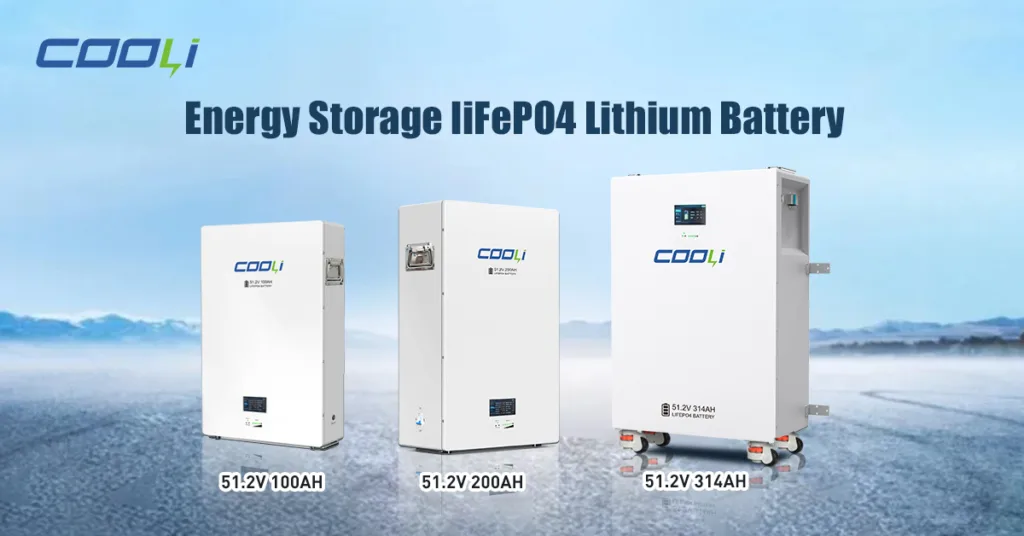
सौर बैटरी क्षमता गणना उदाहरण
परिदृश्य: होम बैकअप सिस्टम
उपकरण:
- लाइट्स = 200W
- रेफ्रिजरेटर = 150W
- टीवी + राउटर = 150W
कुल भार = 500डब्ल्यू
आवश्यक रनटाइम = 6 घंटे
ऊर्जा की जरूरत:
500 × 6 = 3,000 क = 3 किलोवाट
48V LiFePO4 बैटरी का उपयोग करना:
3,000 ÷ 48 = 62.5 एएच
के लिए समायोजित करें 90% डीओडी:
62.5 ÷ 0.9 ≈ 70 एएच
अनुशंसित बैटरी: 48वी 100एएच LiFePO4
लोड समर्थन के लिए बैटरी पावर गणना
क्षमता के अलावा, डिस्चार्ज पावर की जाँच करें.
FORMULA:
अधिकतम पावर = बैटरी वोल्टेज × अधिकतम डिस्चार्ज करंट
उदाहरण:
- बैटरी = 48V
- अधिकतम डिस्चार्ज = 100ए
शक्ति = 48 × 100 = 4,800डब्ल्यू (4.8किलोवाट)
आपका इन्वर्टर लोड इस सीमा के भीतर रहना चाहिए.
शिखर बनाम सतत शक्ति
बैटरी क्षमता और पावर गणना के लिए महत्वपूर्ण:
- निरंतर शक्ति = स्थिर आउटपुट
- चरम शक्ति = लघु विस्फोट (मोटर स्टार्टअप)
मोटर लोड की आवश्यकता हो सकती है 3-5× स्टार्टअप पावर.
हमेशा जांचें:
- बैटरी बीएमएस पीक रेटिंग
- इन्वर्टर सर्ज रेटिंग
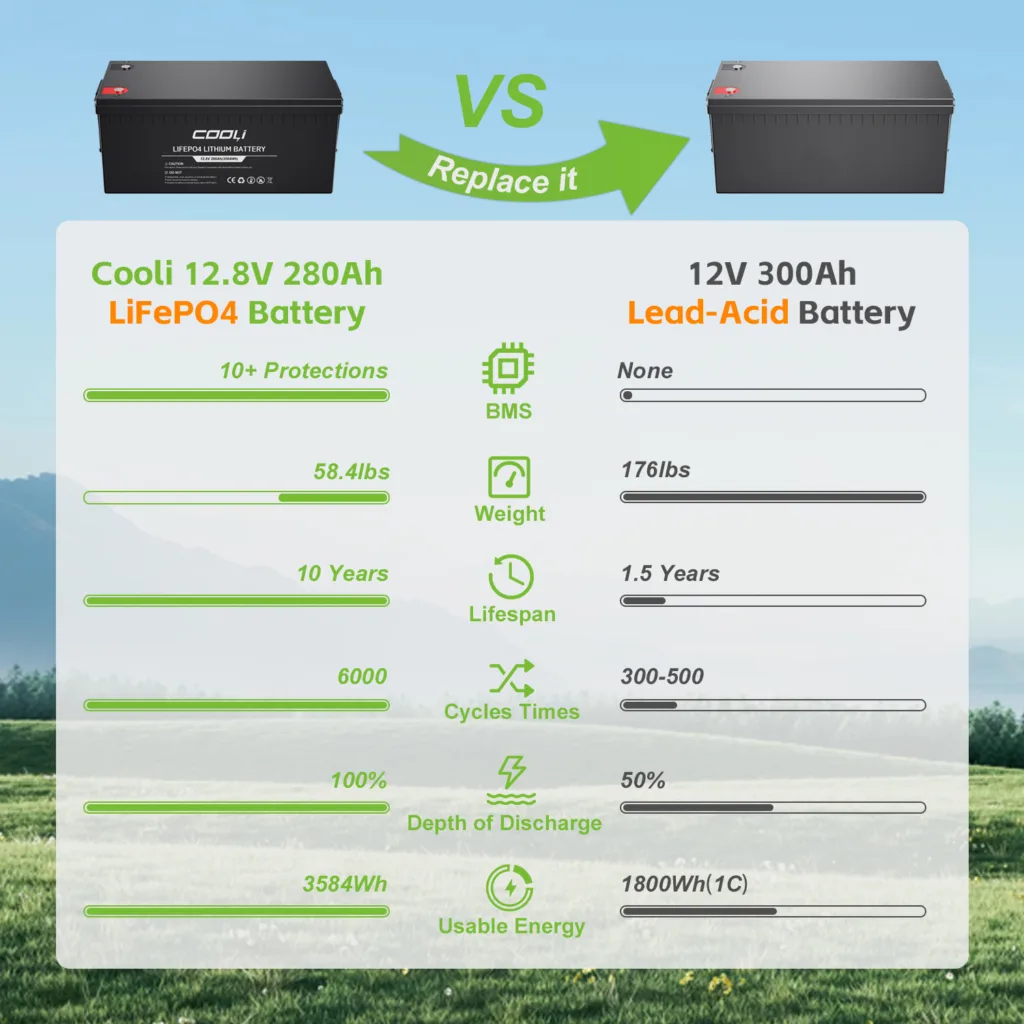
क्षमता गणना में LiFePO4 बनाम लेड एसिड
| कारक | LiFePO4 | लैड एसिड |
|---|---|---|
| प्रयोग करने योग्य क्षमता | 90% | 50% |
| चक्र जीवन | 4000-6000 | 300-500 |
| क्षमता | उच्च | निचला |
| वज़न | हल्का | भारी |
इसका मतलब है कि LiFePO4 सिस्टम की आवश्यकता है छोटी नाममात्र क्षमता उसी प्रयोग योग्य ऊर्जा के लिए.
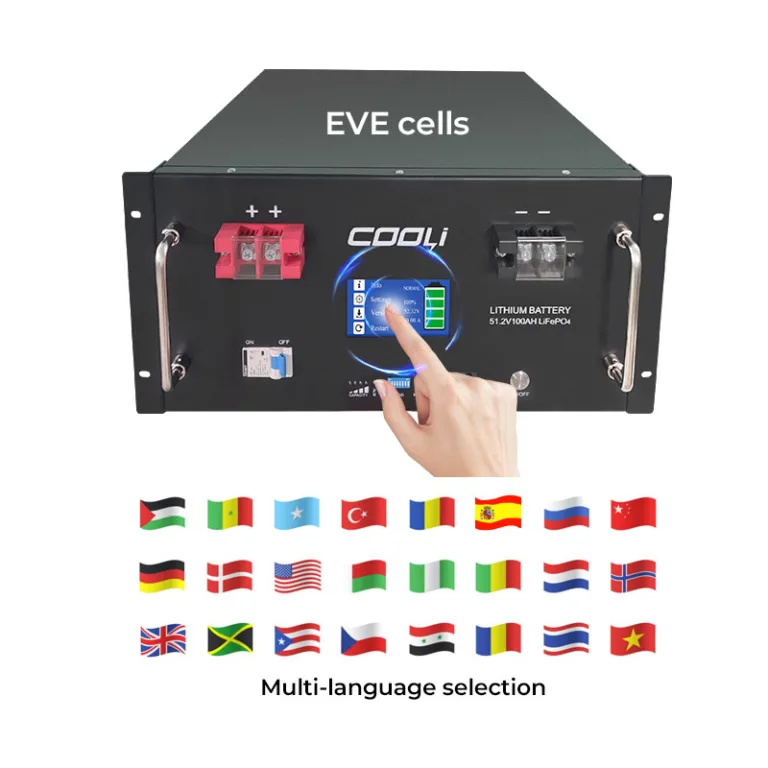
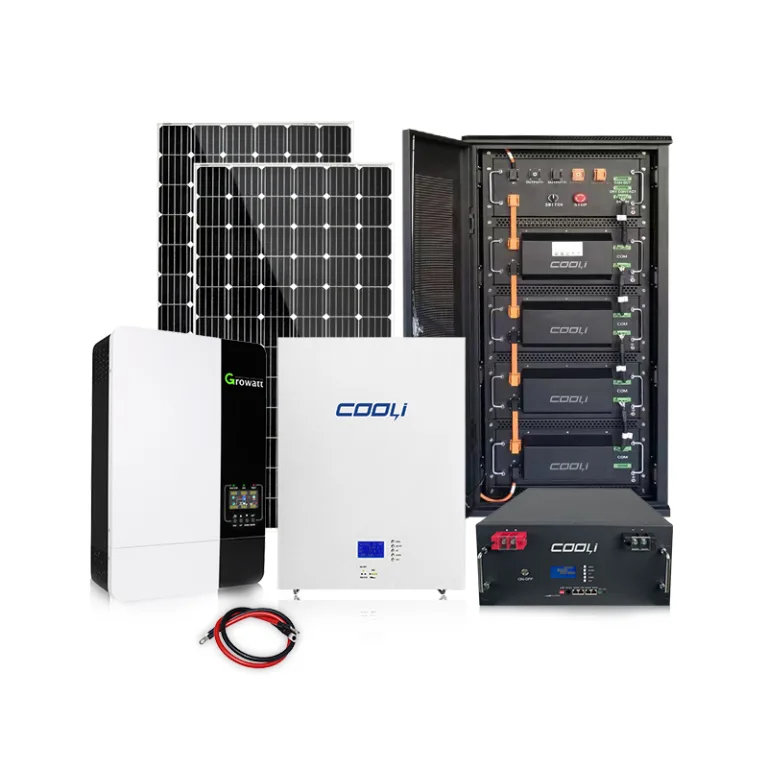
आधुनिक आपूर्तिकर्ता जैसे कूली (Coolienergy.com) उच्च उपयोगी क्षमता वाली LiFePO4 बैटरी प्रदान करें, एकीकृत बीएमएस, और सौर परियोजनाओं और ओईएम प्रणालियों के लिए स्केलेबल भंडारण.
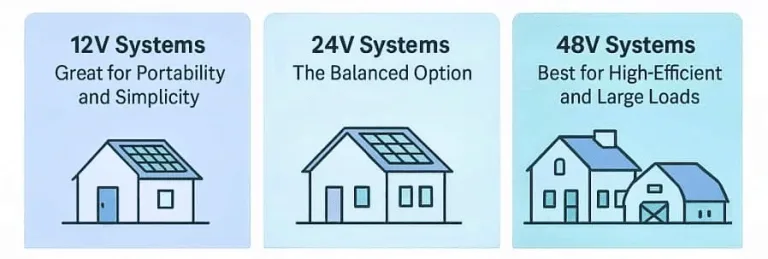
सिस्टम वोल्टेज और क्षमता योजना
उच्च वोल्टेज सिस्टम करंट और केबल हानि को कम करते हैं.
| प्रणाली | सर्वोत्तम उपयोग |
|---|---|
| 12वी | छोटे सेटअप |
| 24वी | मध्यम प्रणाली |
| 48वी | घर & वाणिज्यिक भंडारण |
बड़े सौर भंडारण प्रणालियों के लिए, 48V या उच्चतर दक्षता और सुरक्षा मार्जिन में सुधार करता है.
अंगूठे का त्वरित आकार निर्धारण नियम
आप इसका उपयोग करके बैटरी क्षमता का अनुमान लगा सकते हैं:
दैनिक ऊर्जा उपयोग (किलोवाट) × बैकअप दिन ÷ DoD
उदाहरण:
- दैनिक उपयोग= 5 किलोवाट
- बैकअप = 1 दिन
- डीओडी = 90%
5 ÷ 0.9 = 5.6 किलोवाट बैटरी
विशेष रुप से प्रदर्शित स्निपेट अनुकूलित उत्तर
बैटरी क्षमता की गणना बैटरी वोल्टेज को amp-घंटे की रेटिंग से गुणा करके की जाती है (क = वी × आह). बैटरी पावर की गणना वोल्टेज को डिस्चार्ज करंट से गुणा करके की जाती है (डब्ल्यू = वी × ए). क्षमता संग्रहीत ऊर्जा को दर्शाती है, जबकि पावर डिलीवरी की गति दिखाता है.
अक्सर पूछे जाने वाले प्रश्न - बैटरी क्षमता और पावर गणना
मैं अपने घर के लिए बैटरी क्षमता की गणना कैसे करूँ??
अपने कुल भार को गुणा करें (डब्ल्यू) रनटाइम द्वारा (घंटे) क पाने के लिए, फिर बैटरी वोल्टेज से विभाजित करें और DoD के लिए समायोजित करें.
क्या kWh, Ah से अधिक महत्वपूर्ण है??
सिस्टम प्लानिंग के लिए, kWh अधिक उपयोगी है क्योंकि यह वास्तविक ऊर्जा भंडारण को दर्शाता है.
क्या उच्च क्षमता वाली बैटरी उच्च शक्ति प्रदान कर सकती है??
हमेशा नहीं. आपको अवश्य जांचना चाहिए अधिकतम डिस्चार्ज करंट और बीएमएस सीमाएँ.
ऊर्जा भंडारण गणना के लिए LiFePO4 बेहतर क्यों है??
क्योंकि यह गहरे डिस्चार्ज की अनुमति देता है, उच्च दक्षता, और लंबा चक्र जीवन - आवश्यक नाममात्र क्षमता को कम करना.



एक टिप्पणी