
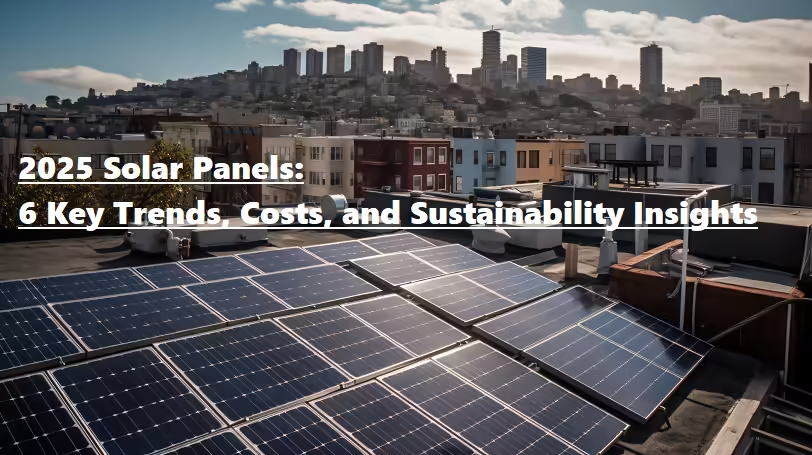
2025 ソーラーパネル: 6 主要な傾向, コスト, と持続可能性に関する洞察
As the world increasingly turns to renewable energy sources, solar power continues to play a central role in reshaping the global energy landscape. In 2025, ソーラーパネル are poised to become even more efficient, cost-effective, and sustainable. With advancements in technology, the growing demand for clean energy, and supportive policies, the solar industry is evolving at an unprecedented pace. This article delves into the latest trends, cost dynamics, sustainability benefits, and technological innovations driving the solar panel market forward, providing a comprehensive look at what consumers, ビジネス, and investors can expect from this powerful energy solution.
1. How Solar Panels Work & Power Management
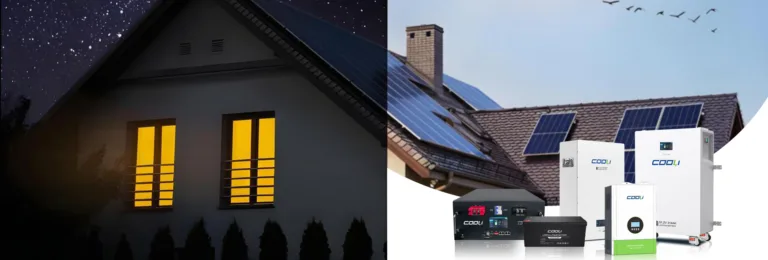
ソーラーパネル convert sunlight into electricity using the photovoltaic effect. The core materials—typically silicon-based semiconductors (単結晶, polycrystalline, or thin-film)—absorb sunlight, exciting electrons that create an electric current.
- Photovoltaic Modules: These panels convert sunlight into electrical energy.
- インバータ: This component transforms the direct current (直流) into alternating current (交流), making it suitable for household use.
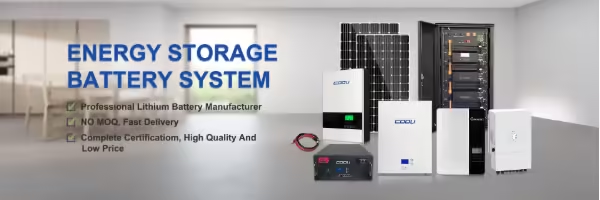
- エネルギー貯蔵電池 (オプション): These store excess energy for later use, such as during the night or on cloudy days.
- Smart Meter: Enables interaction with the grid, facilitating net metering policies where surplus electricity is sold back to the grid, reducing electricity bills.
Technological Innovations: AI and IoT are revolutionizing solar systems. Real-time data helps optimize panel angles and predict energy storage needs. 例えば, AI-powered adjustments based on weather forecasts can maximize energy efficiency.
2. コスト & Market Trends in 2025
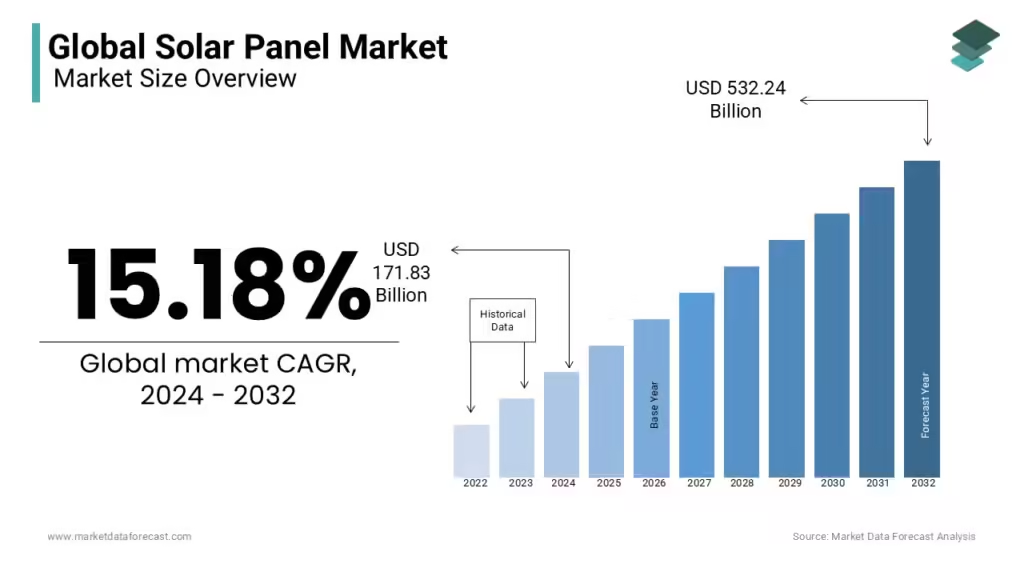
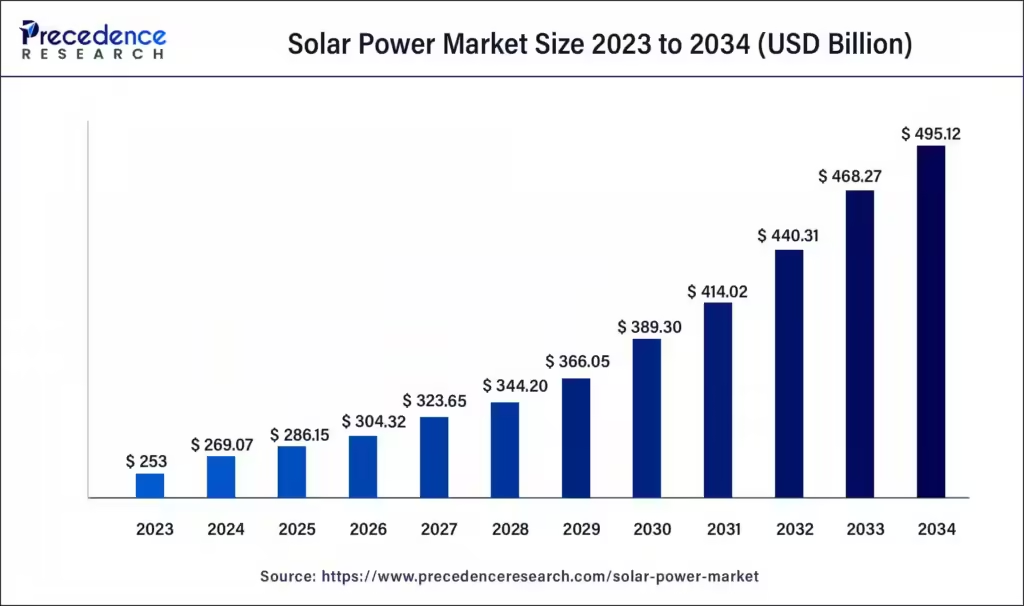
The cost of solar panels has plummeted over the past decade. According to 2023 データ, the cost of solar energy has dropped more than 80% compared to a decade ago, and prices are expected to fall even further by 2025.
Global Projections
Think tank CEF predicts module prices could fall to 0.1 USD per watt by 2025 (その周り 0.7 CNY), marking a major shift in affordability.
Premium for High-Efficiency Technologies
N-type TOPCon modules (efficiency over 24%) are priced 5%-10% higher than standard P-type modules but offer better long-term returns.
Price Drivers: The cost reduction is attributed to large-scale production, a sharp drop in polycrystalline silicon prices (down 70% で 2024), and government subsidies.
3. Sustainability: 環境 & Economic Benefits
Environmental Impact
Carbon Reduction: あ 1 kW home solar system can reduce around 1 ton of CO2 emissions annually. Over 25 年, it can offset up to 25 tons of carbon emissions.
Resource Recycling: Major manufacturers like LONGi and Jinko Solar are committed to reducing waste. With silicon material recovery rates exceeding 95%, recycling plays a vital role in sustainability.
4. Technology Trends and Policy Drivers for 2025
- AI & IoT Integration: Sensors and real-time monitoring provide predictive maintenance and reduce system downtime.
- Perovskite Solar Cells: Efficiency has surpassed 33% in laboratory settings, and mass production is gaining traction, with significant projects underway (例えば, Boya Clean Energy).
- Lightweight Modules: These are ideal for rooftops with limited load-bearing capacity. New solutions, such as Yidao New Energy’s “Urban Photovoltaic,” address such needs.
ポリシーサポート
International Expansion: India’s ALMM policy promotes domestic manufacturing, making it a global hotspot for solar expansion.
5. How to Choose the Best Home Solar Panels in 2025
- トップブランドのおすすめ: Leading brands such as LONGi, トリナ・ソーラー, クーリチウム そして Jinko Solar stand out for their high efficiency and extended warranties.
- Key Technical Parameters: N-type TOPCon or HJT modules should be prioritized, as they offer efficiencies above 23% and superior low-light performance.
- Installation Considerations: Focus on roof orientation (south-facing is ideal), tilt angle (aligned with local latitude), and avoiding shading for optimal performance.
6. Global Application Cases: New Zealand and South Africa
New Zealand
Due to high electricity costs (その周り 0.3 NZD per kWh) and ample sunlight, the payback period for home solar systems is shortened to 5-7 年. The government provides low-interest loans to incentivize installations.
南アフリカ
Market Growth: South Africa’s solar market is expanding rapidly, driven by the country’s high solar potential and frequent power outages. 現在 2023, South Africa had over 4 GW of installed solar capacity, with projections for growth to 10 GW by 2025.
料金 & Incentives: The average cost of solar panels in South Africa is approximately 8-12 ZAR per watt, with prices expected to decrease as local manufacturing scales up. The government offers several incentives, including tax rebates for solar installations.
Energy Crisis: Due to ongoing energy supply issues, many South African households and businesses are turning to solar solutions for energy independence, and the payback period for home solar systems is typically around 6-8 年.
結論
Solar panels are a game-changer for tackling climate change and are becoming central to reducing household and business energy costs. With continuous technological advancements and robust policy support, 2025 will mark a significant turning point as solar energy moves from being a “substitute” to a “主流” energy source. When choosing solar panels, consider efficiency, 料金, and long-term benefits to embrace the green energy revolution.
Additional Data Comparison:
- Global Solar Growth: Global solar installations are projected to reach over 350 GW annually by 2025, a major increase from the current installation rate of approximately 200 GW.
- US Solar Investment Returns: A 5kW solar system in the US, costing between 10,000-15,000 米ドル, can save over 20,000 USD in electricity bills over its 25-year lifespan.
- South Africa Market Trends: With an expected capacity growth to 10 GW by 2025, South Africa’s solar market will continue to grow, driven by local incentives, rising electricity prices, and increasing energy independence demands.
10kWh LiFePO4 バッテリー 10ミャンマーのkWh太陽電池コスト 25kWhバッテリーシステム オールインワン BESSコンテナ 4MWh サウジ BESSメーカー中国 最も安い家庭用バッテリー 中国BESSソリューション 中国DDP卸売 中国工場LiFePO4バッテリー 中国グリッドスケール BESS 中国のOEMサプライヤー 商業用バッテリー保管庫 ケニア DC ESS ソリューション DRC に直接接続する DDP ソリューション 中国をアフリカに誘導する 中国をアフリカに誘導するバッテリー エネルギー貯蔵電池 エネルギー貯蔵システム リチウム電池の世界的リーダー グレードAバッテリー グリッドスケールのバッテリーストレージサプライヤー オランダの家庭向けの家庭用バッテリー 家庭用エネルギー貯蔵 インダストリアル BESS ケニア 鉛酸 vs. リチウムイオン電池 LiFePO4 LiFePO4電池 南アフリカのLiFePO4バッテリー LifePo4 バッテリー LifePO4 バッテリーテクノロジー イラクのLiFePO4販売業者 LiFePO4 ESS ケニア リチウムイオン電池 リチウムイオン電池 低価格 市場動向 屋外液体冷却キャビネット サウジのLiFePO4調達 産業向けのスケーラブルな BESS ソリューション ソーラーパネル 太陽系 スタッキングオールインワン 卸売LiFePO4太陽電池 卸売太陽電池
よくある質問


3 コメント