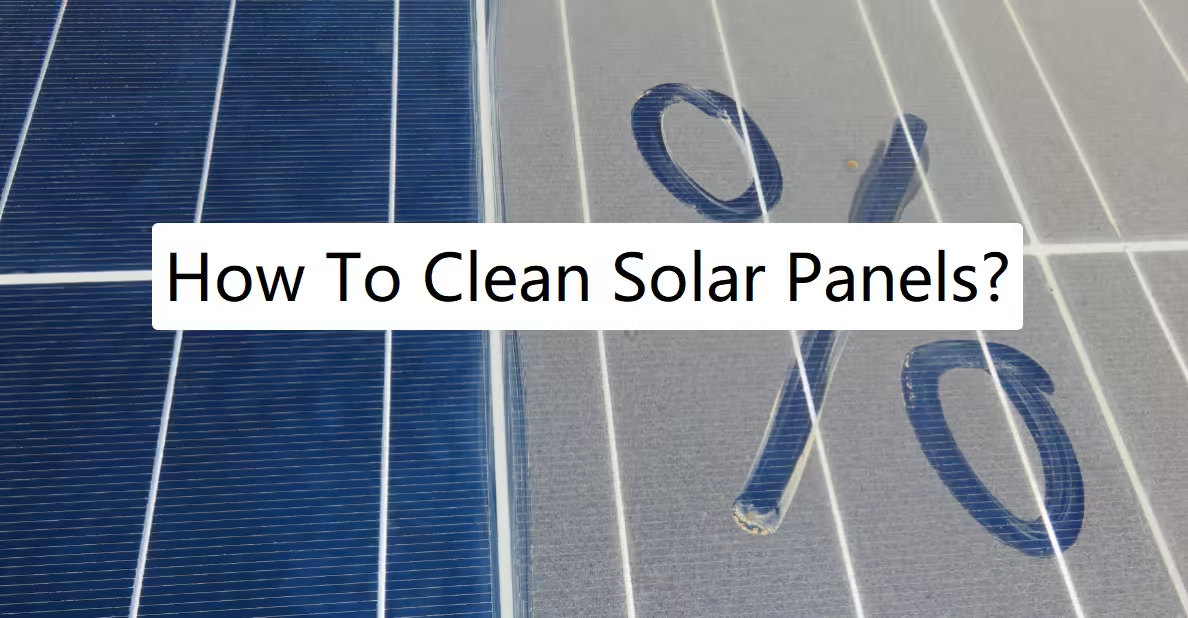
how to clean solar panels
|

25% More Power: 5 Solar Cleaning Secrets That Save $500+ Annually

Comprehensive Guide to Solar Panel Cleaning: Scientific Methods to Enhance Efficiency and Extend Lifespan

How to Clean Solar Panels A Quick Guide

How to Clean Solar Panels?

Solar panels, as the core component of green energy systems, directly impact energy yield through their power generation efficiency. Research from the National Renewable Energy Laboratory (NREL) reveals that dust accumulation can reduce photovoltaic module output by 7%-40%. This guide delves into the critical aspects of solar panel maintenance, helping users establish a scientific cleaning regimen.

“Does solar panel cleaning make a difference in solar system performance?
The short answer: 是的, cleaning your solar panels helps allow the maximum amount of sunlight to penetrate your solar panels.

More sunlight on your panels = more solar energy = lower utility bill.

Solar panels are a great investment for generating clean energy, but dirt, dust, and debris can reduce their efficiency. Regular cleaning helps maintain peak performance and ensures maximum energy output.

我. Why Cleaning Matters: Beyond Surface Dust Removal

1. Ensuring Photoelectric Conversion Efficiency

  • Dust Impact: 0.1g/cm² dust reduces power output by 5%
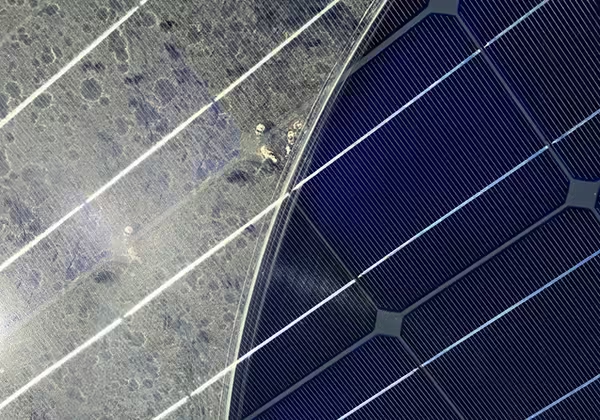
  • Organic Stains: Bird droppings create localized shading, triggering hotspot effects
  • Industrial Pollutants: PM2.5 particles form light-blocking adhesive layers

2. Extending Equipment Lifespan

  • Corrosion Prevention: Acidic contaminants (例如, bird excrement) erode tempered glass
  • Coating Protection: Salt crystallization in dust abrades anti-reflective coatings
  • Thermal Management: Dust accumulation raises panel temperature by 5-8°C, accelerating aging

3. Economic Benefits

  • A 10kW system may lose $45-75 monthly in unrecovered energy
  • Regular cleaning boosts annual ROI by 8-15%
image 28

II. Optimal Cleaning Frequency: Decision-Making Framework

1. Environmental Assessment Matrix

Location TypeCleaning IntervalPrimary Contaminants
Industrial Zones15-30 daysOily particles, factory dust
Agricultural Areas30-45 daysPollen, pesticide residue
Desert Regions7-15 daysFine sand, calcium deposits
Coastal Zones20-30 daysSalt spray crystallization

2. Seasonal Adjustments

  • Rainy Season: Extend intervals by 30% due to natural rinsing
  • Dust Storm Periods: Clean immediately post-event
  • Leaf Fall Season: Weekly debris inspections

3. Smart Monitoring Solutions

  • Irradiance sensors track light transmission rates
  • IV curve tracers analyze performance degradation
  • Drone thermal imaging identifies soiled areas

III. Professional Cleaning Protocol

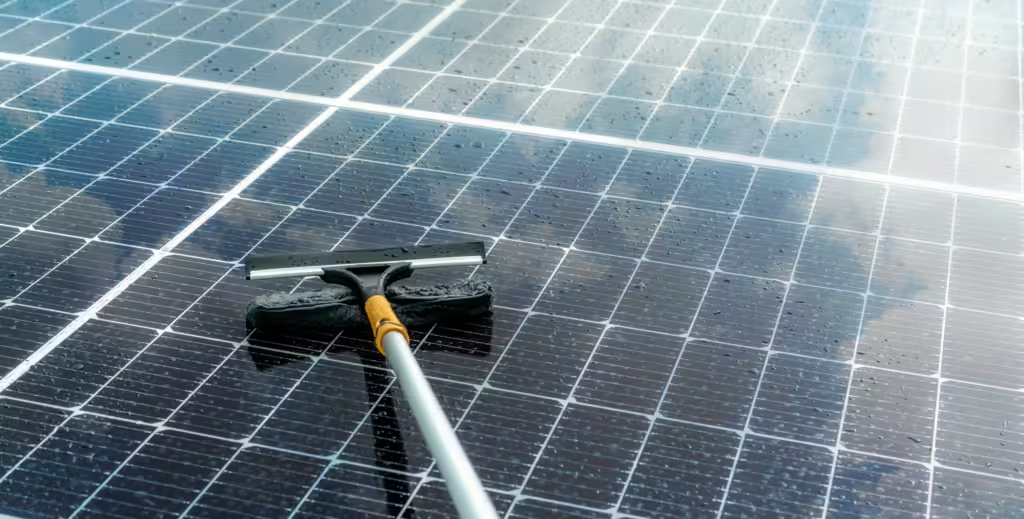
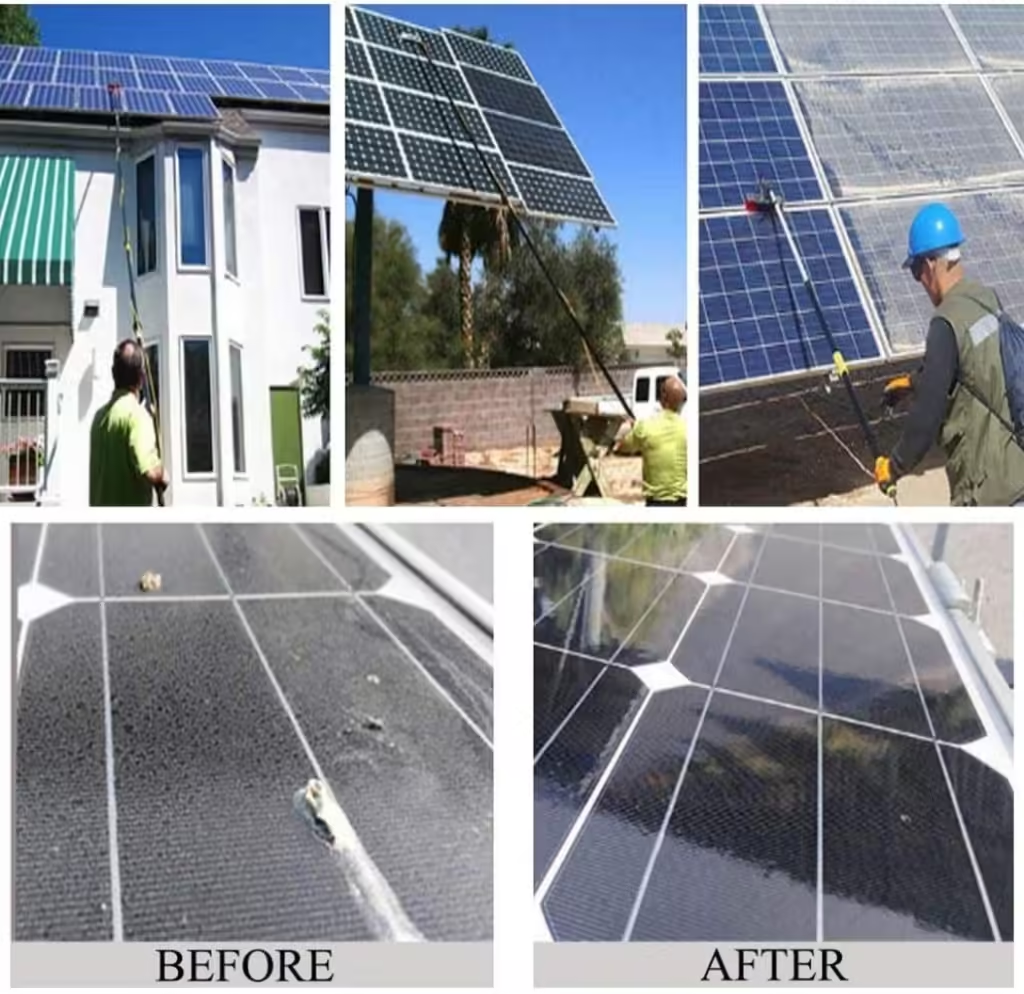
cleaning solar panels

1. Tool Specifications

  • Brushes: Nylon bristles ≤0.3mm diameter
  • Cleaning Agents: pH-neutral solutions (6-8 pH range)
  • Water Quality: Softened water with TDS <50ppm

2. Standard Operating Procedure

  1. Safety Prep: Disconnect DC switches, use fall protection gear
  2. Pre-Rinse: Low-pressure (<2 bar) water flush for loose debris
  3. Deep Cleaning: 45° angle unidirectional brushing
  4. Final Rinse: Deionized water rinse cycle
  5. Inspection: Air-dry naturally, verify surface integrity

3. Specialized Stain Treatment

  • Bird Droppings: Enzymatic cleaner soaking
  • Tree Sap: ≤30% isopropyl alcohol solution
  • Mineral Deposits: Mild acidic rinse (pH ≥5)

IV. Risk Mitigation & Technological Innovations

1. Critical Safety Protocols

  • Avoid midday cleaning (recommended: dawn/dusk)
  • Operate only when panel temperature <35℃
  • Never step on panels (load capacity ≤50kg/m²)

2. Advanced Cleaning Technologies

  • Nano Coatings: Reduce dust adhesion by 90%
  • Robotic Systems: Clean 2,000㎡ daily
  • Electrostatic Cleaners: Contact-free dust removal

3. Quality Control Metrics

  • Light transmittance recovery ≥97%
  • Module temperature differential ΔT ≤2℃ (via thermal imaging)
  • Power output improvement ≥5%

V. Economic Analysis: 100kW Commercial System Example

范围UnmaintainedMaintained System
Annual Generation120,000 千瓦时132,000 千瓦时
Annual Revenue$96,000$105,600
5-Year Maintenance$0$15,000
Net Profit Difference+$33,000

结论:

Systematic cleaning can increase total lifecycle ROI by over 20%. Implement a three-tier maintenance strategy:

  1. Daily Inspections: Visual checks for debris
  2. Quarterly Deep Cleaning: Professional service
  3. Annual Technical Audit: Performance verification

For large-scale plants, automated cleaning systems optimize operational costs at 0.5%-1.5% of energy revenue, maximizing ROI. Combine IoT monitoring with predictive maintenance algorithms for peak system performance.

By following these simple steps, you can ensure your solar panels stay clean, effective, and durable for years to come. Keep an eye on performance, clean when necessary, and enjoy the full benefits of solar energy!

How to Clean Solar Panels

5千瓦时 5kWh 家用备用电池 10千瓦时磷酸铁锂电池 16面向批发合作伙伴的 kWh LiFePO4 解决方案 多合一 BESS集装箱4MWh沙特 BESS制造商中国 最便宜的家用电池 中国BESS解决方案 中国工厂磷酸铁锂电池 中国电网级电池储能系统 肯尼亚商业电池存储 直流储能系统解决方案 直接发往 DRC 的 DDP 解决方案 中国直飞非洲 中国直飞非洲电池 刚果民主共和国海外仓 储能电池 储能系统 A级电池 电网规模电池存储供应商 荷兰家庭的家用电池 家庭储能 工业 BESS 肯尼亚 磷酸铁锂电池 南非的磷酸铁锂电池 LifePo4电池 磷酸铁锂电池制造商 LifePO4电池技术 LiFePO4 ESS 肯尼亚 锂离子电池 锂离子电池 更低的价格 最低价格 乌干达 市场趋势 欧洲家庭离网太阳能电池 室外液冷柜 通过可定制的 BESS 彻底改变业务能力 沙特磷酸铁锂采购 适用于工业的可扩展 BESS 解决方案 太阳能板 太阳系 堆叠一体式 批发磷酸铁锂太阳能电池 批发太阳能电池
类似文章

发表回复

您的邮箱地址不会被公开。 必填项已用 * 标注