用于太阳能存储的锂离子电池: 综合指南
Unleashing the Potential of Lithium-Ion Batteries in Solar Energy Storage
As solar energy adoption accelerates worldwide, the challenge of efficiently storing and utilizing excess solar power has become paramount. Lithium-ion batteries, with their superior performance characteristics, have emerged as the cornerstone technology for solar energy storage. This article delves into the science behind lithium-ion batteries, their advantages over traditional storage solutions, and key considerations for optimizing their performance.

The Science Behind Lithium-Ion Batteries
At the core of every lithium-ion battery is an intricate electrochemical system that facilitates energy storage and release. During charging, lithium ions migrate from the cathode—composed of lithium iron phosphate (LiFePO₄) or nickel-manganese-cobalt oxide (国家管理委员会)—through an electrolyte to the graphite anode, where they are stored. When discharging, the ions travel back, generating an electric current. This reversible ion exchange enables lithium-ion batteries to sustain thousands of charge-discharge cycles, typically lasting 8–15 years.
Why Lithium-Ion Batteries Dominate Solar Energy Storage
Compared to conventional lead-acid batteries, lithium-ion batteries offer several critical advantages:
- Unmatched Energy Density: With an energy density of 150–250 Wh/kg—up to five times higher than lead-acid batteries (30–50 Wh/kg)—lithium-ion batteries provide significant space savings, making them ideal for residential rooftop solar systems and commercial energy storage.
- Exceptional Cycle Life: 磷酸铁锂 (LiFePO₄) batteries can endure more than 4,000 周期 at an 80% 放电深度 (国防部) under optimal conditions, equating to over a decade of reliable operation. Some advanced models, like BYD’s Blade Battery, have demonstrated lifespans of up to 12,000 cycles in laboratory testing.
- Superior Charge-Discharge Efficiency: With efficiencies exceeding 95%, lithium-ion batteries ensure minimal energy loss during storage and retrieval, optimizing solar energy utilization.
- Smart Energy Management: Paired with advanced Battery Management Systems (电池管理系统), lithium-ion batteries facilitate intelligent charging and discharging. This allows users to store energy when electricity rates are low and discharge when demand peaks, significantly reducing energy costs.
- Rapid Charging Capability: Supporting charge/discharge rates of up to 1C, lithium-ion batteries can fully charge or discharge in an hour—ideal for dynamic solar applications requiring flexible energy access.
Lithium-Ion vs. Other Energy Storage Technologies
| Technology | 效率 | 寿命 | 成本 (USD/Wh) | 应用领域 |
|---|---|---|---|---|
| 锂离子 | 95% | 8–15 年 | 0.15–0.25 | Residential/Commercial |
| Lead-Acid | 80% | 3–5 年 | 0.08–0.15 | Small Off-Grid Systems |
| Flow Battery | 75% | 20+ 年 | 0.40–0.60 | Grid-Scale Storage |
| Sodium-Sulfur | 85% | 15 年 | 0.30–0.50 | Industrial Energy Storage |
Innovative Technologies Enhancing Lithium-Ion Storage
- Thermal Management Systems (TMS): Integrated TMS solutions regulate battery temperature to ensure optimal operation between 15–35°C. Advanced systems like Huawei’s LUNA2000 use heating films to enable functionality in extreme cold (-30℃).
- Optimized State of Charge (SOC) Management: Keeping SOC levels between 20–80%, as recommended by 特斯拉, can triple a battery’s lifespan compared to full charge-discharge cycles.
- Hybrid Storage Solutions: Combining lithium-ion batteries with supercapacitors enhances performance in high-power applications, enabling millisecond-level response times for transient loads such as HVAC systems.
The Future of Lithium-Ion Batteries in Solar Energy Storage
- Solid-State Battery Advancements: Next-generation solid-state lithium batteries using sulfide-based electrolytes promise energy densities exceeding 400 瓦时/公斤. Toyota aims for commercial production by 2027, with significant implications for solar storage applications.
- Battery Recycling & Sustainability: Major recycling initiatives, such as Huayou Cobalt’s hydrometallurgical process, achieve lithium recovery rates above 90% and cobalt/nickel recovery rates of 98%, contributing to a circular economy.
- Virtual Power Plants (VPPs): AI-driven VPPs aggregate decentralized energy storage units into a unified grid resource. In China, Jiangsu’s VPP network successfully provided 300 MW of peak shaving capacity in 2023, showcasing the immense potential of smart grid integration.
Real-World Solar Storage Example
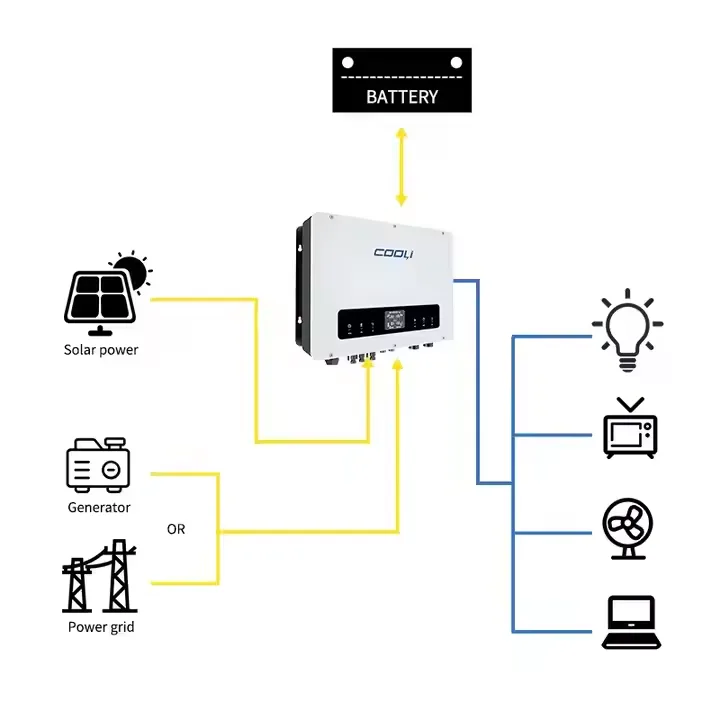
A typical 5 kW solar system paired with a 10 kWh lithium-ion battery delivers substantial energy independence:
- Daily Solar Generation: 5 kW × 4 hours of sunlight = 20 千瓦时
- Storage Utilization: Covers nighttime base loads (~8 kWh for lighting, 冷藏, and appliances)
- Financial Returns: With an initial investment of ~$8,000, factoring in government incentives and electricity cost savings, the system achieves a payback period of 6–8 years.
结论
Lithium-ion batteries are at the forefront of the clean energy revolution, empowering homeowners, 企业, and grid operators with efficient and scalable solar energy storage solutions. As advancements in battery chemistry, thermal management, and AI integration continue to unfold, lithium-ion technology will play a pivotal role in accelerating the transition to a sustainable energy future.
锂离子电池: Are They The Best Energy Storage For Solar?
5千瓦时 5kWh 家用备用电池 10千瓦时磷酸铁锂电池 16面向批发合作伙伴的 kWh LiFePO4 解决方案 多合一 BESS集装箱4MWh沙特 BESS制造商中国 最便宜的家用电池 中国BESS解决方案 中国工厂磷酸铁锂电池 中国电网级电池储能系统 肯尼亚商业电池存储 直流储能系统解决方案 直接发往 DRC 的 DDP 解决方案 中国直飞非洲 中国直飞非洲电池 刚果民主共和国海外仓 储能电池 储能系统 A级电池 电网规模电池存储供应商 荷兰家庭的家用电池 家庭储能 工业 BESS 肯尼亚 磷酸铁锂电池 南非的磷酸铁锂电池 LifePo4电池 磷酸铁锂电池制造商 LifePO4电池技术 LiFePO4 ESS 肯尼亚 锂离子电池 锂离子电池 更低的价格 最低价格 乌干达 市场趋势 欧洲家庭离网太阳能电池 室外液冷柜 通过可定制的 BESS 彻底改变业务能力 沙特磷酸铁锂采购 适用于工业的可扩展 BESS 解决方案 太阳能板 太阳系 堆叠一体式 批发磷酸铁锂太阳能电池 批发太阳能电池