Zambia’s Solar Boom: The Best Inverters for Reliable Power!
1.Zambia’s Power Structure

Zambia’s power generation structure is primarily based on hydropower, supplemented by other forms of energy generation. With abundant water resources, hydropower is the country’s main source of electricity, accounting for approximately 80% of Zambia’s total power generation. According to data provided by CEIC, Zambia’s total electricity generation in 2022 was 19,399 吉瓦时, which slightly decreased to 19,373 GWh in 2023. The country’s heavy reliance on hydropower makes it vulnerable to extreme weather conditions, especially during dry seasons when insufficient rainfall leads to lower water levels in hydropower stations, significantly affecting electricity supply.
2.Severe Power Shortage in Zambia

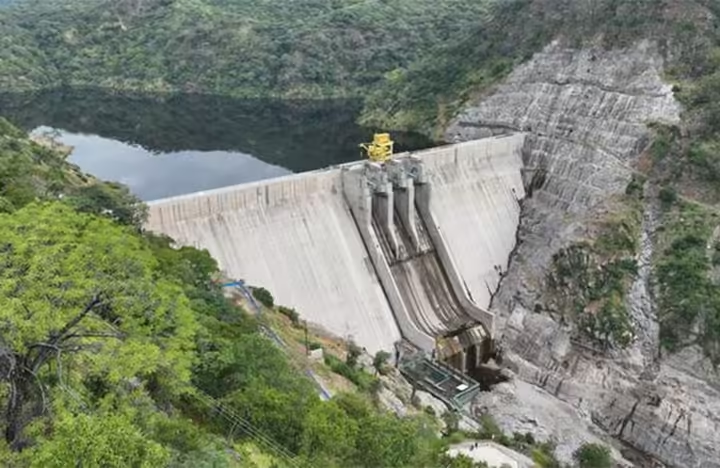
Zambia is currently facing a severe power shortage. As of the latest update on August 15, 2024, the water levels in the reservoir of Zambia’s largest hydropower station have been continuously declining, leaving only about 10% of usable water for power generation. As a result, the power deficit is expected to increase by 300 MW.
Zambia’s total installed capacity stands at 3,777 MW, while the country’s average peak electricity demand remains at 2,400 MW. 然而, the available power generation capacity averages only 890 MW, leading to a power shortfall of 1,510 MW. Zambia’s national power utility, along with other power traders, is importing 496 MW of electricity from the Southern African region, but the total power shortage still exceeds 1,000 MW.
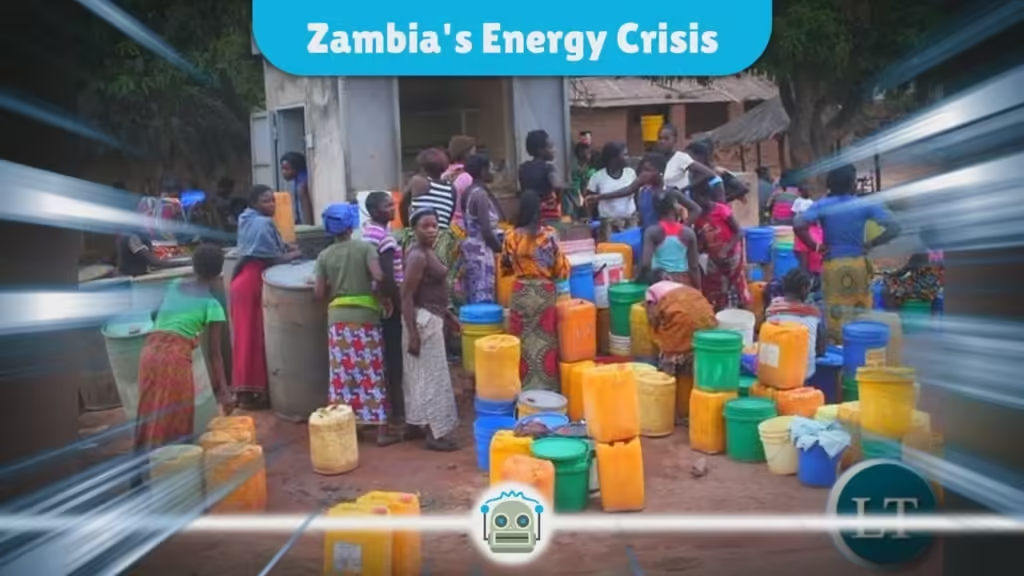
Due to insufficient rainfall during the 2023-2024 rainy season, which caused a decline in reservoir water levels, Zambia’s power utility announced an 8-hour daily load-shedding schedule in March 2024. This schedule was gradually extended, and starting from September 1, the daily power cuts will increase from 14 hours to 17 小时. In response to the ongoing power crisis, the Zambia government is encouraging investment in alternative energy sources, particularly solar energy.
3.Rising Electricity Prices in Zambia
Zambia’s electricity prices have traditionally been relatively low. 然而, due to recent drought conditions affecting hydropower generation, the Zambia Electricity Supply Corporation (ZESCO) has adjusted its electricity pricing structure. According to a report from Zambia
media on August 18, 2024, ZESCO has expanded its existing pricing tiers and introduced different adjustment plans for residential and commercial electricity users.
For residential electricity consumers:
The electricity price for the first 100 千瓦时 (lifeline tariff) will remain unchanged.
The proposed tariff increase will range from 50% 到 156%, affecting approximately 44% of Zambia households (417,365 households).
The tariff for the first and second consumption tiers will remain unchanged to prevent additional financial burdens on low-income households.
For commercial electricity consumers:
For electricity usage below 500 千瓦时, the price will remain unchanged.
For electricity consumption above 500 千瓦时, tariffs will increase, with a proposed adjustment of approximately 39%.
For low-income families, the lifeline tariff remaining unchanged ensures that their electricity costs will not increase. 然而, for households consuming beyond this limit, electricity expenses may rise significantly.
The increase in electricity prices will also raise operational costs for businesses in Zambia, especially for industries with high electricity consumption, potentially impacting their operations. 然而, on the other hand, rising electricity prices and power shortages may accelerate the growth of Zambia’s solar energy market. These factors are expected to drive the development of residential solar photovoltaic (PV) projects and increase demand for solar-related products such as solar inverters, solar power generation systems, 和 solar PV panels.
Recommended Solar Storage Capacity for Zambia Homes
Based on household power consumption, the following storage capacities are recommended:
- Small Households (1-3 people)
– Daily consumption: 5千瓦时 – 7千瓦时
– Recommended storage: 5千瓦时 – 10千瓦时 - Medium Households (4-6 people)
– Daily consumption: 8千瓦时 – 12千瓦时
– Recommended storage: 10千瓦时 – 15千瓦时 - Large Households (6+ people)
– Daily consumption: 12千瓦时 – 20千瓦时
– Recommended storage: 15千瓦时 – 20kWh+(expandable modules)
Off-grid solar power generation system suitable for Zambia
Zambia has a total population of 20.72 million (2023). Currently, the electricity coverage rate among the Zambia population is 25%, while the electricity coverage level in rural areas is less than 5%. Electricity is the foundation of industrial development. Without reliable power supply, there can be no stable industrial production and economic development. Electricity is related to the daily life of the people. If there is a long power outage every day, the quality of life of the local people will inevitably decline significantly. In the current situation of energy shortage in Zambia, how to effectively improve the problem of electricity consumption? Then the solar power generation system is a good solution, and the off-grid solar power generation system is a solar energy solution that is very suitable for many families and businesses in Zambia.
Solar power generation systems are divided into off-grid solar power generation systems, grid-connected solar power generation systems, and hybrid solar power generation systems.
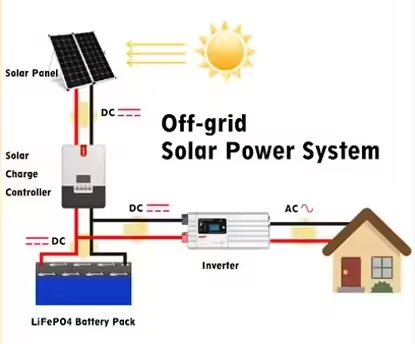
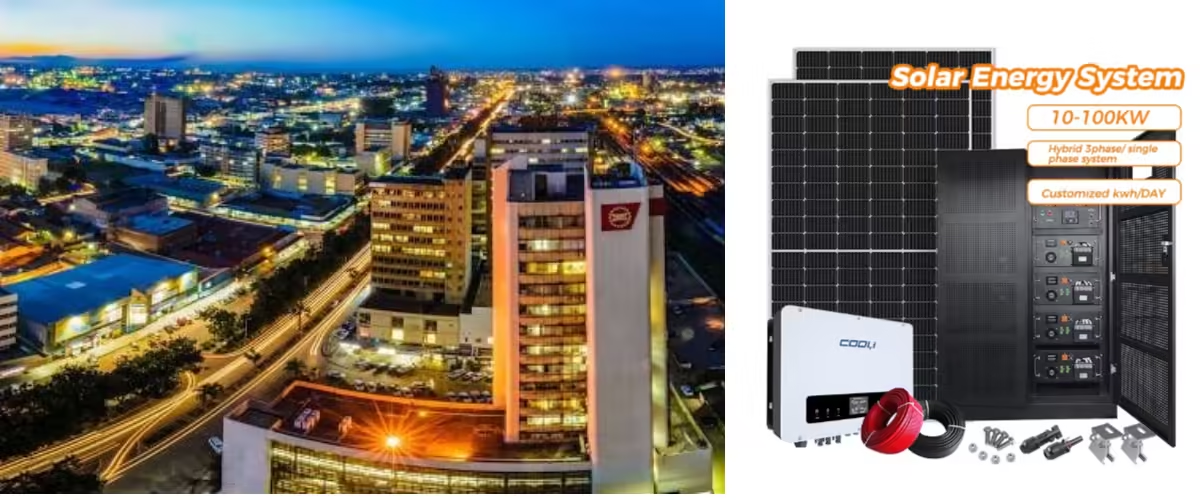
The off-grid solar power generation system is an independent power generation system that does not rely on the public power grid. It can independently supply power to households or small communities, solving the problem of lack of power grid coverage. The system uses solar panels to convert solar energy into electrical energy and store electrical energy for use at night. When using household appliances, the DC power generated by solar panels or stored in batteries is converted into AC power by solar inverters for use by equipment loads.
Off-grid solar power generation systems require energy storage batteries. The biggest advantage is that they can generate electricity independently and will not be affected by grid failures or power outages. This makes off-grid solar power generation systems very practical in remote areas or places where there is a lack of grid coverage, such as rural areas or mountainous areas. For people in Zambia who often suffer from power outages, off-grid solar power generation systems are a rigid and very suitable choice, especially in a country with abundant solar energy. It can bring stable and reliable electricity to Zambians, improve electricity conditions, and improve the quality of life without worrying about power outages.
Grid-connected solar power generation systems are a system that converts the DC power generated by solar panels into AC power that meets the requirements of the grid through a grid-connected inverter and then connects to the public grid to achieve power sharing and allocation. This system can sell electricity to grid companies and obtain electricity from the grid when needed. The biggest advantage of the grid-connected solar power generation system is that it can interact with the power grid and there is the possibility of power complementarity. The grid-connected solar power generation system does not require additional energy storage equipment. It is suitable for cities and industrial areas with good grid coverage and large power demand. It is suitable for large-scale national photovoltaic power generation projects, but not suitable for Zambian households. The grid-connected system needs to be connected to the public power grid to operate. In the case of a power outage, the system will stop working and cannot provide electricity to the family. The grid connection depends on sunlight, and the grid-connected type is usually not equipped with batteries. Once the power outage, the system cannot supply power, and it cannot be used on cloudy days or at night.
The hybrid solar power generation system combines the advantages of the off-grid system and the grid-connected system. It can sell excess electricity to the power company, and when the power grid is out of power, it can provide electricity to the family through the photovoltaic energy storage battery. The grid and solar energy can charge the battery at the same time. It is highly flexible and can achieve the purpose of self-generation and self-use, and the purpose of surplus electricity to the grid, so as to maximize the utilization of photovoltaic power generation and improve the efficiency of photovoltaic energy utilization.
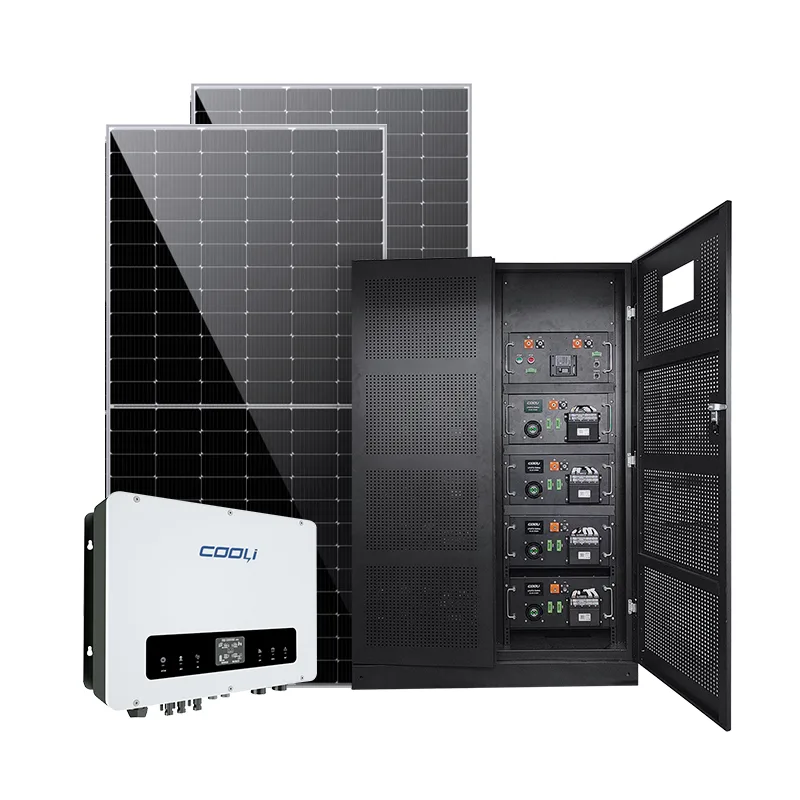
Coolithium 3KW 5KW 10KW 15KW 30KW Off Grid Solar System Solution
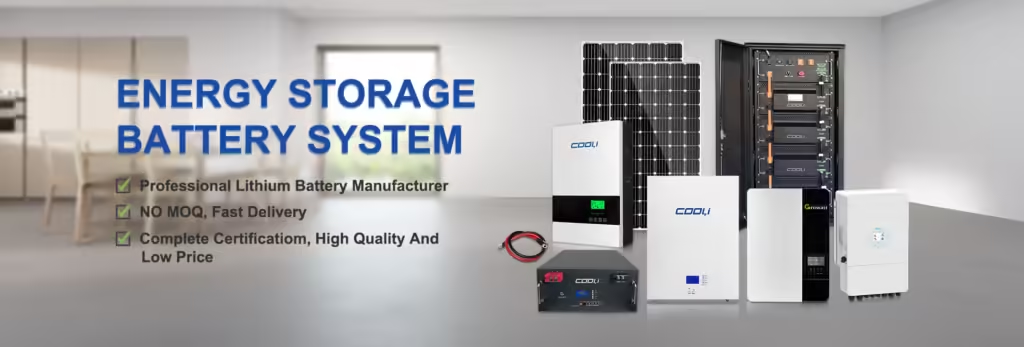
To address these challenges, the Coolithium Coolithium 3KW 5KW 10KW 15KW 30KW Off Grid Solar System Solution provides a reliable solution, optimizing solar energy storage and enhancing power stability.

1. Large Storage Capacity for 24/7 Power Supply
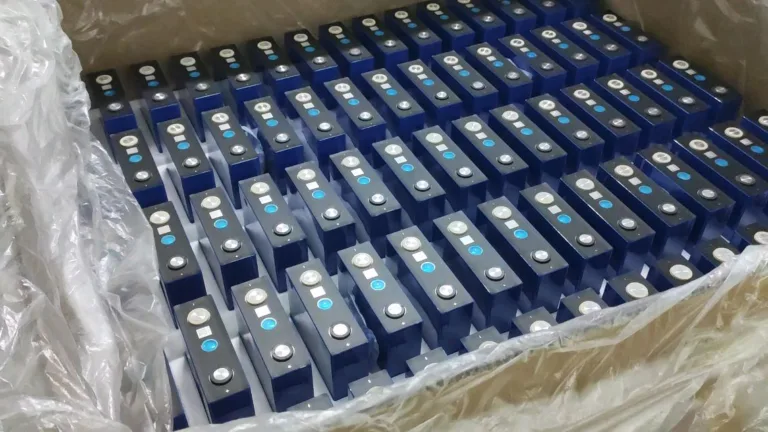
Equipped with high-efficiency LiFePO4 (磷酸铁锂) 电池, the system supports deep discharge, offering long-lasting power even during nighttime or cloudy days.
2. Smart Power Management for Maximum Efficiency
Seamlessly integrates with solar inverters to intelligently manage charging and discharging, prioritizing power supply to household appliances while storing excess energy for later use.
3. Modular Design for Flexible Expansion
Homes with higher power needs can scale up by connecting multiple storage units, ensuring a customizable and future-proof solution.
4. 高安全性 & Low Maintenance Costs
磷酸铁锂电池 are known for their thermal stability, reducing the risk of overheating or fires. 此外, the system requires minimal maintenance, lowering long-term costs.
5. Ideal for Various Home Applications
Whether in urban homes or rural areas, the Coolithium 3KW 5KW 10KW 15KW 30KW Off Grid Solar System helps households increase energy independence while enjoying a stable and continuous power supply.
结论
For Zambia households, solar storage shortages can be effectively resolved by adopting an efficient and reliable storage system. The Coolithium 3KW 5KW 10KW 15KW 30KW Off Grid Solar System offers high capacity, smart energy management, and robust safety features, making it an ideal solution. Not only does it enhance solar energy utilization, but it also ensures round-the-clock electricity supply for a more secure, economical, and sustainable household energy solution.
If you’re looking for an effective home energy storage solution, Coolithium 3KW 5KW 10KW 15KW 30KW Solar System is your best choice!
相关产品
5千瓦时 5kWh 家用备用电池 10千瓦时磷酸铁锂电池 16面向批发合作伙伴的 kWh LiFePO4 解决方案 多合一 BESS集装箱4MWh沙特 BESS制造商中国 最便宜的家用电池 中国BESS解决方案 中国工厂磷酸铁锂电池 中国电网级电池储能系统 肯尼亚商业电池存储 直流储能系统解决方案 直接发往 DRC 的 DDP 解决方案 中国直飞非洲 中国直飞非洲电池 刚果民主共和国海外仓 储能电池 储能系统 A级电池 电网规模电池存储供应商 荷兰家庭的家用电池 家庭储能 工业 BESS 肯尼亚 磷酸铁锂电池 南非的磷酸铁锂电池 LifePo4电池 磷酸铁锂电池制造商 LifePO4电池技术 LiFePO4 ESS 肯尼亚 锂离子电池 锂离子电池 更低的价格 最低价格 乌干达 市场趋势 欧洲家庭离网太阳能电池 室外液冷柜 通过可定制的 BESS 彻底改变业务能力 沙特磷酸铁锂采购 适用于工业的可扩展 BESS 解决方案 太阳能板 太阳系 堆叠一体式 批发磷酸铁锂太阳能电池 批发太阳能电池


Our company is looking for reliable inverters suitable for the Zambian market, planning bulk purchases. Are the models mentioned in your article available for stable long-term supply? Could you send us your wholesale price list?
Thank you for your interest! The inverter models recommended in the article are all selected for stable performance and long-term availability, ideal for the growing demand in Zambia. We offer competitive wholesale pricing based on order quantity. Kindly leave your contact information or email, and our sales team will send you the full quotation and supply schedule right away!